Short answer first. For the soreness that shows up just under my left kneecap when I add mileage too fast, the Bodyprox patella tendon strap is the piece of gear I put on before every run. For a knee that is puffy and cranky all over the day after pickup basketball, I would want a full knee sleeve instead. Two different jobs, two different tools, and the mistake I see most is buying one and expecting it to do the other.
I'm Grady Holloway, 49, live in Cincinnati, work as a sales manager. I have played Sunday morning rec league soccer for about 15 years, I run three mornings a week, mostly 3 to 5 miles on the neighborhood roads and the park loop, and I play pickup basketball at the Y on Wednesday nights. I am not a doctor, a physical therapist or a trainer, and none of this is medical advice. What I have is a plastic bin of gear in the corner of my basement and a left knee that complains when I get greedy with mileage.
| Bodyprox Patella Strap | A Full Knee Sleeve | |
|---|---|---|
| Coverage | A narrow band that sits just below the kneecap and nowhere else | Wraps the whole knee, front and sides |
| What it targets | One spot, the tendon under the kneecap | The joint as a whole, spread evenly |
| Compression style | Focused pressure at a single point, set by hand | Even squeeze across the entire joint |
| Fit | One size, hook and loop, no measuring | Sold in sizes, has to match your leg |
| Heat | Leaves the back of the knee open to air | Holds warmth around the joint |
| Under tights and work pants | Listed at 0.1 centimeters thick, sits flat | Bulkier, shows a lump under slim pants |
| Staying put | Can need a mid-run tweak if you set it loose | Grips the whole leg and rarely moves |
| Cushioning | No padding, you feel the floor when you kneel | Fabric between your knee and a hard surface |
| Care | Hand wash only | Varies by sleeve, many are hand wash too |
| Best for | Pinpoint soreness below the kneecap from running | A joint that aches all over, warmth and contact |
Where Bodyprox Wins
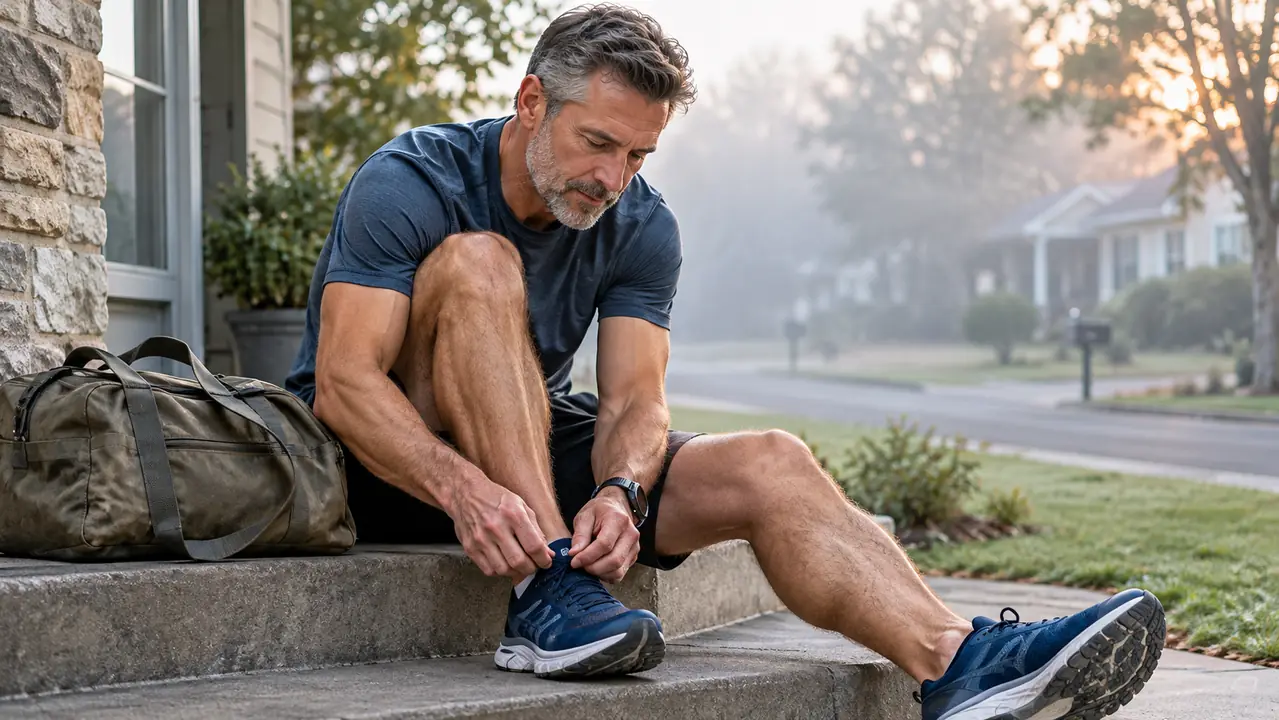
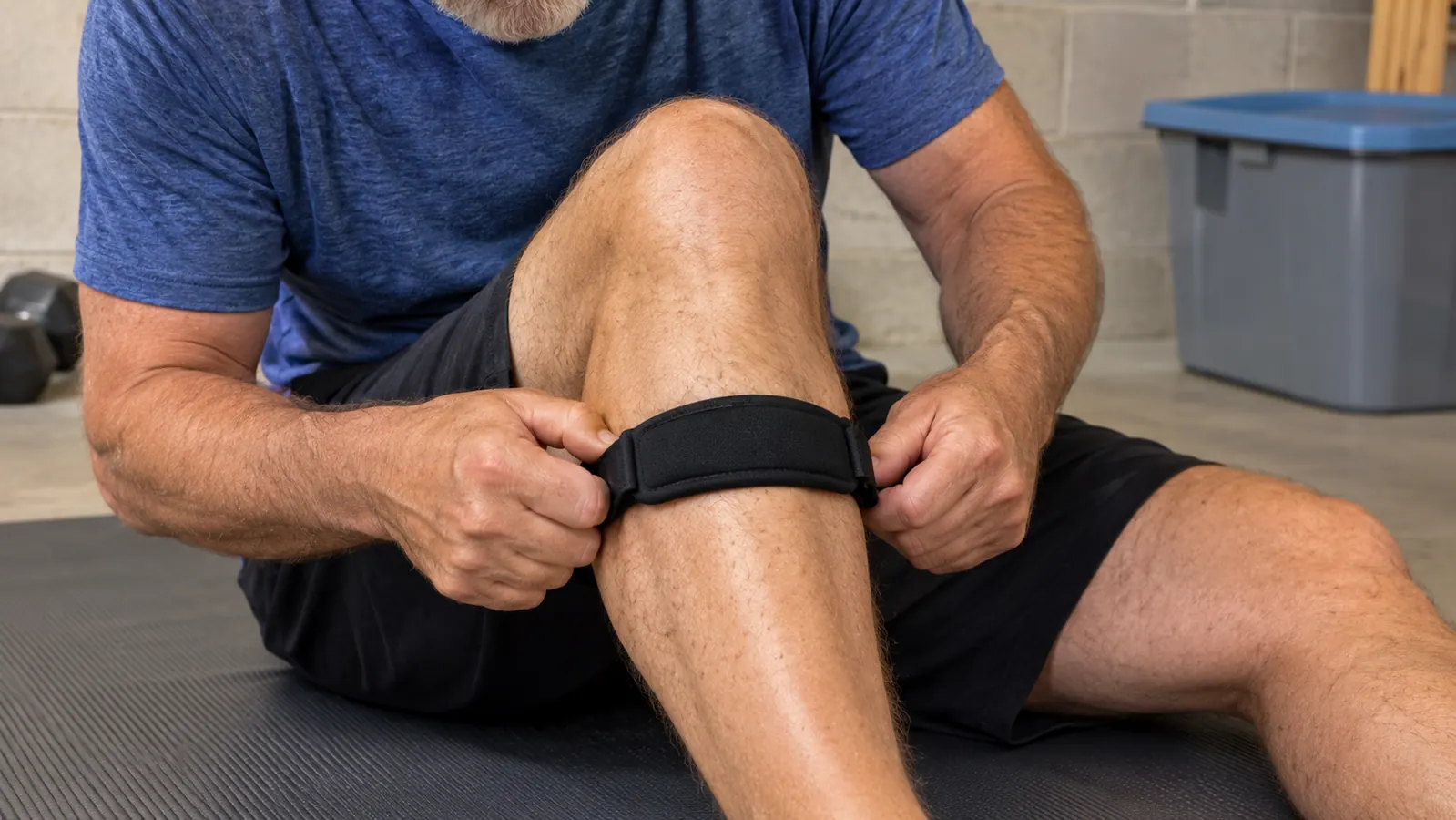
The reason this strap works for me is that it aims at one spot. When I get greedy and add a mile before my legs are ready, the soreness lands just below the left kneecap, on the tendon, and nowhere else. The Bodyprox strap sits right there. I set it with the hook and loop closure, snug enough to feel supported and loose enough that it does not leave a mark, and the pull I feel on every foot strike moves into the strap instead of settling under the kneecap. It is one size, it is adjustable, and the silicone gel padding keeps the edges from digging in. The first morning I wore it was a Tuesday in April, 6:20 am, 41 degrees, with a three mile loop in front of me. I set it standing in the kitchen, walked to the end of the driveway, and made one small adjustment before the first crosswalk. That was the only adjustment I made all morning.
The second thing is what it does not cover. The strap is listed at 0.1 centimeters thick, and it wears like a band rather than a brace. The back of my knee stays open to the air on a warm morning, which matters more at 49 than it did at 35. It disappears under tights when the weather turns and it does not fight the sock line. On the mornings I run before work and drive straight to the office, nobody at the sales desk knows it is on.
Third is the adjustment. My knee is not the same on Tuesday as it is on Thursday. Some mornings I want a little more tension, some mornings less, and I can change that with one pull without sitting down on the curb. The pack comes with two straps, so the second one lives in the bin as a spare. In eight months I have never once been at the door at 6:15 in the morning hunting for it.
Where a Knee Sleeve Wins
A sleeve does something the strap cannot, and that is cover the whole joint. The ones I have borrowed wrap the knee front and sides and hold heat against it. After a Wednesday night of pickup basketball, when my knee is achy rather than sharp, that warmth feels good in a way a narrow band does not deliver. If your complaint is general rather than pinpointed, a sleeve is the better shape for the job. The sleeve I borrowed most often was a medium from a friend at the Y, and on my leg it was a fight to pull over the heel. Once it was on, though, it did the thing it is built to do: my knee stayed warm for the whole five miles, and the next morning it felt less stiff than it usually does after a Wednesday of basketball.
Sleeves also stay where you put them, and they cushion. A full sleeve grips the whole leg, so it does not need a mid-run adjustment the way a strap can if I set it a little loose at the start. And when I end up kneeling on a gym floor or catching a knee on somebody's hip, the fabric gives me something between my knee and the surface. The strap gives me nothing there, by design. That is not a flaw, it is just the trade you make for a thin band.
The tradeoff is fit. A sleeve comes in sizes, and the wrong size is either a fight to pull on or a slow slide down the leg by mile two. My strap is one size with a hook and loop closure, so there is no measuring and no guessing. That is a real advantage for a guy buying gear online at 10 pm, and it is the main reason the strap is the one living in my bin while the sleeves stay borrowed.
One Spot, One Strap, Every Run
The Bodyprox patella tendon strap sits just below the kneecap, adjusts with hook and loop, and comes as a two pack so there is always a spare in the bag.
Amazon Check Today's Price on Amazon →How I Actually Compared Them
This was not a lab test and I am not going to pretend it was. I have worn the Bodyprox strap on three runs a week for about eight months, starting in the spring when the soreness below the left kneecap flared as I built mileage back up after winter. The sleeve side of this comparison comes from borrowing one from a friend for a couple of long runs and for the evenings after basketball, plus enough time around other people's gear at the Y to know what the shape does and does not do for a knee. I kept a note on my phone for the first six weeks: date, distance, whether the strap went on, and a one to five number for how the knee felt at mile one and at the end. That log is how I know the pattern. The bad runs line up with the weeks I added distance, not with the weeks I forgot the strap.
I judged both on four things. Does it stay where I put it for the whole run. Does it change how the run feels, in a way I would notice if I forgot it. Does it survive being washed and shoved back in a plastic bin. And would I spend my own money on it again. That last one is the only question that matters, and it is the reason eight months later the strap is still the first thing I put on.
What the Strap Does Not Do
Here is where I have to be honest about my own history. The strap did not fix the thing that caused the soreness. What caused it was me adding a mile a week for three straight weeks in April because the weather finally turned and I felt good for the first time since February. The strap made those runs comfortable enough to finish. It did not make the ramp safe. When I got greedy again in June, the soreness came back with the strap on, which told me the strap is a comfort tool and not a free pass. April was the tell. I went from 9 miles a week to 12 in three weeks because the weather broke and I felt bulletproof. By the third week the soreness was there at mile one, with the strap on, and it stayed there for a week of shorter, slower runs. That is the whole lesson. The strap does not care how fast you ramp. Your tendon does.
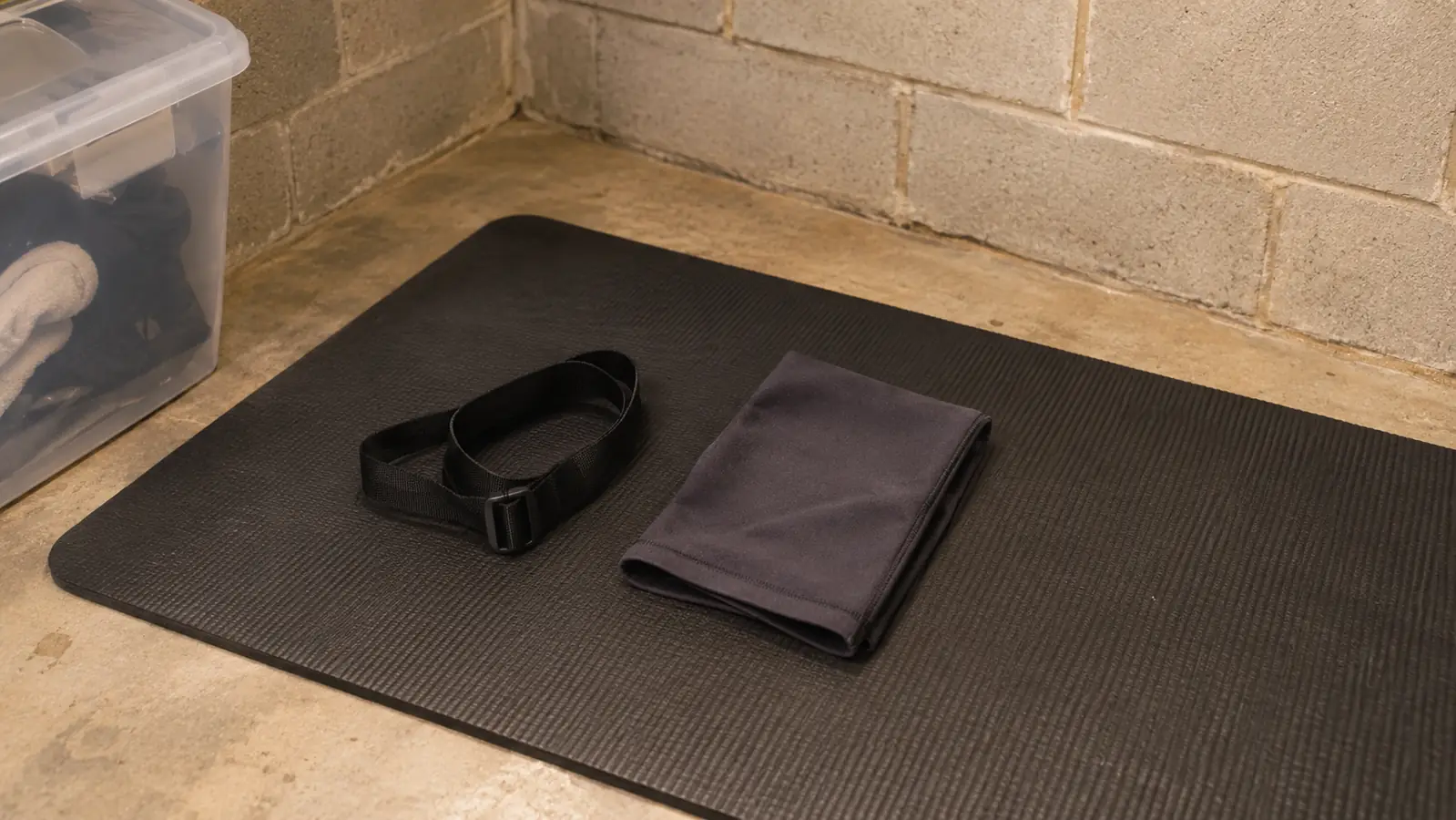
It also does not replace the boring work. Five years ago I rolled my right ankle badly in a soccer game and saw a physical therapist a handful of times. She gave me hip and ankle exercises. I let them slide for years. About 18 months ago I finally started doing them again with a set of resistance bands, ten minutes before soccer and a short session twice a week at home in the basement. That work is what lets me keep running. The strap just makes the run itself more comfortable while I do it.
And it is not a cushion and not a brace. It is 3.2 ounces of nylon, SBR, spandex and cotton with hand wash only on the care tag. If I crank it too tight, it lets me know around mile two. If I kneel on the basement floor to tie a shoe, I feel the floor. If your knee needs support on both sides of the joint or padding for contact, this is the wrong shape of gear and no amount of tightening will change that.
Eight months of three-mile mornings, and the strap is still the only piece of gear that goes on before every single run.
What I Liked
- Aims at the one spot below the kneecap that actually hurts on a run
- Hook and loop closure and one size, so there is no measuring and no guessing
- Listed at 0.1 centimeters thick, it disappears under tights and work pants
- Leaves the back of the knee open to air on warm mornings
- Two in the pack, so the spare sits in the bin ready to go
Where It Falls Short
- No cushioning if you kneel or take a knock on the knee
- Does nothing for a joint that aches all over
- Crank it too tight and you will feel it around mile two
- Hand wash only, so it does not go in with the running clothes
- The spare is easy to lose if you do not keep it in the same bin
How I Wear It Now
The strap goes on just below the left kneecap, over bare skin or over a thin sock line, tight enough that I can feel it and loose enough that I forget about it by the first quarter mile. It comes off when I get home. I do not sleep in it, I do not wear it around the house, and I do not wear it on the days the ankle brace comes out of the soccer duffel. Hand wash, air dry, back in the bin with the rest of the gear. On a rainy Tuesday in October I wore it under tights for a 3.5 mile loop, and it was still in place when I got home. That is the test I care about now: does it survive a wet run and a wet pair of tights without sliding down or bunching behind the knee. So far it has.
The second strap of the pack is still in the bin, still in the same corner, and that is the whole point of a two pack for me. One goes on my leg, one waits. If I ever leave one on a park bench or in a hotel room on a work trip, I am not ordering a replacement before the next run and I am not skipping the run either.
Who Should Buy Which
Buy the Bodyprox strap if your complaint is one spot, just below the kneecap, and it shows up when you run. Buy it if you want to keep running while you sort out your mileage, if you wear tights and do not want a lump underneath them, or if you like being able to change the tension without stopping. The two pack is the version I would get, because the spare earns its keep and because one size means there is nothing to get wrong.
Buy a knee sleeve if the ache is general, if warmth is the thing that feels good, if you are kneeling or taking contact, or if you simply prefer a slip-on. I do not own one. I have borrowed one often enough to know I would buy one the day my knee went from one sore spot to a general complaint. Until then it would sit in the bin next to the strap and never get worn, and gear you never wear is the most expensive gear you own.
And one more thing, said plainly. If the soreness comes with swelling, if the knee gives way, if it wakes you up at night, or if a couple of weeks of easier running does not settle it, put the gear down and go see your doctor or a physical therapist. I am a guy with a plastic bin and a park loop. That is all I am. A strap is a small tool and it should not be asked to do a big job.
If It Is One Spot, It Is the Strap
One size, hook and loop, two in the pack. The Bodyprox patella tendon strap is the piece that goes on before every run in my house, and the spare lives in the gear bin.
Amazon See the Bodyprox 2-Pack on Amazon →