
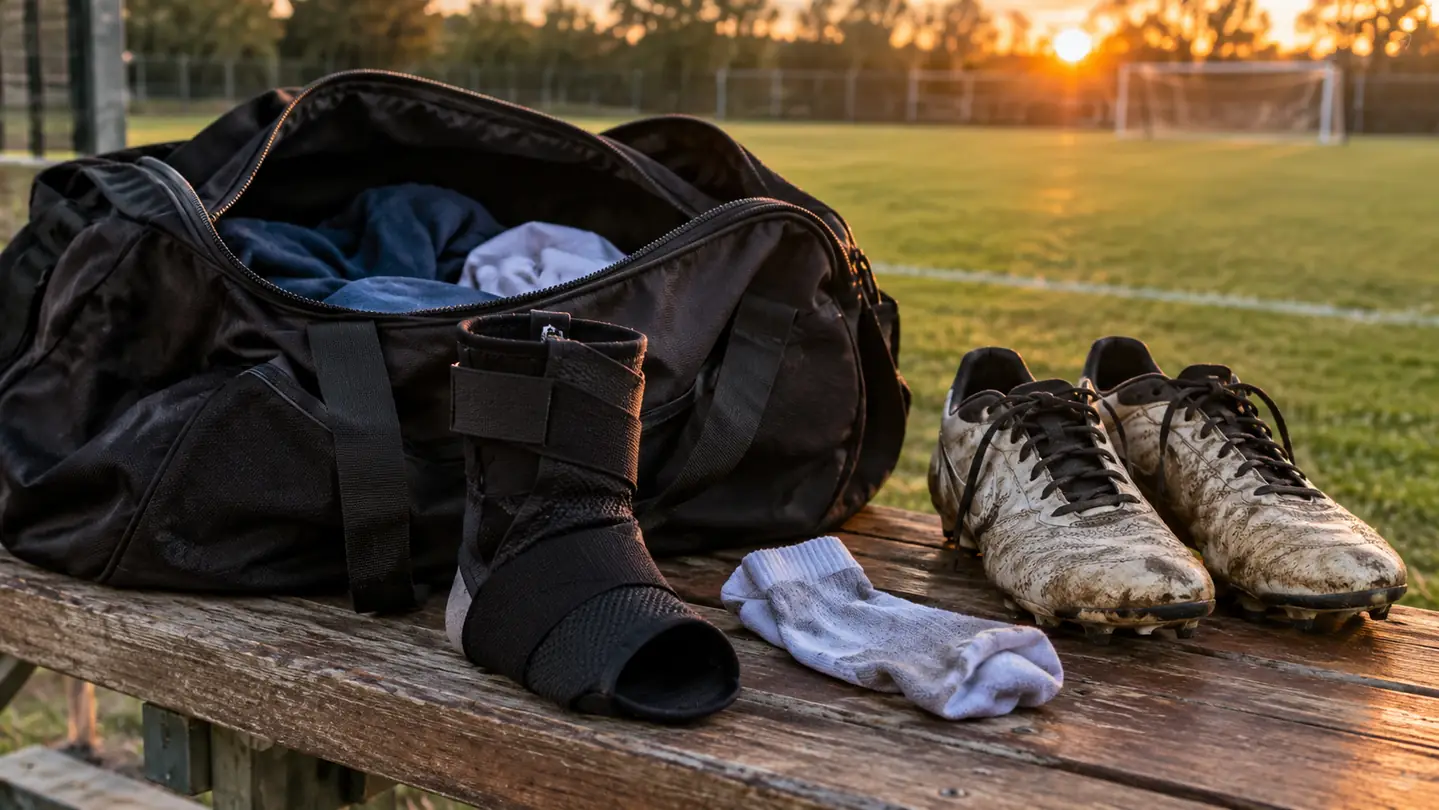
I rolled my right ankle badly in a rec-league soccer game when I was 44. Five years later it still feels loose when I step on a root or a rut, and two years ago it rolled over again on a bumpy field. That second roll is why I bought the Med Spec ASO Ankle Stabilizer. I am 49, I live in Cincinnati, I work as a sales manager, and I have played rec-league soccer for about 15 years, run three mornings a week, and play pickup basketball at the Y on Wednesday nights. I am not a doctor or a PT. I am just a guy who got tired of wondering whether his ankle would hold.
The short version: the Med Spec ASO is the brace that lives in my soccer duffel and goes on my right ankle before I put on cleats. It is not a fix. It does not make a loose ankle new. What it does is give me a repeatable, snug feel under the shoe, and that has been enough to keep me playing without thinking about the ankle every step. I have worn this one brace for about two years, on Sundays and Wednesdays, and I have a plain list of what I like and what I do not.
The Quick Verdict
A lightweight lace-up brace that fits in a cleat, gives my old sprain a stable feel, and has held up for two years. It is a tool, not a fix, and not for everyone.
Amazon Check Today's Price →If your ankle still feels loose on uneven ground, this is the brace I bought
One Med Spec ASO in size MD, worn over a thin sock, laced under my cleats. It is the same brace I have used for two years on Sunday mornings and Wednesday nights.
Amazon Check Availability on Amazon →How I've Used It
I bought the Med Spec ASO about two years ago, after my right ankle rolled over again on a field that had more divots than grass. I ordered size MD. The package came with the brace and a small set of instructions. I read them once in the kitchen, laced it up on the living room floor, and have been using the same brace ever since. I own one. It lives in my soccer duffel, not in the plastic gear bin in my basement recovery corner. That bin is for the foam roller, the resistance bands and the knee strap.
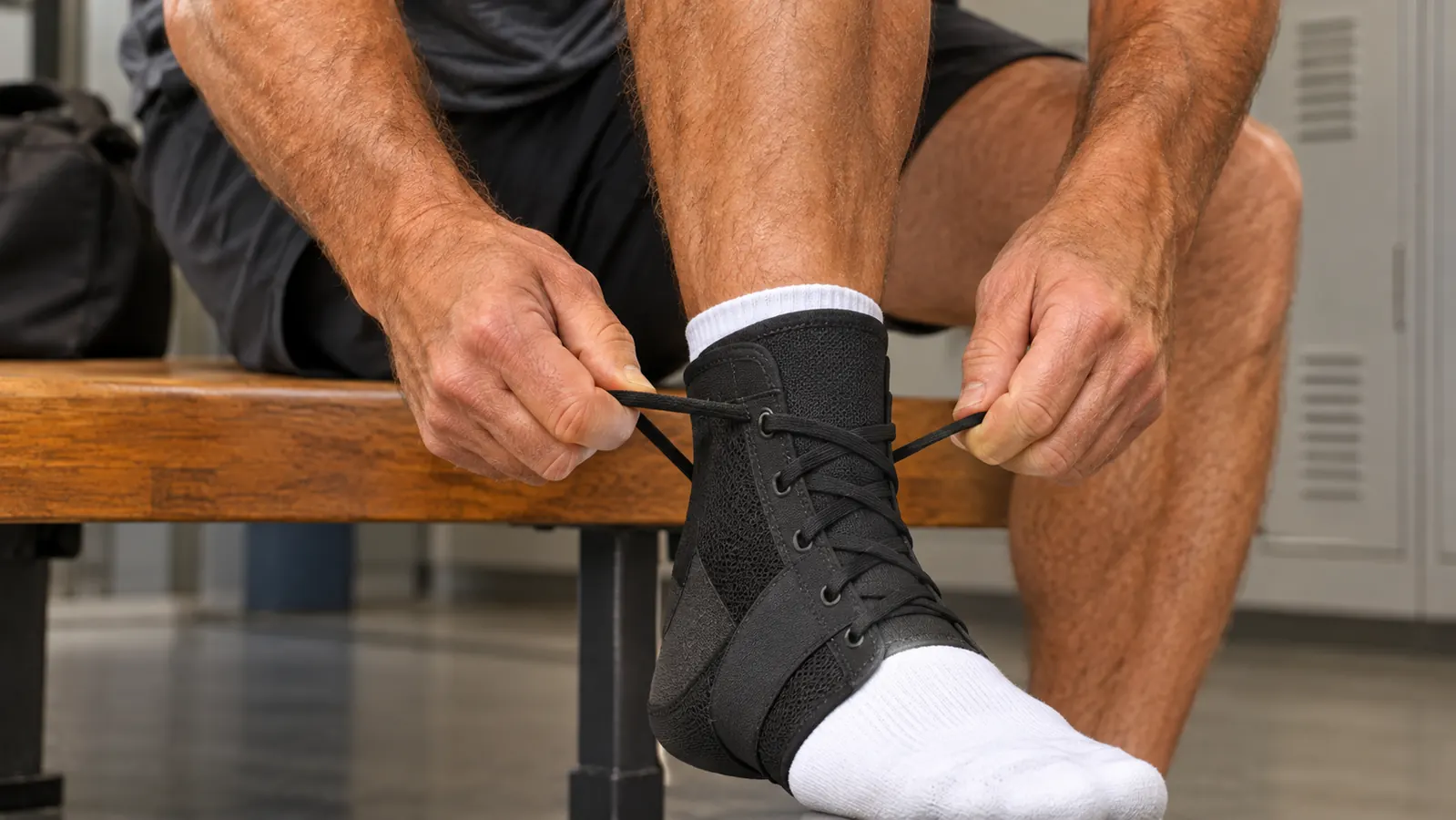
I wear it on my right ankle only. Thin sock first, then the brace, then the laces. On Sundays I put it on before cleats. On Wednesdays I put it on before basketball shoes. I do not wear it for my road runs. My runs are 3 to 5 miles on neighborhood roads and a park loop, and the brace is not part of that routine. This is a court and field tool for me, not an all-day accessory.
The first few times I laced it too tight. That is on me, not the brace. The figure-8 straps can make the whole thing feel like a firm handshake around the ankle, and if you crank them down you will feel your foot go numb before the first whistle. I now snug the straps, stand up, take a few steps, and adjust once. That takes about 30 seconds. After that I forget it is there, which is the highest compliment I can give a piece of gear.
On Wednesdays at the Y, the brace goes on under my basketball shoes. The court is cleaner than the soccer field, but the cutting and stopping is harder on the ankle. I like the brace there for the same reason I like it on the field: it gives me a consistent feel before the first possession. I take it off after the game, let it air out on the ride home, and put it back in the duffel. That is the entire routine.
What the Brace Actually Does
Let me be careful here, because this is where gear reviews get silly. The Med Spec ASO is a lace-up ankle stabilizer. The listing says it uses figure-8 straps, and it does. Those straps cross over the front of the ankle and wrap around the sides, and when you pull them snug they add a sense of side-to-side control. The nylon shell is lightweight, and the whole thing fits inside my cleats and basketball shoes. That is the mechanical story. I am not going to tell you it heals anything, because I am not qualified to say that and I do not believe it.
The practical story is smaller and more useful. When my ankle is feeling loose, the brace gives me a boundary. It is the difference between stepping onto a bumpy field and hoping, and stepping onto it with a set routine. I still warm up. I still do the band work. The brace is not a substitute for the 10 minutes of lateral band walks, glute bridges and ankle work I do before soccer. It is the last thing I put on before I lace my cleats.
Med Spec includes a six-month limited warranty and a set of instructions. I have not needed the warranty. The brace has held its shape, the laces have not frayed, and the straps still hold where they should. That is a low bar, maybe, but I have had cheaper braces where the lace loop tore in a month. This one has been boring in the best way.
The listing also says athletic trainers and doctors recommend it. I cannot verify that from my basement. What I can tell you is that the brace has a simple design that makes sense to me: laces for the front, figure-8 straps for the sides, nylon for the shell. There is no pump, no dial, no app, no battery. That simplicity is why I trust it. Fewer parts means fewer things to break in a duffel.
The Fit Details That Matter
Size MD is the size I bought, and it fits my right foot with a thin sock. The brace is meant to go over a sock, not directly on skin, at least the way I use it. If you wear a thick wool sock, you may need to loosen the laces a notch. If you have a wide foot, try the fit before you commit to a full season. The listing says it is built to fit in shoes, and in my cleats it does. In my basketball shoes it also fits, though the tongue of the shoe sits a little differently. It is not bulky. The item weight listed is 9.07 grams, and while I have not put it on a kitchen scale, it feels like almost nothing in the duffel.
The laces are the part that takes getting used to. This is not a slip-on sleeve. You lace it, you pull the figure-8 straps, and you secure them. If you are the kind of person who wants to step into a brace and go, this will annoy you. If you are the kind of person who likes a repeatable fit, you will like it. I keep the laces at the same tension and only adjust the straps. That routine is why it goes on fast now.
I also noticed the brace works better with the sock I always wear. A thin sock gives me a consistent fit. A thicker sock changes the feel, and I have to loosen the laces. That is not a defect. It is just how lace-up gear works. Pick your sock, pick your tension, and repeat it. The brace rewards consistency.
Two Years In: What Changed and What Didn't
After two years, the brace looks used. The laces have softened. The nylon has a few creases. The straps still hold. I have not had a strap fail, a lace break, or a seam open. I wash it by hand every few weeks with a little mild soap, rinse it, and let it air dry on the basement mat. I do not put it in the dryer. That is the whole maintenance routine.
What changed is not the brace. It is my warm-up. When I first bought it, I was looking for a piece of gear that would let me keep playing without doing the boring stuff. That is not how it worked. The brace felt better once I got serious about the resistance bands, the ankle work and the hip exercises the PT showed me after the original sprain five years ago. I had let those slide for years. Now the bands ride in my soccer duffel with the brace. The brace is the seatbelt. The warm-up is the driving.
What did not change is the loose feeling on uneven ground. The brace does not tighten my ankle permanently. It does not make the joint new. When I step on a root in the park, I still feel a little wobble. The difference is that I feel it and keep going instead of stopping to test it. That may sound small. For a 49-year-old who wants to keep playing Sunday soccer, small is the whole game.
The straps are the part I check before every game. I run my thumb over the strap ends and make sure there is no grit stuck to them. A little grass or dust can make the strap feel less secure. I wipe it with my hand and go. That is a 10-second check. It has kept the same straps working for two years.
I still feel a little wobble when I step on a root. The difference after two years is that I keep going instead of stopping to test it.
What I Liked
- Fits inside cleats and basketball shoes without feeling bulky
- Figure-8 straps give a snug, repeatable fit once you learn the lacing
- Lightweight nylon and low weight make it easy to keep in a duffel
- Has held up for about two years of Sunday and Wednesday use
- Comes with instructions and a six-month limited warranty
Where It Falls Short
- Takes time to lace and adjust, not a slip-on
- Can be over-tightened, especially the first few times
- Not something I wear for road runs, it is a field and court tool
- Only one size MD in my case, so fit depends on your foot and sock
- Does not fix a loose ankle, it only gives support during play

Where It Falls Short
The biggest knock is the lacing. If you are running late, this is not the brace you grab and slap on in the car. You need to sit down, get the sock right, lace it, snug the figure-8 straps, and stand up to check the fit. That is a two-minute job when you are learning and about 30 seconds when you have a routine. I have done it in a parking lot with the brace on my knee, and I have done it in a locker room. It is not hard. It is just not instant.
The second knock is that it is not a running accessory for me. I tried it on one 4-mile run early on and did not like it. The brace is designed for court and field support, and that is where it stays. If you want something for daily runs, look at a sleeve or talk to a PT. I am not going to pretend this is a universal answer.
The third knock is fit. Size MD works for my foot, but feet are not standardized. If you are between sizes, or you wear a thick sock, or your shoe is already tight, you may need to adjust or try a different size. The listing is clear about the size, but the feel is personal. Buy from a place with a return policy you understand. That is generic advice, but it is the advice I would give a teammate in the parking lot.
What I'd Tell a Teammate
If a teammate asked me in the parking lot whether to buy the Med Spec ASO, I would ask three questions. Do you have an old ankle sprain that still feels loose on uneven ground? Do you play a field or court sport where you wear a shoe that can fit a lace-up brace? Are you willing to spend 30 seconds lacing it and 10 minutes doing the warm-up? If the answer is yes to all three, I would tell them to try it. If the answer is no to any of them, I would tell them to save their money and talk to a PT.
I would also tell them not to expect a new ankle. The brace is a tool. It gives me a consistent feel and a little side-to-side structure during play. It does not fix the loose feeling I have had since I was 44. The thing that has helped most is the boring band work I do before soccer and twice a week at home. The brace is what I put on after that work. That order matters.
Who This Is For
This is for the weekend athlete who has an old ankle sprain that still feels loose, who plays a field or court sport, and who wants a lace-up brace that fits inside a shoe. It is for the person who is willing to spend 30 seconds lacing up and who will actually do the warm-up. It is for the soccer player, the basketball player, the person who plays volleyball or softball or tennis and wants a little more structure around the ankle during play. The Med Spec ASO has been that brace for me for two years, and I still put it in the duffel every Sunday.
Who Should Skip It
Skip it if you want a slip-on sleeve you can pull over your foot in two seconds. Skip it if you are looking for something to wear all day, or for road runs, or as a substitute for rehab. Skip it if you have a fresh injury you have not had looked at. I am not a doctor. If your ankle is swollen, unstable, or painful in a way that is new, talk to your doctor or a PT before you buy gear. A brace is not a diagnosis.
Also skip it if you hate laces. There is no shame in that. A lace-up brace is a small ritual, and if you will not do the ritual, you will not get the fit. I would rather you buy the thing you will actually use than the thing that reviews well.
The brace that earned a permanent spot in my soccer duffel
I have worn the Med Spec ASO on my right ankle for about two years. It is not a fix, and it is not for every run. It is the lace-up brace I trust on bumpy fields and Wednesday nights at the Y.
Amazon See the Med Spec ASO on Amazon →