
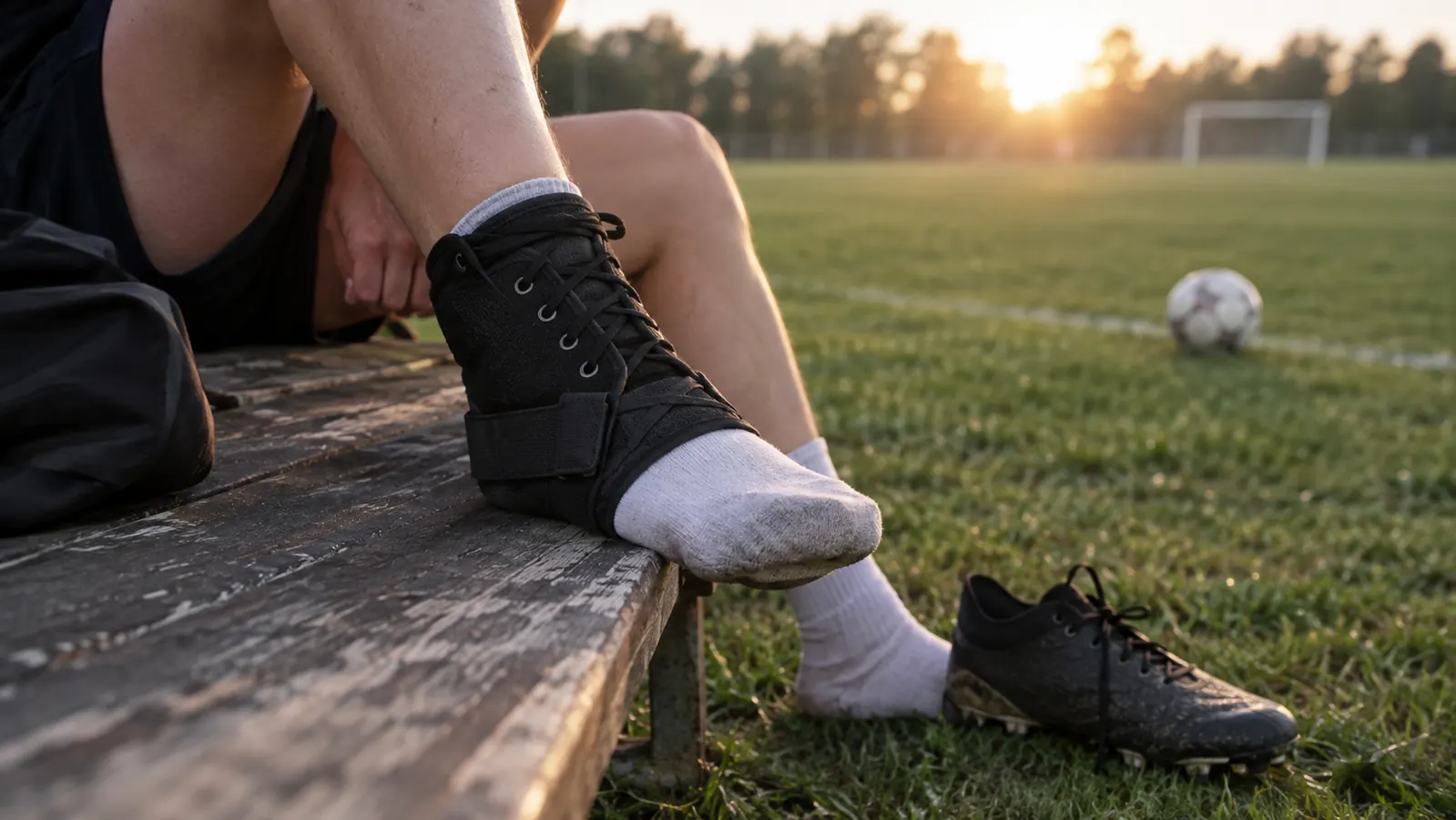
I rolled my right ankle at 44 and it has never fully trusted uneven ground since. About two years ago it went over again on a bumpy field, and I did what most people do first: I dug a slip-on compression sleeve out of my bag and hoped for the best. Two weeks of that was enough. I bought the Med Spec ASO lace-up brace and I have laced it on for Sunday soccer and Wednesday basketball ever since.
So here is the short answer, before I get into the details. A slip-on sleeve and the Med Spec ASO are not two versions of the same product. One squeezes. One restrains. If your ankle has actually rolled on you, squeezing is not the job you need done. If your ankle is just stiff and puffy at the end of a long day, restraining it is more than you need. I own the brace, I have worn both, and I would not swap them for each other. I would just stop pretending they are interchangeable.
| Med Spec ASO Lace-Up | Slip-On Ankle Sleeve | |
|---|---|---|
| What it does | Figure-8 straps plus laces limit how far the ankle can turn | Steady compression from a knit tube, no straps, no structure |
| Adjustability | Lace tension and strap tension set separately, by feel | None. What the knit gives you on day one is what you get |
| On and off | Laces plus the figure-8 straps, call it a minute or two | Pull it on in a few seconds |
| Under a normal shoe | Fine in cleats and court shoes over a thin sock, tight in a dress shoe | Thin enough to disappear inside almost anything |
| Holds up over time | Nylon that keeps its shape, 6 month limited warranty | Elastic knit relaxes with washing and wear |
| Comfort for a long day | You know it is on, and by 90 minutes I want it off | Feels like a thick sock you forget about |
| Best for | An ankle that has already rolled and still feels loose | Stiffness and puffiness with no history of rolling |
Where Med Spec Wins
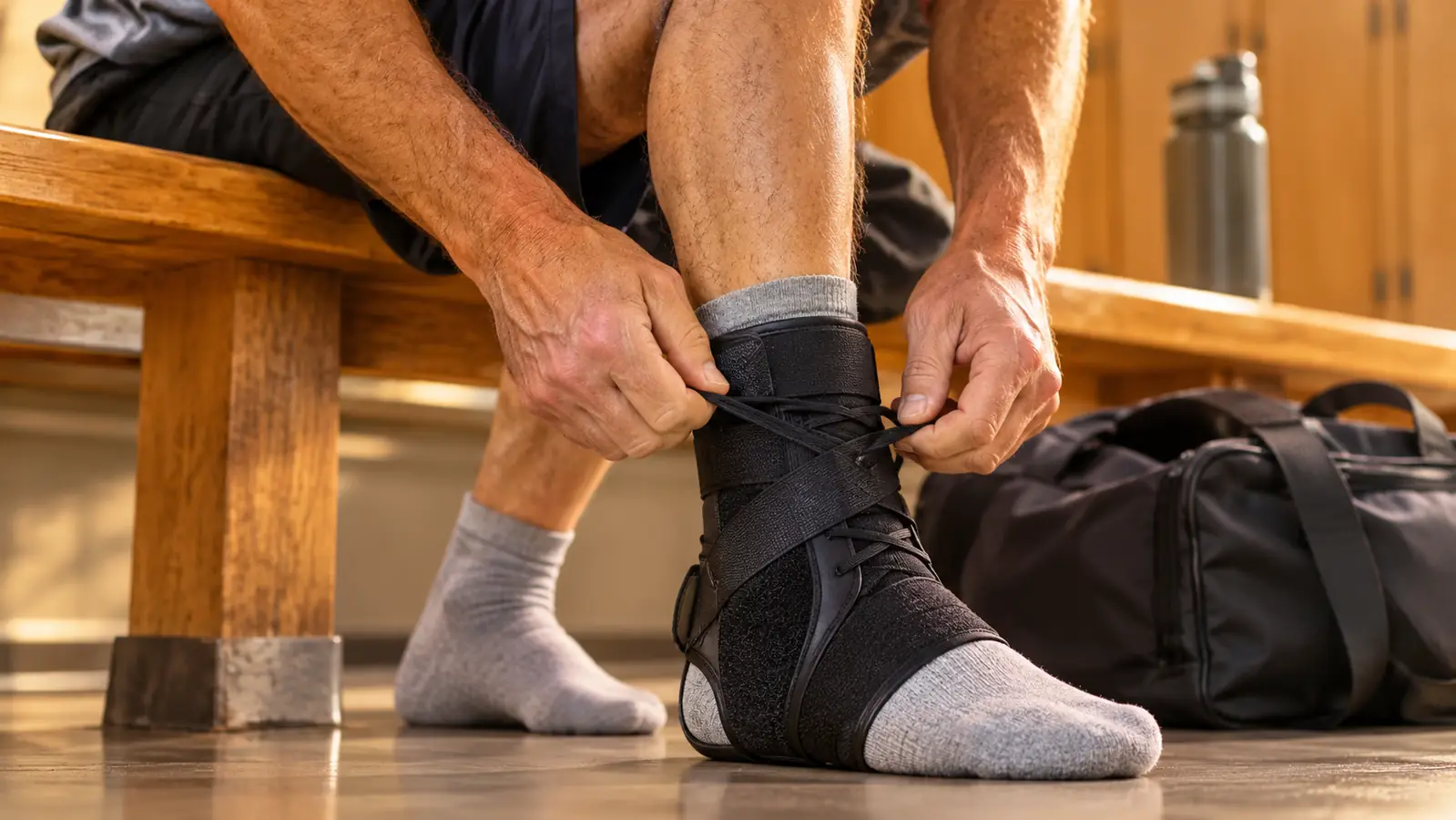
Control is the first place the Med Spec separates itself. The laces pull the two sides of the brace together across the front of your ankle, and then the figure-8 straps wrap around and lock the whole thing down. You feel the difference the second you stand up. In the sleeve, my ankle still had room to wander. In the brace, it has a limit, and that limit sits on the outside of the spot where it used to roll. For a guy who plays a sport built on cutting, that is the entire point.
There is one play I keep coming back to. Last October, Sunday league, second half, a through ball I had no business chasing. I planted my right foot on a patch of field that had been chewed up by a middle school game the day before, and the foot slid sideways while the rest of me kept going. Five years ago that is a roll and a ride to urgent care. That morning my ankle hit the end of the strap and stopped. I did not fall. I did not limp off. I finished the half, badly, because I am slow now, but I finished it. I am not going to sit here and tell you the brace is why I stayed upright. I will tell you it is the difference between a near miss and a two-week setback, and near misses never show up in anybody's stats but they are the whole reason the thing lives in my duffel.
The other half of that is adjustment. On a dry field in August I lace it one way. On a chewed-up field in November I cinch the straps a little harder, and I can do that standing on the sideline with cold hands while the other team is still arguing about the coin toss. A sleeve has no adjustment at all. It does not care that the ground got worse, and it does not care that your ankle feels sketchy today and fine tomorrow.
Then there is the boring part that turns out to matter most: it holds its shape. The brace is nylon, it carries a 6 month limited warranty, and after two years of Sunday mornings mine still laces down the same way it did in the first month. The sleeve I had did not. Elastic knits relax with washing and wear, so by the end of a season a sleeve is giving you a fraction of the squeeze it gave you in week one. You never notice it going. You just notice your ankle feels loose again and you blame your ankle instead of the sleeve.
Where the Slip-On Sleeve Wins
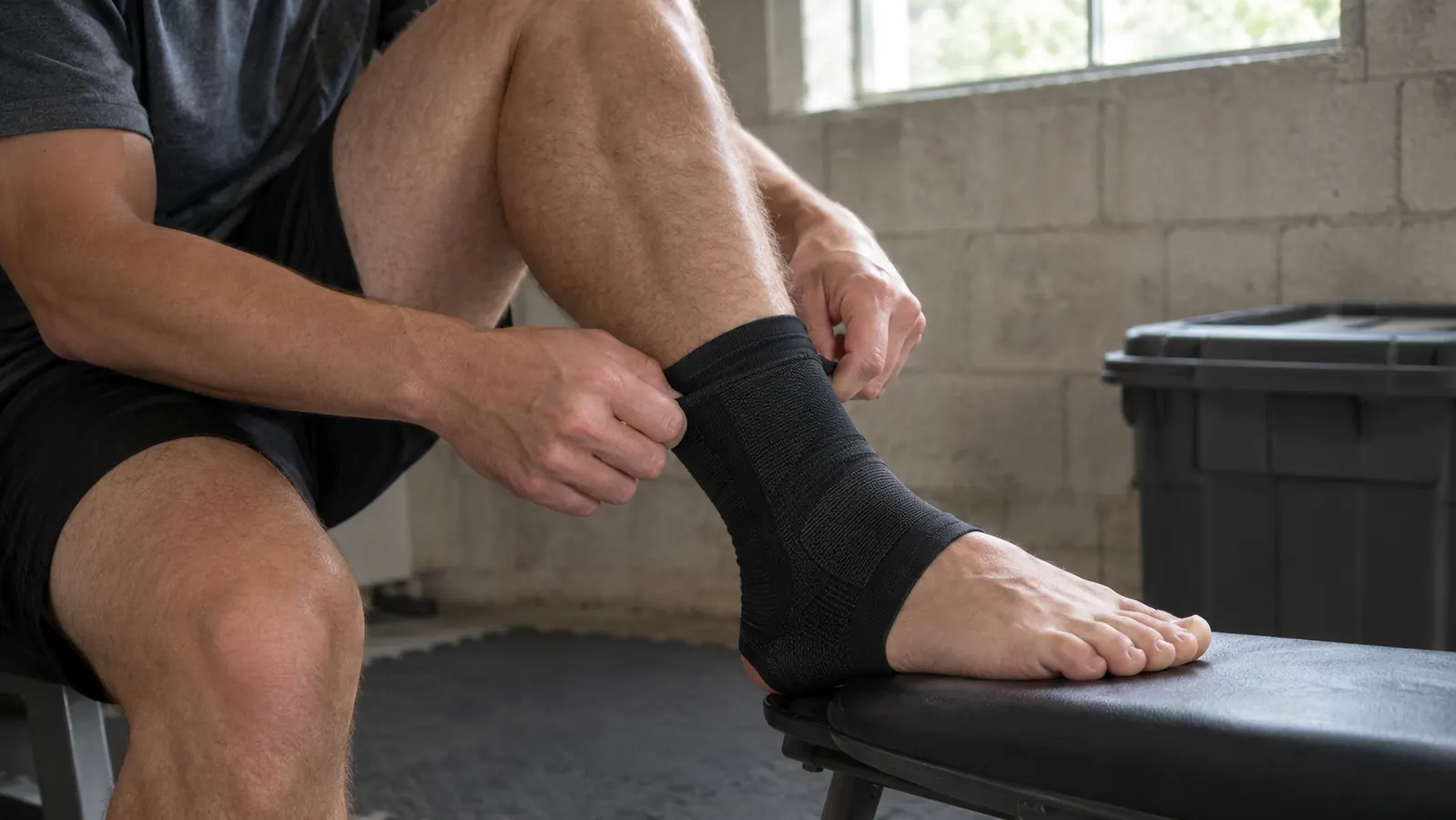
Speed is the sleeve's win, and it is not a small one. It goes on in a few seconds. No laces, no straps, nothing to thread with cold fingers in a parking lot. If your ankle is stiff when you get out of bed, or stiff after a long drive home from a client meeting, a sleeve is the version you can actually be bothered to put on. I have skipped plenty of useful things over the years because they took ninety seconds too long, and I suspect you have too.
Second, it goes under almost anything. The Med Spec is fine in cleats and fine in court shoes, but it is a tight squeeze in a dress shoe and I am not wearing it into a client meeting. A thin knit sleeve disappears inside whatever you have on your feet, which makes it the only one of the two that fits into an ordinary Tuesday. Third, comfort. Straps are straps. By ninety minutes I can feel the brace and I am ready to be done with it. A sleeve feels like a thick sock and you forget it exists.
I keep one in the house for exactly that. Tuesday nights I get home from a day of client calls, three hours in the car, and both ankles feel like they belong to somebody older. I pull the sleeve on, make dinner, haul the trash out to the curb, and by the time I sit down the ankle has warmed up and stopped complaining. That is not a small thing at 49, because the alternative is sitting still and letting it stiffen up worse. What it does not do is make me feel safe on a field. I tried that once. I wore a sleeve to pickup basketball at the YMCA, felt the same loose wobble on the first hard cut, and walked back out to the car for the brace. Ten seconds versus ninety, and I still chose ninety.
And there is a real job here that has nothing to do with rolling: a stiff, puffy ankle at the end of a long day feels better with steady compression on it. Warms it up, makes it feel less puffy, gets you moving around the kitchen instead of sitting still. That is the sleeve's job and the brace does not do it, because the brace was never built for it. Different tool, different job.
Two weeks in a sleeve did nothing for the loose feeling. Two years in the Med Spec and I have not rolled that right ankle once on a Sunday.
Two Things I Got Wrong Before I Bought Either One
First thing I got wrong: I thought tighter meant better. I pulled that sleeve on hard and wore it for a whole Sunday, and by the afternoon my foot was filing a complaint. Compression should be steady, not a tourniquet. Same lesson with the brace, actually. The first month I laced the Med Spec like I was trying to win a bet, lasted about twenty minutes, and had to sit on the tailgate and loosen it. Now I lace it snug, stand up, roll the ankle a couple of times, and adjust from there. That little routine takes ten seconds and it is the difference between a brace you wear all season and a brace that ends up in the bottom of the duffel.
Second thing I got wrong: I thought a sleeve was the budget version of a brace. It is not a budget version of anything. It is a different tool for a different job, and treating it like a cheap brace is how you end up two weeks down the road with an ankle that still feels loose every time you step on a root. The other thing I would tell you is that neither one is rehab. My right ankle still feels loose on uneven ground and it probably always will. The brace keeps it from going over during a game. The work that actually helped was boring: the hip and ankle exercises a physical therapist showed me after the sprain, which I let slide for years before I finally got serious about them again with a set of resistance bands in the basement. If your ankle is more than a tweak, talk to your doctor or a PT. I am a 49-year-old sales manager in Cincinnati who plays rec league soccer. That is the whole credential.
I also wasted most of a season asking the wrong question. For months I was hunting for which one was better, as if there were a single answer waiting for me in a comment thread. What I should have been asking was what I wanted the thing to do at 8 a.m. on a Sunday. When the answer is stop my ankle from rolling, the sleeve is not in the conversation. When the answer is make my foot feel less like a brick after a long day of driving, the brace is not in the conversation either. I read a pile of comparisons that crowned a winner and not one of them mentioned that these two products are answering different questions. That is the whole reason I sat down and wrote this out.
The one I lace on before I trust a field
The Med Spec ASO is the tool that limits the roll instead of just squeezing the ankle. Nylon, lace-up front, figure-8 straps, fits over a thin sock inside cleats and court shoes. Size MD is what I wear.
Amazon Check Today's Price on Amazon →Who Should Buy Which
Buy the Med Spec ASO if your ankle has actually rolled on you, more than once, and still feels loose when you walk across a rutted yard. Buy it if you play something with cutting and lateral movement in it: soccer, basketball, tennis, volleyball, football, even softball on a bad infield. Buy it if you are coming back from a sprain and you want the thing that limits the direction your ankle is not supposed to go. The tradeoff is honest: it takes a minute to put on, the straps press on your foot, and it does not fit in every shoe you own.
Buy the slip-on sleeve if your ankle is stiff and puffy without a history of going over, if you want something that slides under dress shoes, or if you want a warm layer for the first ten minutes of a cold morning run. Buy it as a second thing for the day after a long effort, not as a replacement for the brace. Owning both is not silly. I have both in the house right now and they do not overlap at all. What I would not do is stand on a sideline in October with a rolled ankle and a knit tube and call it protection. If you are in the first week or two after a real roll, that is a conversation with your doctor or a PT, not a shopping decision.
One more note on fit, because it tripped me up and it will trip you up too. The Med Spec comes in MD, and MD is what I wear. It goes on over a thin sock, not a thick one. If you try to force it over a wool sock you will fight it every single time and you will decide the brace is badly made when the truth is you are wearing the wrong sock. Break the laces loose all the way down before your foot goes in, seat your heel, then tighten from the bottom up. If you cinch the top first and work down, the whole thing bunches across the front of your ankle and you will hate it by halftime. None of that is a design flaw. It is me learning how to put on a lace-up brace in my late forties. Give it a week and the sequence lives in your hands.
Two years on the right ankle and I am still lacing it on
One brace, one size to sort out, and it lives in your bag instead of a drawer. If your ankle has gone over and never felt right again, this is the purchase that matches the problem.
Amazon Check Today's Price on Amazon →