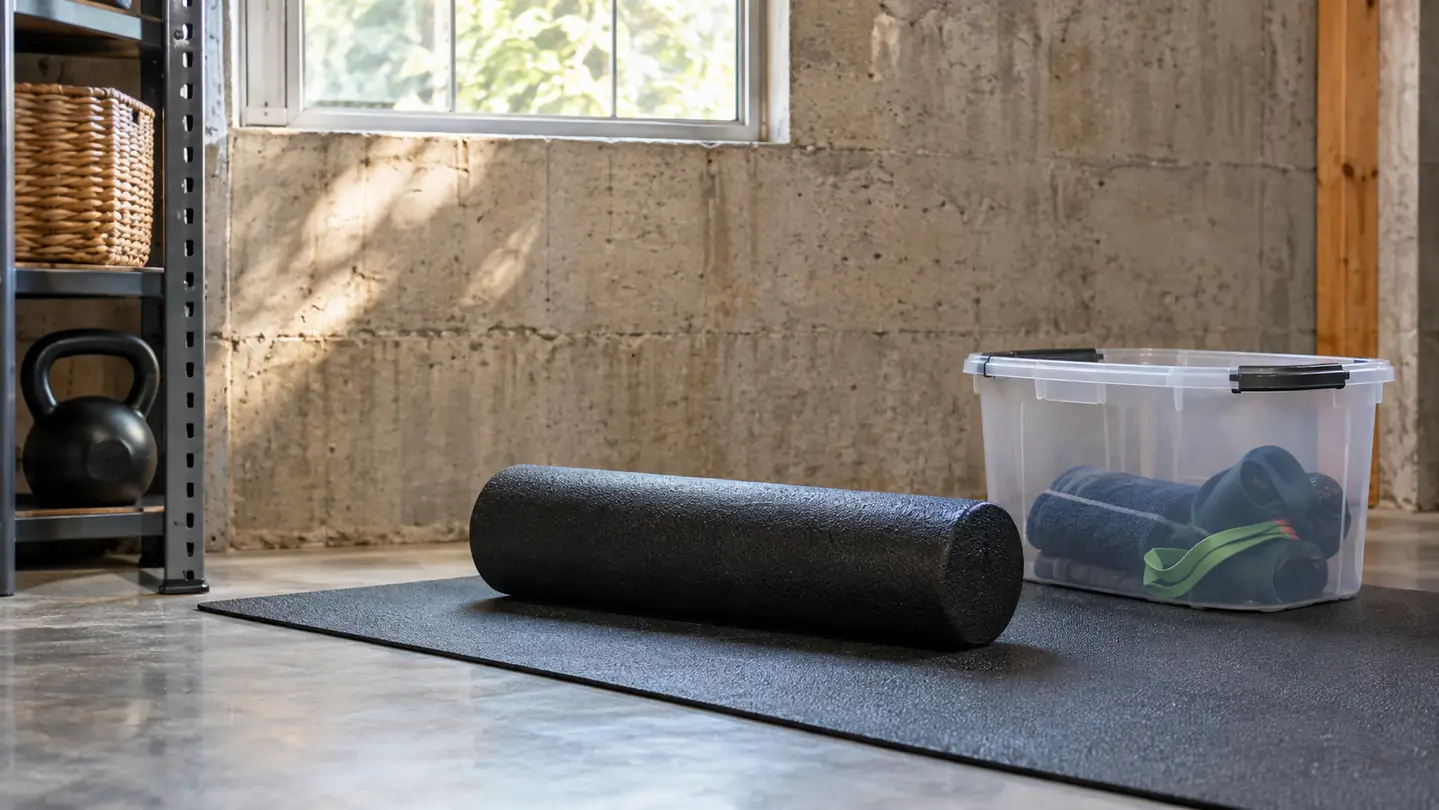
Sunday morning soccer used to end at the final whistle. Now it ends about forty minutes later, in the basement, on a rubber mat, with a Blackroll foam roller under my right calf and a knee strap waiting on the shelf above me.
I am 49, I play rec-league soccer on Sunday mornings, I run three mornings a week, and I play pickup basketball at the Y on Wednesday nights. That is not a heavy load. It is heavy enough that Monday morning started feeling like a receipt for everything I did on Sunday.
For two years my recovery plan was three minutes of toe touches in the driveway, a hot shower, and pretending the tightness in my lower back belonged to somebody else. I tried a friend's textured roller once and spent the whole time flinching. I tried doing nothing, which worked right up until the soreness below my left kneecap showed up when I built mileage too fast.
The Blackroll Standard roller is the fix that stuck. It is about 12 inches long and 6 inches across, it weighs roughly 155 grams, and it has lived in the same plastic bin in my basement corner for three years. I am not a doctor, a physical therapist, or a trainer. I am a guy with a bad right ankle and a cranky knee who needed something he would actually use on a Sunday afternoon.
The 12-inch roller that never leaves my basement mat
Smooth surface, no knobs, no settings to pick. About 12 inches long, 6 inches across, around 155 grams, with an exercise card in the box. Three years in the same spot and still the first thing I reach for.
Amazon Check Today's Price on Amazon →It fits in the ten minutes after soccer, not an hour
Most recovery routines are written by people with a free evening. I get home from Sunday soccer around noon with a lawn to mow and a wife who would like to see me before dinner. What I can actually commit to is ten minutes on the mat: two minutes on each calf, a minute on each quad, a minute down the outside of each thigh. That is the whole session. It survives because it is small enough to survive a busy Sunday.
It gets at the calf that covers for my ankle
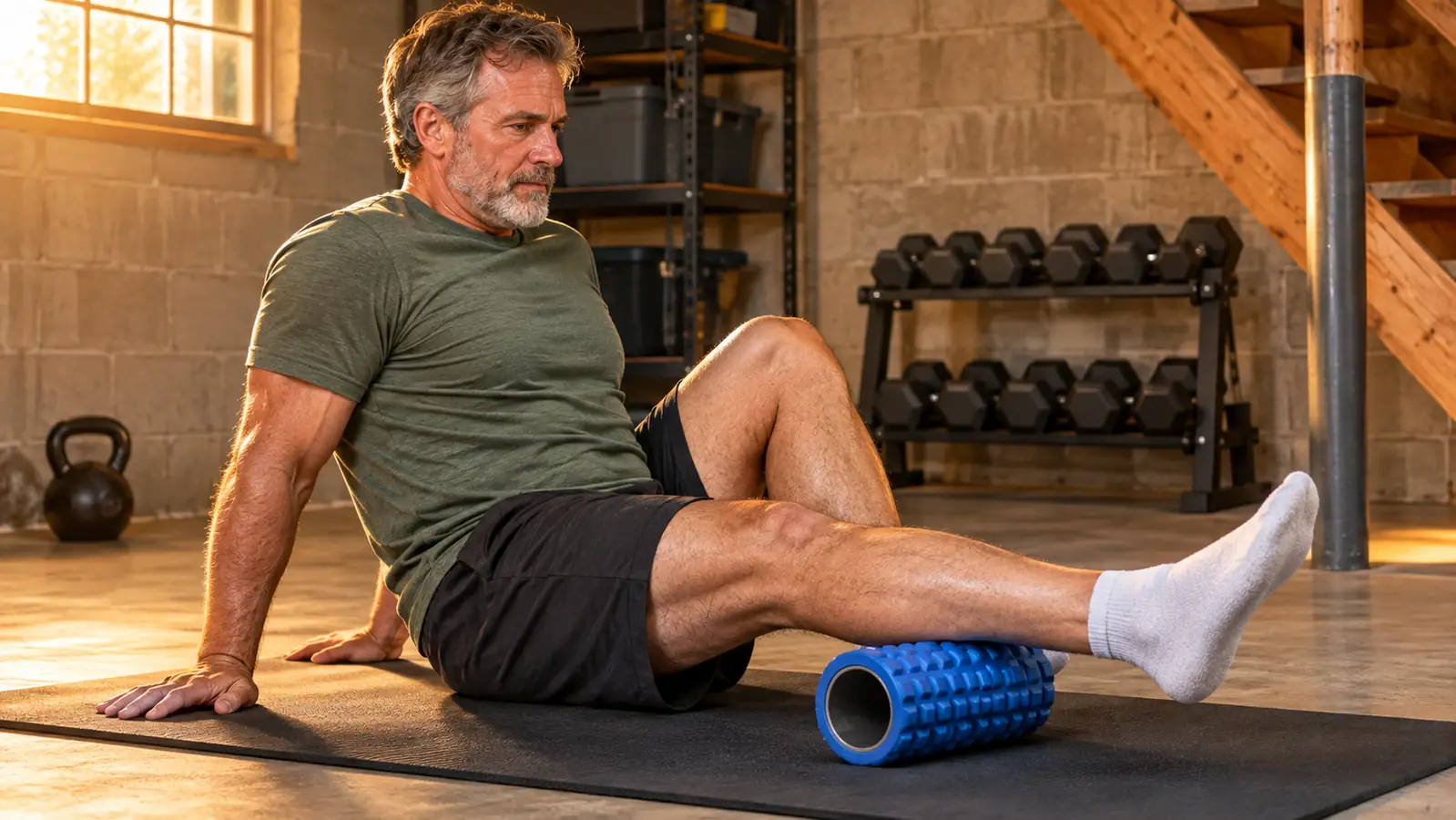
My right ankle rolled badly in a game when I was 44 and it still feels loose on uneven ground. So I favor it, and the right calf does the paying for that favor. By Sunday evening the calf is tight enough that I notice it on stairs. Two minutes rolling it slowly, stopping where it is tender instead of grinding through, and the leg feels closer to normal before bed.
It gives my quads a Sunday night job
After the game and after dinner, I roll the outside of each thigh for about a minute a side, then the front. I go slow. My rule is that if I am holding my breath, I am pushing too hard. It is not a deep-tissue session and it is not meant to be. It is ten minutes of paying attention to two muscle groups that carry most of my running volume.
It is small enough to actually put away
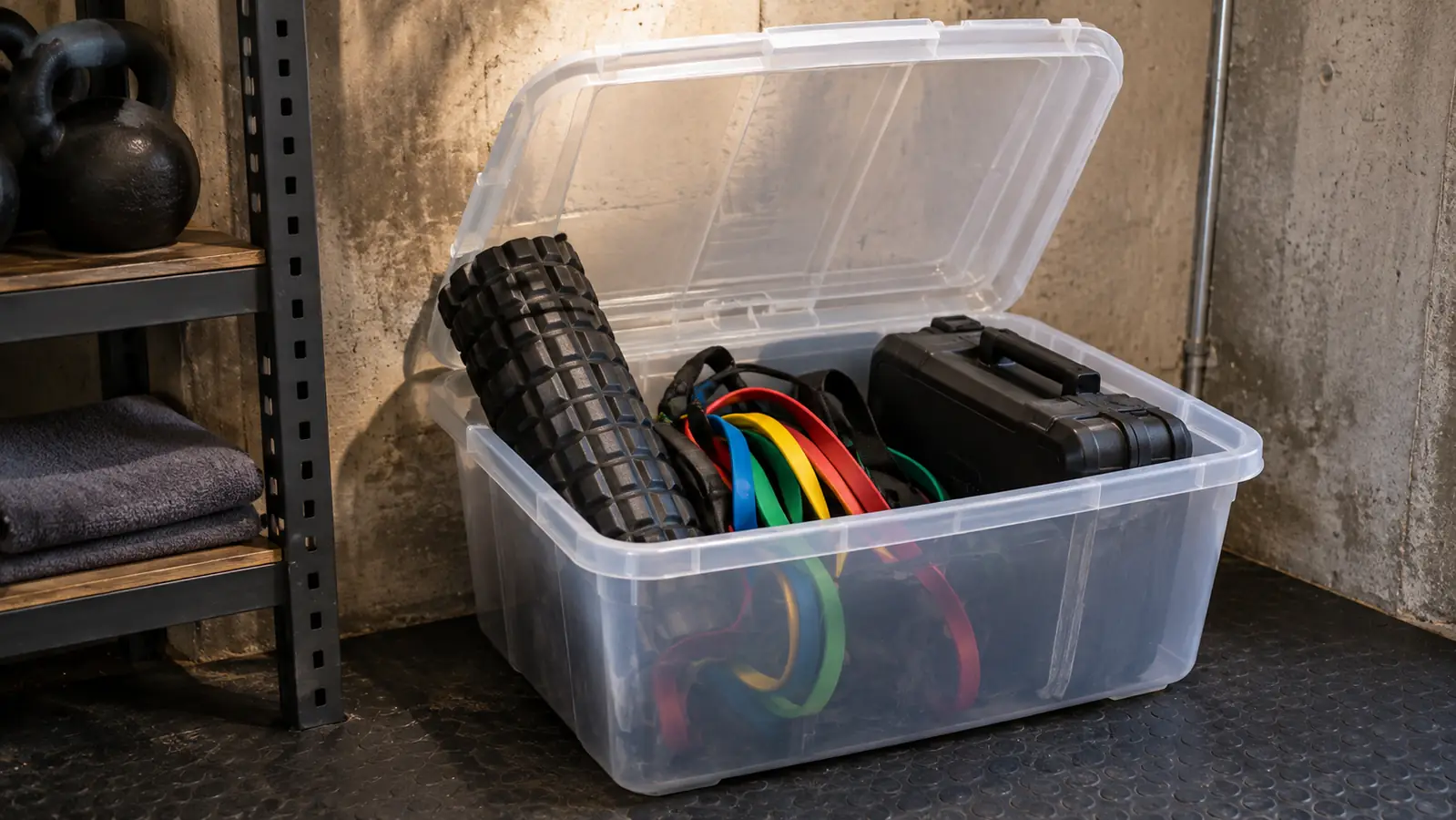
This is the reason it gets used. The roller is about 12 inches long and 6 inches across and it weighs about as much as a water bottle. It slides under the shelf in my gear bin without a fight. Every piece of recovery gear I have quit on had the same problem: it was a hassle to store, so it stayed in the garage, and then it stayed in the garage forever.
The smooth surface is easier to talk myself into
No knobs, no ridges, no texture. I borrowed a textured roller once and spent the whole session bracing instead of breathing. For a 49-year-old with a tight lower back, the smooth surface of the Blackroll is the difference between a habit and a punishment. It is dense and it holds its shape, so it does not squish flat under my weight the way the flimsy one I had before did.
It gives my lower back something to do after long drives
I am a sales manager, which means a lot of windshield time, and my lower back gets tight after a long drive and after Wednesday basketball. I do not roll directly on my lower spine. That was a rule I picked up from the physical therapist I saw after the ankle sprain, and I have kept it. What I roll is the upper back and around the shoulder blades, and my hips. Slow movement, twenty seconds a spot.
There is nothing to charge, pair, or remember
No app. No battery. No speed setting to forget. It is a cylinder of foam that does one job whenever I put weight on it. That matters more than it sounds like it should, because the gear I quit on is always the gear that needed a good week, a charged battery, or a plan I had to look up. On a bad week I can still lie down on the mat for four minutes.
It slots into the routine I already have
Sunday soccer is the ankle brace laced on the right ankle under my cleats. Wednesday basketball is the massage gun on low speed for a couple of minutes per muscle afterward. Runs are the knee strap just below my left kneecap. The roller is the last ten minutes of Sunday, after all of that. It does not compete with anything, which is why it is still happening three years later.
It makes the PT homework less of a chore
After the ankle sprain at 44 I saw a physical therapist for a handful of sessions, got a set of hip and ankle exercises, and then let them slide for years. I finally bought a set of resistance bands about a year and a half ago and started doing them twice a week. Rolling first makes the bands easier. Two minutes on the calf and the ankle work stops feeling like punishment.
Three years in, it is still the same 12 inches
I have replaced a lot of gear in three years. This Blackroll roller has not needed it. No flat spots, no chunks missing, no dead spot in the middle. The listing describes it as compact with optimal density, and my experience matches: it looks and behaves the way it did the week I unboxed it. The exercise card that came with it is still folded in the bin.
I do not roll because I think it rebuilds anything. I roll because ten minutes on the mat on Sunday night is the difference between walking into work on Monday stiff and walking in normal.
What I'd Skip
Skip the twenty-minute production. Skip rolling directly on the lower spine, the kneecap, or the ankle bone, because nothing good happens there. Skip buying three rollers to find the right one. And skip anything that promises to fix a loose ankle or a sore knee. Mine helps me feel looser, recover more comfortably, and stay consistent. If something is more than a tweak, talk to your doctor or a PT instead of a guy with a foam roller.
If Monday mornings feel like a receipt, start with ten minutes
One roller, one mat, ten minutes on a Sunday night. Mine is three years old, still dense, and still the piece of gear I reach for first.
Amazon Check Today's Price on Amazon →