
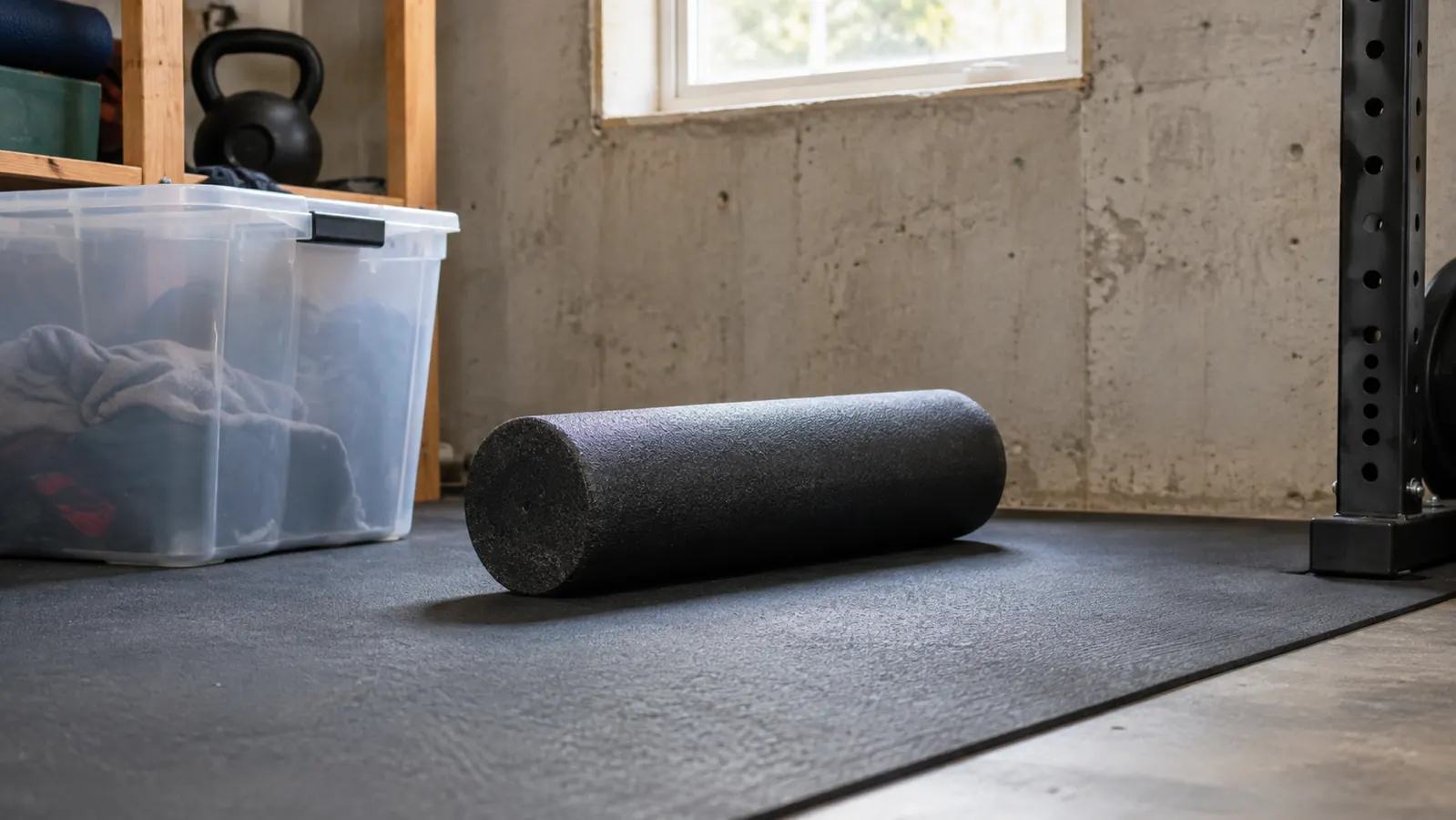
The Blackroll standard foam roller has been sitting at the bottom of my plastic gear bin for about three years now, and it is the one thing in there I have never once thought about replacing. I bought it after a Sunday morning soccer game where my right calf locked up on the drive home and I had to pull off and walk it out on a side street. I am 49. I play rec-league soccer on Sunday mornings, I run three mornings a week, and I play pickup basketball at the YMCA on Wednesday nights. That is not an elite schedule. It is the schedule of a guy in Cincinnati who would rather be a little sore than a little retired. The Blackroll was the first thing I ever bought that was purely for recovery, and everything else in the bin came after it.
Before that I ran through the usual false starts. I stretched for ninety seconds after a game and called it a program. I used a tennis ball on my calf and bruised myself doing it. I borrowed a textured grid roller from a buddy and found the bumps so aggressive that I stopped using it altogether, which is a strange way to get better at anything. The Blackroll is the opposite of that experience. It is a plain cylinder with nothing carved into it. There is no pattern to learn and no manual to lose. You put it on the floor, you put a body part on it, and you move.
The Quick Verdict
The recovery gear I have used the longest and thought about the least. Dense, quiet, and simple enough that I actually kept doing it for three years. It will not fix a bad ankle, and it is not supposed to.
Amazon Check Today's Price →Three years in the bin and it is still the first thing I grab
Smooth surface, about a foot long, and dense enough that it has not flattened out under me. If you want one piece of recovery gear that does not need a manual, a charge or an app, start here.
Amazon Check Today's Price on Amazon →How I've Used It
My recovery corner is the far end of the basement. A rubber mat on the concrete with a plastic bin beside it, and everything lives in that bin. The roller is the oldest thing in there by a wide margin. Sunday night is the ritual. Game in the morning, dinner with Lisa, then downstairs while she watches something I am not interested in.
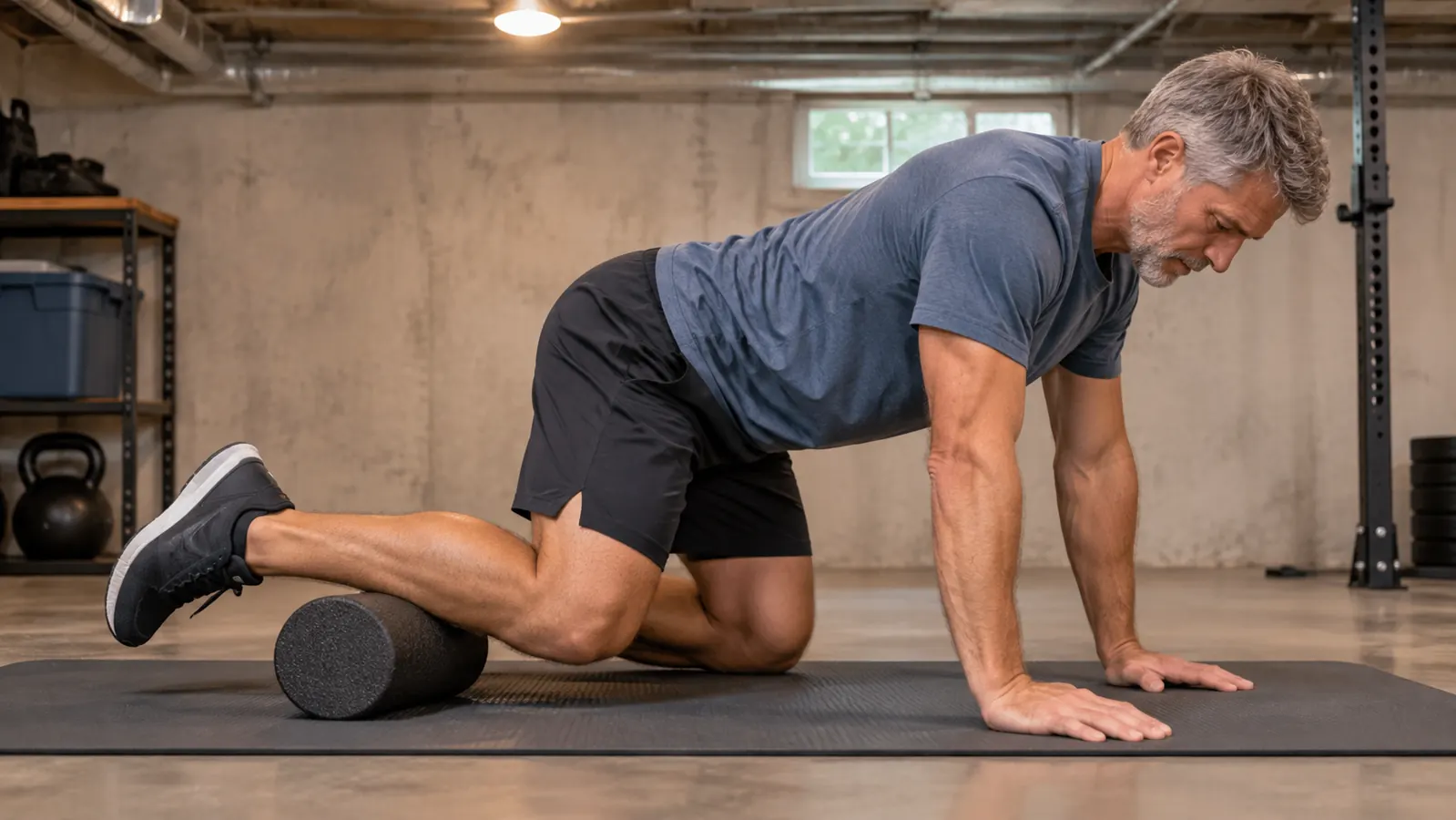
I start with my calves, one leg at a time, rolling slowly from above the ankle up to the back of the knee. Then quads, face down. Then the outside of each thigh, the IT band area, which is the spot that complains the loudest after a game on a bumpy field. Then I sit up and do my upper back, hands behind my head, rolling from mid-back up to the shoulder blades. I never roll directly on my lower spine. Not once in three years, and I would not start now.
Total time is maybe twelve minutes. I am not timing it and I am not following a protocol. The test I use is simple. Does the spot feel different when I stand up than it did when I knelt down. Most Sunday nights it does. Some nights it does not, and I do not read anything into that either way.
I also use it after the longer runs, usually the five mile mornings, when my quads are heavy and my stride has gotten short. The massage gun Lisa gave me handles most of the Wednesday basketball recovery, and the two do not really overlap. The gun is for spots I can point at with one finger. The roller is for the broad areas, the ones that are too big to chase with a handheld tool.
What Three Years of Sunday Nights Actually Looked Like
The first month was awkward. I did not know how much body weight to put on it, so I put too much, and my calves were sore in a way that had nothing to do with soccer. I eased off, let my weight settle, and stopped trying to win at it. That was the whole learning curve. There was no third thing.
By month six it was habit. Not motivation, habit. The roller lives where I can see it, on the mat, not buried under a towel. That is the only reason it survived when every other recovery purchase I have made did not. The resistance bands I bought a year and a half ago are in the same bin and I use those twice a week for the hip and ankle exercises the physical therapist showed me after I rolled my ankle at 44. That is a different job entirely. The roller does not do that job and I have never asked it to.
Here is the honest part. The roller has not fixed my right ankle. Nothing has. The ankle still feels loose on uneven ground and I still lace up the ankle brace for soccer and for basketball. What the roller does is make the Monday after a game less of a slog. My calves are less locked up, my quads are less heavy, and I am more willing to go run on Tuesday morning than I would be otherwise. That is the whole benefit. It is a real one, and it is smaller than the marketing on any of this gear suggests.
The lower back is the other one. Long drives for work and Wednesday basketball both leave it tight. I do not roll it directly. I roll the upper back and the outside of my hips and then I stretch on the mat. That combination is what helps me, and I could not honestly tell you which half is doing the work. Probably both. Probably neither, on the bad weeks.
The thing that surprised me most is how little it changed over three years. I expected a foam cylinder to go soft or go crooked, the way a cheap pillow does. This one has not. It lives in a bin, it gets knelt on, and it goes back in the bin. That is the entire relationship and it has held up better than most of the relationships I have with gear.
The Size and Density Question
The listing gives it as about 12 inches long and 6 inches in diameter, at 155 grams. In practice that means it fits between my shoulder blades without me having to fight it, and it is wide enough across that I am not balancing on a knife edge while I work a calf. A narrower roller is a different exercise, and a less forgiving one.
It is dense and it holds its shape. Three years of a 200 pound guy kneeling on it and there is no flat spot, no soft patch in the middle, no wobble when I set it down. That is the thing I would check on any roller before I bought another one. A roller that dents is a roller you stop using, because the dent tells your body where to sit and your body stops listening.
The listing gives the material as polyvinyl chloride and also lists it as PVC free, which is the kind of contradiction I would not build a purchase decision around either way. I bought it for the shape and the density, not the chemistry. There is also one exercise card in the box. I looked at it once, in the first week, and then it went in the bin with everything else.
Where It Stops Working
There are places it does not reach. The hip flexor, the spot deep in the front of the hip, is hard to get at with a cylinder this size. Same for anything small and specific, like the arch of the foot or the tissue right around the kneecap. I use a ball for some of that, or I leave it alone entirely and let it calm down on its own.
It also does nothing about the reasons I got hurt in the first place. My ankle rolled because I landed on a bumpy field with a tired leg. The roller did not change that. The brace and the band work have done more for that ankle than the roller ever has, and I would be lying if I said otherwise. Same story with the soreness under my left kneecap. The knee strap and backing off my mileage did more than rolling did. The Blackroll is a supporting piece, not the main one, and it has never pretended to be.
And there is a temptation with a smooth roller to go harder than you should, because it does not hurt in the obvious way a textured one does. I have done exactly that. I went after my left quad too aggressively the week I was building mileage back up and paid for it with two days of a thigh that felt bruised to the touch. Talk to a doctor or a PT before you start working on anything that is more than a tweak. I am not either one of those, and the only time I have been to a physical therapist in my life was that handful of sessions after the ankle sprain.
How It Fits With the Rest of My Gear
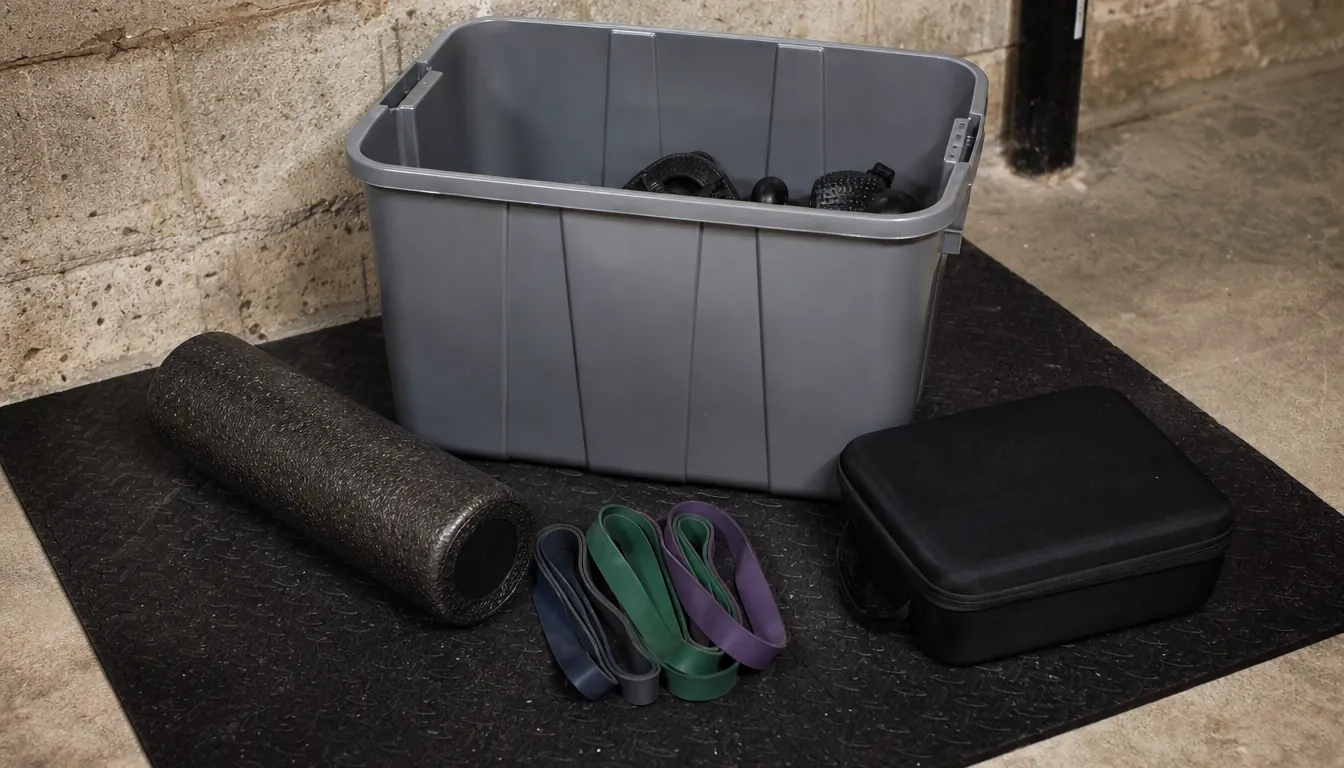
Everything in the bin has one job and only one. The ankle brace goes on the right ankle, laced over a thin sock, under the cleats on Sunday and at the Y on Wednesday. The knee strap goes below the left kneecap for runs and nothing else, and the second strap of the pack stays in the bin as a spare. The massage gun is for the spots I can point at, on low speed, a couple of minutes per muscle, and never on the ankle bone, the kneecap, the spine or the neck. The bands are for the ten minute warm-up before soccer and the twice weekly prehab session. The roller is for the broad areas on Sunday night.
That division of labor is why it has lasted. I never asked the roller to be the whole program. If I had, I would have gotten frustrated in month two and it would be under the basement stairs with the ab wheel and the jump rope.
What I Liked
- Dense and holds its shape. No flat spot and no soft patch after three years of regular use.
- About 12 inches long and 6 inches across, so it fits between the shoulder blades and is wide enough to be stable under a calf.
- Smooth surface with no texture to fight, which is why I did not quit on it the way I quit on a borrowed grid roller.
- Light at 155 grams, easy to move around the mat one handed or toss back in the bin.
- Simple enough that the habit survived three years without an app, a charge or a program to follow.
Where It Falls Short
- Will not reach small, specific spots like the hip flexor or the arch of the foot.
- The smooth surface makes it easy to press harder than you meant to without noticing until the next day.
- Does nothing about the cause of an injury. That is the brace, the strap and the exercises.
- One exercise card is not a program. You need to know what you are doing, or ask someone who does.
Three years of a 200 pound guy kneeling on it and there is no flat spot, no soft patch in the middle, no wobble when I set it down.
Who This Is For
Weekend athletes who are already doing something else and want one more low effort piece of the routine. If you play something on Sunday, run a few mornings a week, and you have noticed that Monday now feels worse than it used to, this is a reasonable place to start. It is also good for the person who bought a textured roller, found it too aggressive, and quietly stopped using it. That was me with a borrowed one, and the plain surface is the reason I stuck with this.
It is also for anyone who wants gear that does not need charging, a subscription, or a manual. There is nothing on it to break and nothing on it to update. You kneel on it, you move, you put it away. That is the entire product.
Who Should Skip It
If you have a specific diagnosis, a recent injury, or pain that wakes you up at night, skip the gear and go see somebody who knows what they are looking at. A foam roller is not a substitute for that and I would not pretend otherwise. Talk to your doctor or a PT.
Skip it too if you want something that reaches small spots. The hip flexor, the arch of the foot, the tissue right around the kneecap, a cylinder this size is the wrong tool for all three. And if you already own a roller you use consistently, this will not change your life. It is a better version of a thing you already have, not a different thing. The upgrade is real but it is quiet.
The oldest thing in my bin is the one I still reach for first
Smooth, dense, about a foot long, and still holding its shape after three years of Sunday nights. If you want one piece of recovery gear that does not need a manual or a charge, start here.
Amazon Check Today's Price on Amazon →