
Short answer: if your problem is one cranky spot and you want to lean on it, a textured grid roller does that better than the one I own. If your problem is that you keep buying recovery gear that ends up buried in a plastic bin, and you want the roller you will still pull out on a Sunday night three years from now, buy the Blackroll. That is the whole comparison in two sentences. The rest of this is why.
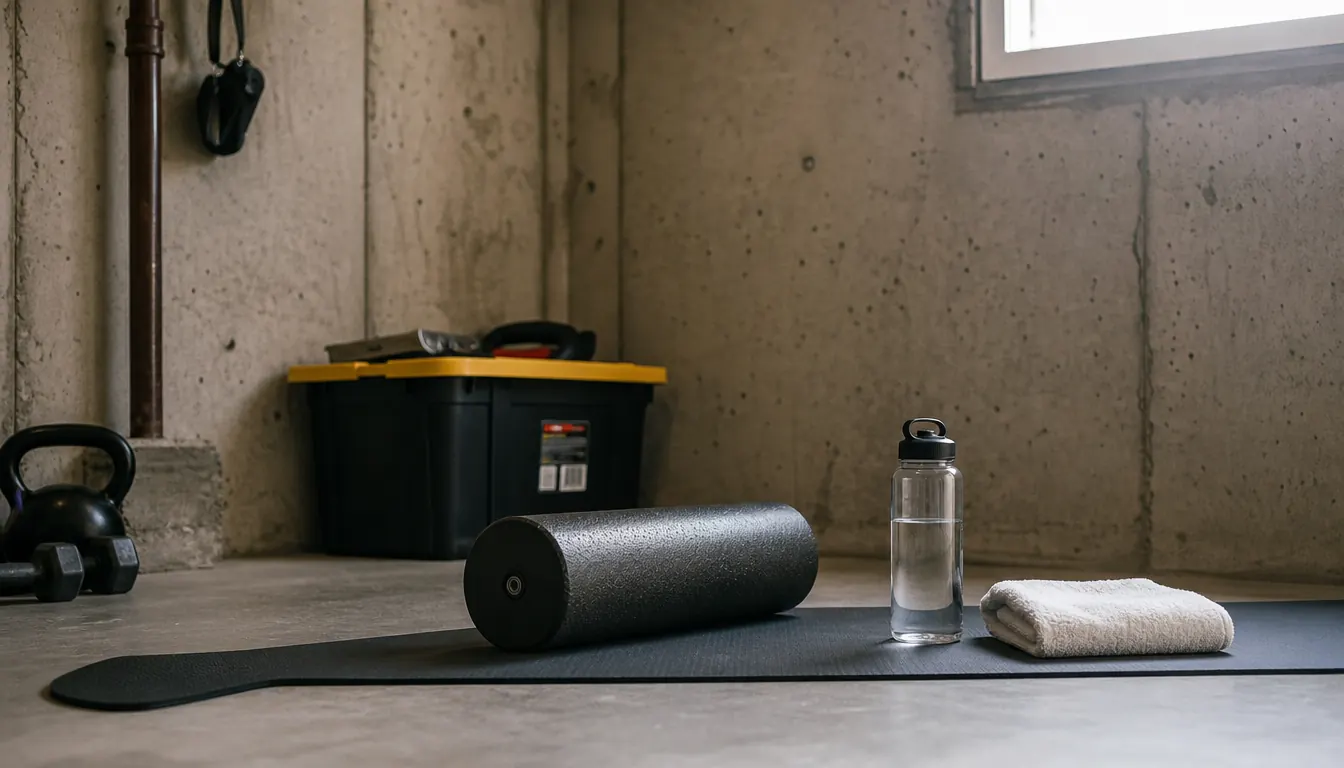
I am 49, I live in Cincinnati, and my week looks like this. Rec-league soccer on Sunday morning, a run three mornings a week, pickup basketball at the Y on Wednesday nights. That is not an athletic resume. It is a body that needs maintenance and a guy who is not naturally good at maintenance. My Blackroll Standard has lived in the plastic bin in my basement recovery corner for about three years, next to a massage gun and a set of loop bands. The textured grid rollers at the Y and I are also well acquainted, mostly on Wednesday nights when my calves start complaining before I have made it back to the car. So this is a comparison from the mat, not from a product listing. Here is the side by side, then I will walk through where each one actually earns its place.
| Blackroll Standard | Textured grid roller | |
|---|---|---|
| Surface | One continuous smooth face. Contact spreads across the whole roll. | Raised grid and ridges. You feel separate pressure points instead of one broad one. |
| Pressure | Whatever your body weight gives you, and it changes the second you ease off. | Sharper pressure over a smaller area, with less of it under your control. |
| Reaching tight spots | Best on big areas: calves, quads, outside of the leg above the knee, upper back. | Ridges get around the edges of a muscle group and into narrow strips. |
| Cost of entry | Costs more than the grid roller for roughly the same footprint on the floor. | Costs less, and the gym version is already sitting in a rack. |
| Durability over years | One piece, dense, holds its shape. Mine is three years in and still round. | Hollow core with thin foam between the ridges, which is where dents start. |
| Simplicity | Nothing to figure out. Ten minutes and you are done. | You spend the first few sessions working out which ridge goes where. |
| Size options | One size: about 12 inches long and 6 inches across. | Sold in a range of lengths, including long ones for lying on. |
What the Texture Is Actually For
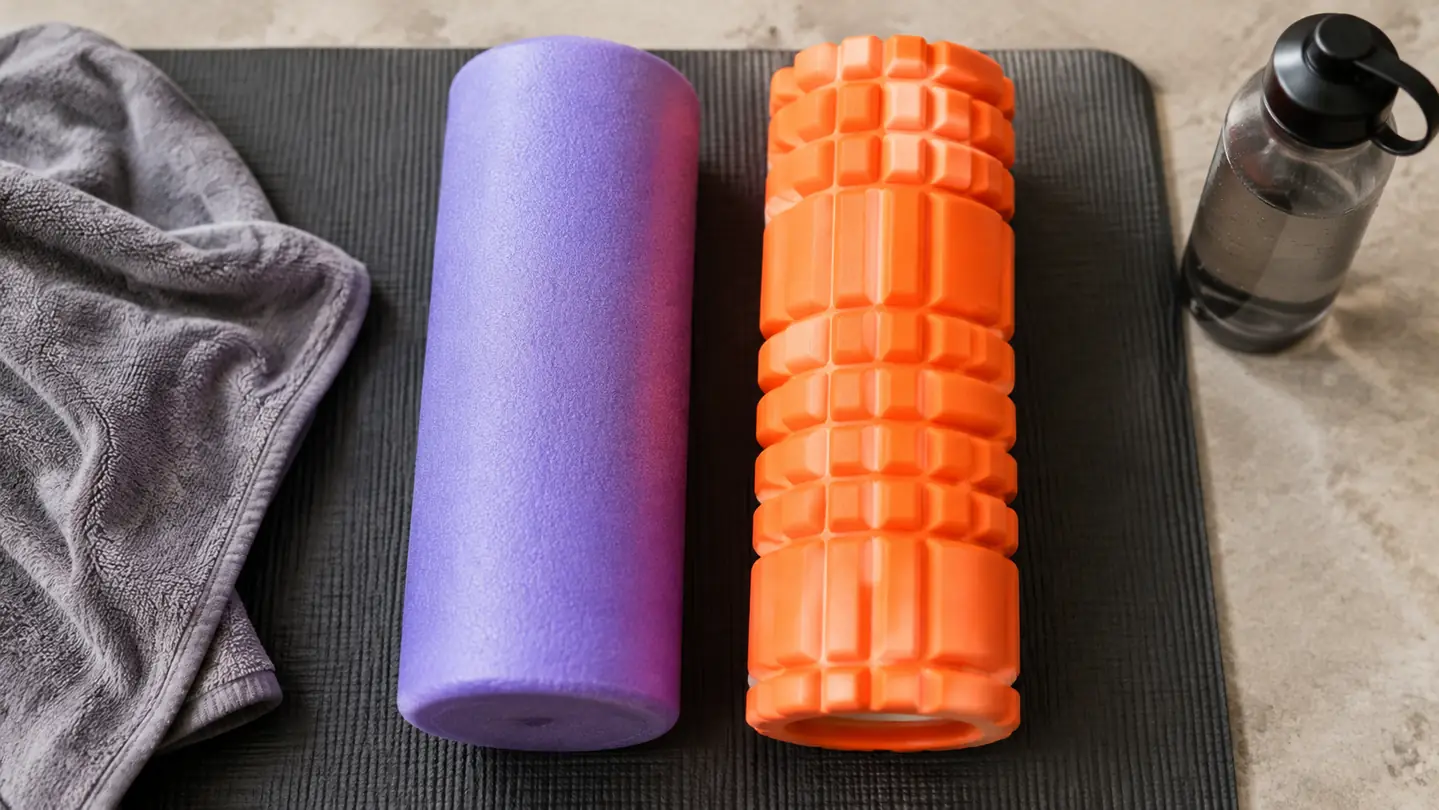
A smooth roller spreads force. The whole face touches you at once, so your body weight gets distributed along the length of the muscle. A textured roller does the opposite. The ridges touch you in bands and the valleys between them touch you not at all, so the same body weight lands on a much smaller area. That is the entire design idea, and it is a good one. If you are working on a calf or a quad and you cannot comfortably put more weight through it, texture is how you get extra pressure without extra load. The roller concentrates it for you.
That is also where the trouble starts. With a smooth roller, pressure is a dial you control with your own body weight. You lean in, you back off, you feel the change while it is happening. With ridges, a chunk of the pressure is baked into the surface. Backing off helps, but the contact points are still contact points. I have come off a grid roller on a Wednesday night feeling like I did some work, then felt twitchy in the calf on Thursday's run. Nothing dramatic. Just more than I needed. That is a me problem as much as a roller problem, but it is worth knowing before you go hunting for the most aggressive surface in the gym.
Here is the specific thing that made me notice. On a Wednesday in February I got to the Y early and used one of their grid rollers on my right calf for maybe four minutes before basketball. The calf felt awake for the first ten minutes of the game and then felt like a calf again. The following Wednesday I did the same four minutes at home on my own roller before driving over and had the same experience, minus the sharper feeling during the roll itself. Two Wednesdays is not a study. It is the kind of thing you notice when you are 49 and paying attention to your legs for the first time in a decade. But it is why I stopped assuming the aggressive surface was doing more work than the plain one.
And here is the part I keep coming back to. Texture is convincing. You feel more, so it reads as doing more. My Blackroll feels like almost nothing by comparison, especially on a first pass when everything is cold and stiff. But feeling more and getting more are two different things, and I have never been able to tell the difference in how I move the next morning. If you want the sensation, buy the sensation. If you want the thing you will still be using in three years, that is a different question. I am not a physical therapist and I am not going to pretend a foam roller does anything beyond helping me feel looser and stay consistent. Anything past a tweak is a conversation with your doctor or a PT.
Three years in, mine is still round and still dense. The grid roller at the Y has a dent in it the size of my thumb.
Where the Blackroll Wins
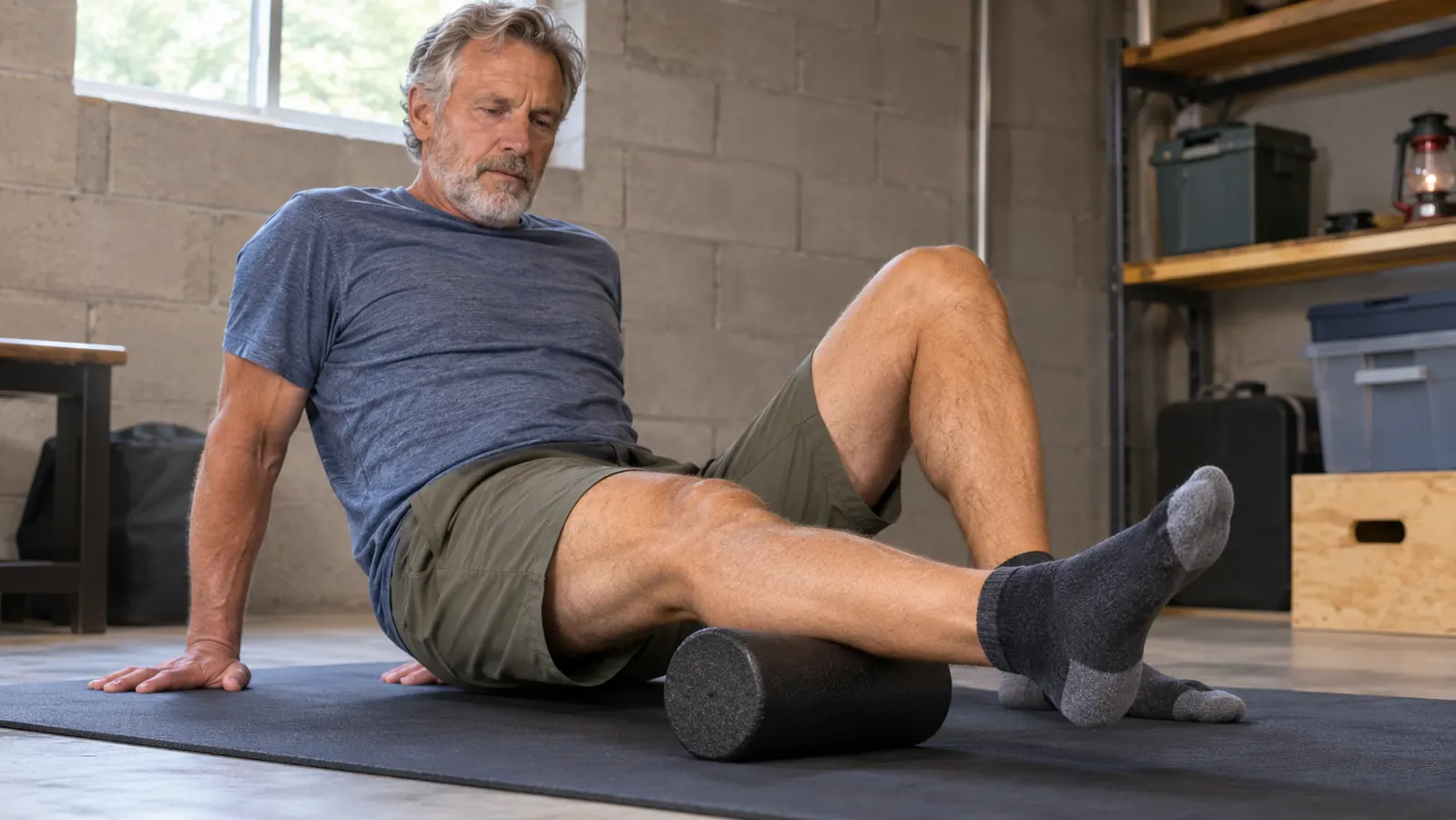
Durability first, because it is the reason I stopped shopping. Mine is one piece of foam, 12 inches long and 6 inches across, 155 grams, and it has been rolled on, dropped, shoved into a bin and hauled to a hotel room a couple of times. It holds its shape. It is dense in a way that does not change with the weather or with how many Sunday nights I have put into it. Grid rollers have a hollow core, and the foam between the ridges is thin by design. Thin foam over a hollow center is exactly where dents come from. Every grid roller I have picked up at a gym has that tired spot in the middle where everybody rolls their quads. Mine does not have one yet.
Some numbers, since I like numbers. At 155 grams it is light enough that I have thrown it in a duffel for a weekend trip without thinking about it, which is not something I would say about the massage gun. At 12 inches long and 6 inches across it fits between my shoulder blades without me having to wiggle around, and it covers a calf in one pass instead of two. It came with a single exercise card, which I looked at once and then never needed, because there is not much to learn. Three years of Sunday nights with me on top of it and the surface still reads flat when I run my hand along it. That is the whole durability review. Cheap foam gives up and this has not.
Second is simplicity, and I mean that as a real feature rather than a shrug. There is nothing to figure out. No ridge pattern to learn, no choosing which grid goes where, no wondering whether you are on the right part of the surface. I put it on the rubber mat, roll the calves, the quads, the outside of the leg above the knee, and the upper back, and I am done in ten minutes. I stay off the lower spine with it and always have. That matters more than it sounds, because the gear I actually use is the gear that asks nothing of me at nine at night. The Blackroll asks nothing.
Where the Grid Roller Wins
Cost and access, no contest. The grid roller costs less, and it is also the one already sitting in a rack at your gym, which means you can find out whether you like rolling before you spend anything at all. If you are not sure you will keep this habit past February, that is not a small thing. I will put a finer point on it, because I have been on the wrong side of this. I have bought running shoes on sale that turned out to be the wrong shoes, and I have bought gear for a hobby I did not end up having. Cheap is only a mistake when you already know you will use the thing. Recovery gear is exactly the category where you do not know yet. A grid roller at the Y costs you nothing to try for six weeks. If you are still doing it in March, go spend real money on the version that lasts. If you are not, you saved yourself a purchase and a square foot of basement floor.
The other place texture genuinely wins is getting around the edges of a muscle group. The pocket just below the outside of the knee. The strip along the shin. The area around the shoulder blades, where a smooth roller covers the whole back at once and you cannot get much specific pressure anywhere. The ridges do the aiming for you, and on a spot you cannot load heavily with body weight, that is a real advantage. If your issue is one narrow, stubborn area that a smooth surface keeps sliding past, the grid roller is the more useful tool. That is an honest win, and it is why I still use the ones at the Y instead of pretending my roller covers everything.
The roller that is still round after three years
The Blackroll Standard is the one piece of recovery gear that has survived my basement bin without losing its shape or its density. 12 inches by 6, one piece, dense, and ten minutes on the mat on a Sunday night.
Amazon Check Today's Price on Amazon →Who Should Buy Which
Buy the Blackroll if you are past the experiment stage. If you have already been rolling on a gym roller for a few months and you know you will keep doing it, buy the one that will still be round in three years. It is the better tool for big areas, the easier tool to reach for when you are tired, and the one that will not need replacing. If you are the sort of person who keeps gear in a plastic bin and wants to reach in and grab it without thinking about it, this is that piece of gear. It has been mine since before the massage gun and it will outlast it.
One piece of context on my own setup, because it explains the recommendation. There are five things in the bin and on that mat: the Blackroll, the massage gun Lisa gave me for my birthday last year, a patella strap for my left knee, a set of loop bands, and the spare strap from the two pack. The ankle brace lives in the soccer duffel instead, not the bin, because it needs to be there on Sunday morning. Every one of those has one job. The roller's job is the ten minutes on a Sunday night after soccer while my quads and calves are still warm and stupid. It does not get used on the knee, because that is the strap's job. Gear that does one job well is gear that stays out of the bin. Gear that is supposed to do everything ends up in there and stays there.
Buy the grid roller if you are testing the habit, or if your problem is genuinely narrow. One spot, one stubborn strip, one area you cannot get enough pressure into with a smooth surface. It costs less, it is everywhere, and for that specific job it works better than mine does. One more thing, and then I will get off the soapbox. If you have an actual injury and not just a cranky calf, none of this is the answer. I rolled my right ankle badly in a soccer game five years ago and it still feels loose on uneven ground. What helped most was a handful of sessions with a physical therapist and the boring hip and ankle exercises I let slide for years afterward. Talk to your doctor or a PT. A foam roller is maintenance, not treatment.
Ten good minutes beats another bin full of good intentions
If you already know you will use it, skip the upgrade cycle. The Blackroll Standard is the version you buy once and pull out of the bin for years.
Amazon Check Today's Price on Amazon →