
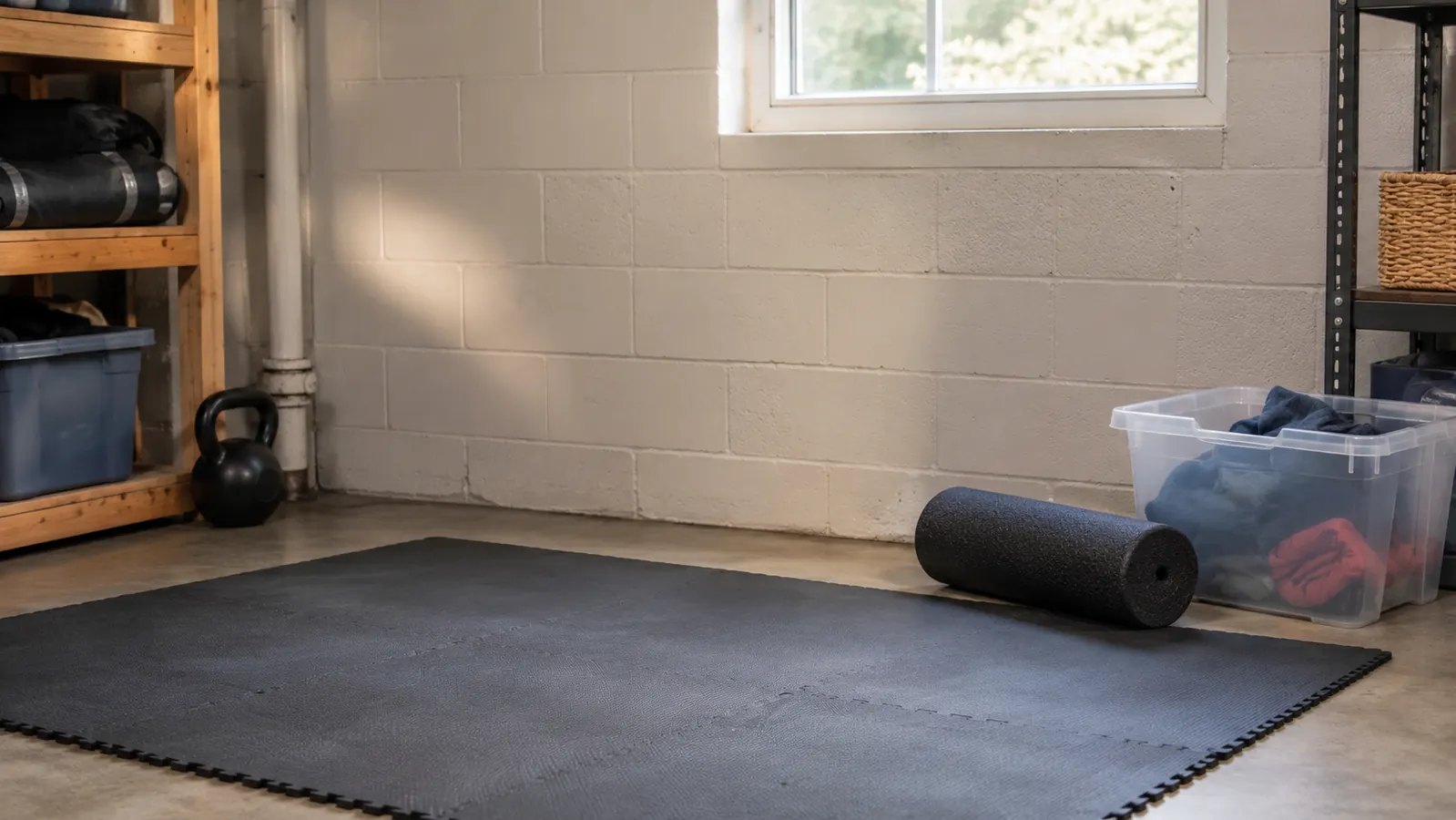
Ten years ago I would have called this a warm-up. Now I call it prehab, mostly because my right ankle has opinions. I rolled it badly in a Sunday rec-league soccer game at 44 and it has felt loose on uneven ground ever since. I saw a physical therapist for a handful of sessions after that and he handed me a short list of hip and ankle exercises. I did them for about a month, felt better, and quit. That was the mistake, and it took me five years to figure out it was the mistake.
About a year and a half ago I got serious about that list again. What made it stick this time was a set of Fit Simplify resistance loop bands I bought for the basement. Five latex loops, a carry bag, a small instruction booklet. They are not a treatment and they are not rehab. They are the reason I actually do the boring exercises twice a week instead of thinking about doing them while I watch something on my phone. Here are ten reasons the Fit Simplify set earned a permanent spot in the bin.
The Bands I Actually Reach For on a Sunday Morning
Five latex loops at five resistance levels, a carry bag, and an illustrated booklet, which matters more than it sounds when you cannot remember what a physical therapist showed you five years ago. Mine live in the gear bin in the basement and in the soccer duffel on weekends.
Amazon Check Today's Price on Amazon →Five Resistance Levels Means You Never Outgrow the Set
The Fit Simplify set is five latex loops at five different resistance levels, from extra light up through heavy, and that range is why it stays useful. Ankle work gets a lighter loop. Glute bridges and lateral walks get a heavier one. Each loop is 12 inches long and 3 inches wide with a quarter inch of thickness, so there is enough material to go around both ankles without it biting in. I nested all five together the day I opened them, which means I grab one thing out of the bin instead of digging for a specific band.
Ten Minutes Before the Game Beats an Hour of Stretching After
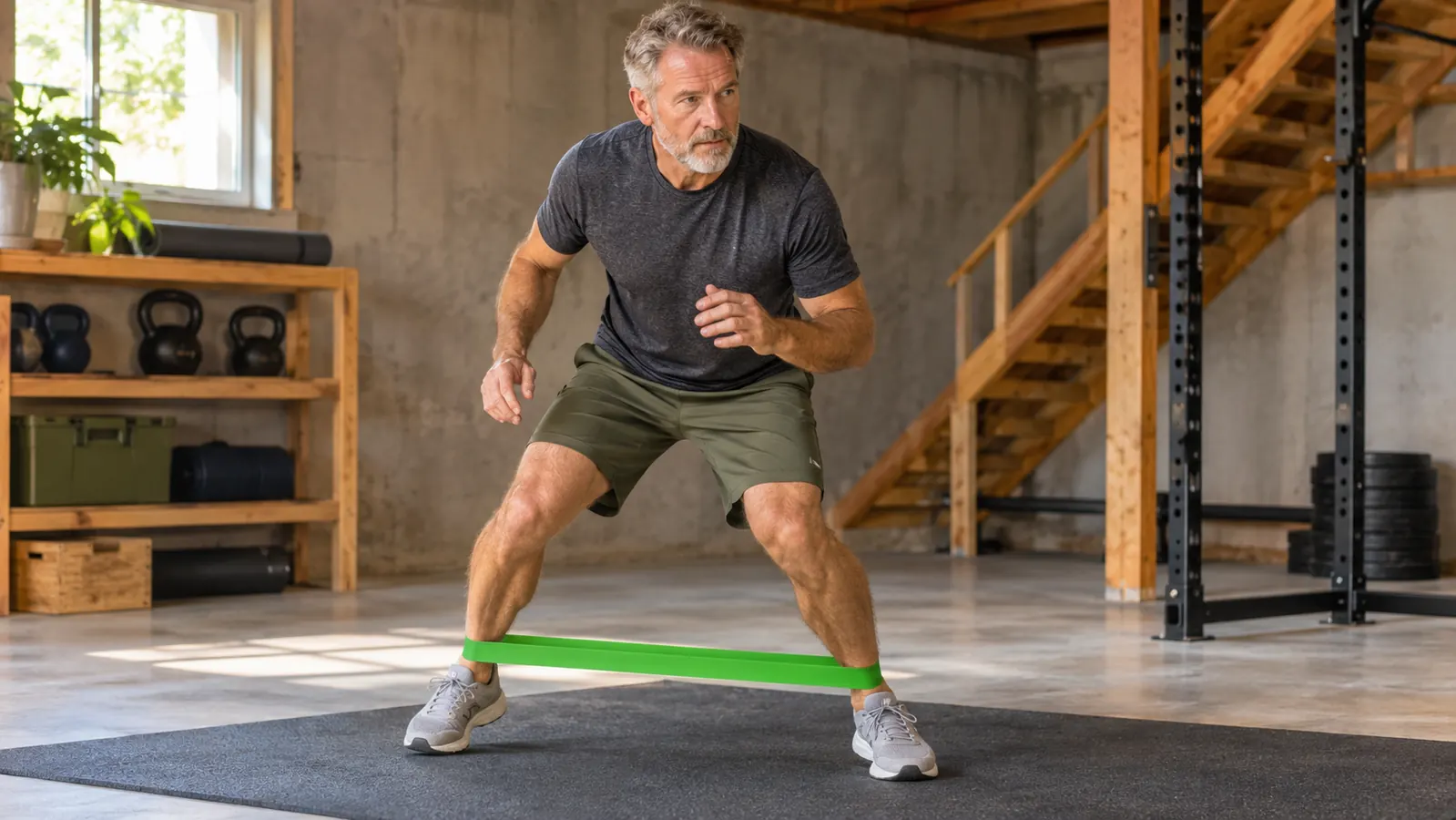
My Sunday routine used to be arrive, jog two laps, play. Now it is arrive, ten minutes of lateral band walks, glute bridges and ankle work on the sideline, then play. I am 49 and I play rec league with guys in their twenties. The band work does not make me faster. What it does is get the hip and the ankle actually moving before I ask them to do something stupid. I am not the guy limping to the car afterward near as often as I used to be.
It Makes the Old Physical Therapy Homework Portable
Three and a half ounces is the whole set. The carry bag rides in my soccer duffel on Sundays and comes out in hotel rooms when I travel for work. That matters more than it sounds. The exercises I was given after the ankle sprain were bodyweight and band work, and band work is the part that is hard to do in a hotel room with no equipment and no floor space you trust. Now it is not hard. The bag is in my laptop case and the mat is a towel.
Lateral Walks Hit the Hip in a Way Stretching Never Did
The one exercise I never skip is the lateral walk. Loop the band around both ankles, get into a half squat, step sideways. Ten steps one way, ten back. It works the outside of the hip in a way that a standing stretch never did for me. That is the spot that quietly checks out when I add miles too fast, and it is the spot that feels different on a Monday when I have been keeping up with the band work. I do it in the basement. It takes ninety seconds.
Glute Bridges Finally Feel Like a Real Exercise
A glute bridge with a loop above the knees is a different exercise than a glute bridge without one. Without the band I can fake it, and I do. With the band, my knees want to fall inward and I have to actively push them out, which is the whole point. Two sets of fifteen, twice a week, on the rubber mat in the basement. Four minutes including the getting down on the floor and the getting back up, which at my age is its own event.
One Bag, One Bin, No Excuses
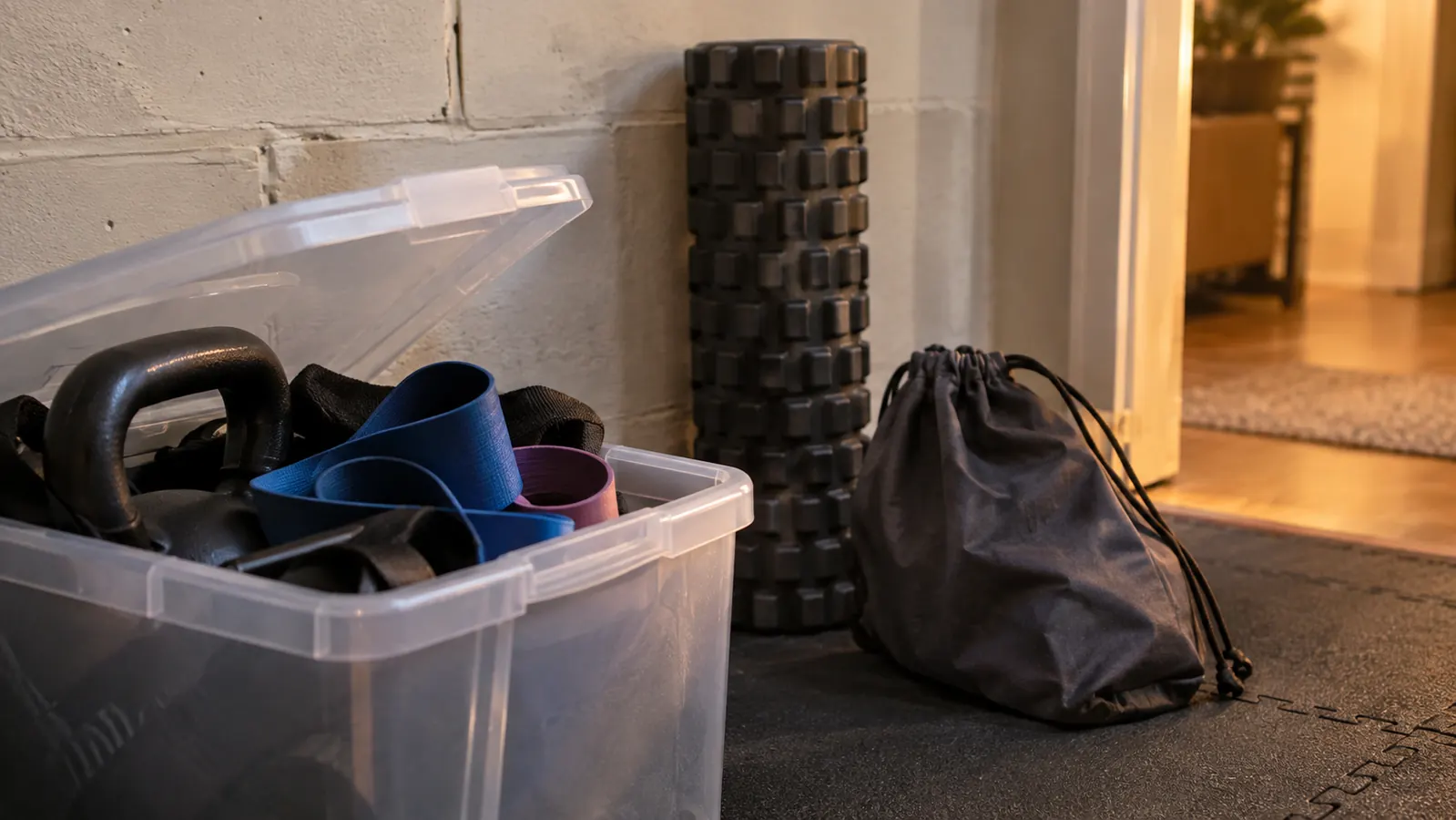
Everything I use for recovery lives in one plastic bin in the corner of the basement, on top of a rubber mat. The bands are the smallest thing in there and the only thing I never have to hunt for, because they have their own bag and the bag goes back in the bin. If gear is annoying to get out, I do not get it out. That is the whole trick, and it took me about twenty years to learn it.
The Instruction Booklet Is the Part I Didn't Expect to Use
The set comes with an instruction booklet full of illustrated exercises. I figured it was filler. Then I realized I could only remember two of the things I was shown after the ankle sprain, and I had been doing those two over and over for years. The booklet gave me back the rest of the list. If you are five years out from a physical therapist visit and working from memory, that booklet is worth as much as the bands.
Twice a Week Is a Program I Can Actually Keep
Twice a week, ten minutes, in the basement. Plus the Sunday warm-up. That is the entire thing. It is not impressive and it does not make a good story at a cookout. It is also the only version of this I have ever stuck with for a year and a half straight. The bands made it easy enough to be boring, and boring is exactly what I needed after years of starting over every spring.
It Does One Job, and It Does Not Compete With the Rest of the Bin
I have a foam roller, a massage gun, a lace-up ankle brace and a knee strap in that bin too, and not one of them does the band's job. The roller is for after. The gun is for after. The brace is for game day. The bands are the only thing in there I use before anything hurts, as maintenance instead of cleanup. Different tools, different jobs. It took me a while to stop expecting one of them to cover everything.
It Is the First Thing I Would Replace If I Lost the Bin
If the basement flooded tomorrow, the Fit Simplify loops would be the first thing I reordered. Not because they are fancy. Because they are the item that made the rest of the routine happen. Everything else in that bin is something I reach for once something already hurts. The bands are what I reach for on a random Tuesday when nothing hurts yet, and that is the only time this kind of work ever gets done.
Three and a half ounces of latex in a fist-sized bag is the reason a 49-year-old sales manager actually does his ankle exercises on a Tuesday night.
What I'd Skip
Two things. First, skip the urge to start on the heaviest loop. The set goes up to heavy, and heavy is not the goal in week one. Start light, get the movement clean, and move up when the current loop feels like nothing. Second, and this is the bigger one, skip the idea that a band fixes an injury. It does not. My right ankle still feels loose on uneven ground and it probably always will. When something is more than a tweak, when it swells or gives way or keeps you up at night, that is a conversation with your doctor or a physical therapist, not a conversation in your basement. The bands are for the ten minutes of maintenance in between. Nothing in that set makes a health claim and neither do I.
Ten Minutes Twice a Week, and a Bag That Lives in Your Duffel
Five latex loops at five resistance levels, a carry bag and an illustrated booklet. Nothing in the set promises to fix anything. It just makes the boring work easy enough to keep doing, which is the part I got wrong for five straight years.
Amazon Check Today's Price on Amazon →