
The Fit Simplify loop bands came into my house a year and a half ago for one reason. I had finally run out of excuses about the hip and ankle exercises a physical therapist handed me after I rolled my right ankle at 44, in a rec league game on a field that had no business being that bumpy. I did those exercises for about three weeks that fall, decided I felt fine, and let them slide for the next several years. That is the honest version, and it matters here, because it tells you what I actually needed. Not a home gym. A short list of boring movements and a way to do them without driving anywhere. Around the same time I got serious again, a teammate on my Sunday soccer team handed me a set of tube resistance bands with handles and told me to try them for a month. He swears by them and he has the shoulders to prove it. I used both styles side by side for four weeks, then kept using one and gave the other back.
Here is the short version before the long one. Loop bands are for small, unglamorous work. Glute bridges, lateral band walks, ankle work, the ten minutes before a game that keeps my right ankle from feeling like it is about to fold again. Tube bands with handles are for pulling and pressing, where your hands are the anchor. If the goal is staying on the field at 49, the loops do more of the job. If the goal is a workout you can load up, the tubes do. I own the Fit Simplify set and it has been in my soccer duffel for eighteen months. I gave the tubes back, and I have borrowed them twice since.
| Fit Simplify Loop Bands | Tube Bands With Handles | |
|---|---|---|
| Grip | Nothing to hold. You step on the loop or run it around both legs. | Handles you grip, closer to a cable machine. |
| Resistance steps | Five latex levels, extra light up through heavy, one band at a time. | Tubes clip together, so you stack two for more load. |
| Hip and ankle work | Goes around both legs above the knees or around the ankles, which is the exact setup for band walks and ankle work. | Handles swing and catch once the band is around both legs. |
| Anchoring | Tie the loop around a post or shut it in a door. No hardware. | A door anchor and clips get it set up in seconds. |
| Portability | The whole set weighs 3.5 ounces and rolls into the carry bag. | Tubes, handles, anchor and bag take real room in a duffel. |
| Upper body pulling | You can row with an anchored loop, but the latex digs into your palm after a few sets. | Handles make rows and presses comfortable for actual sets. |
| Care | Latex, so keep it out of a hot car and check it for nicks. | Sleeved tubes hold up, but the clips and handle joints are what fail. |
| Best for | Warm-up, prehab homework, glute and ankle work. | Loaded strength sets and upper body work. |
Where Fit Simplify Loop Bands Win
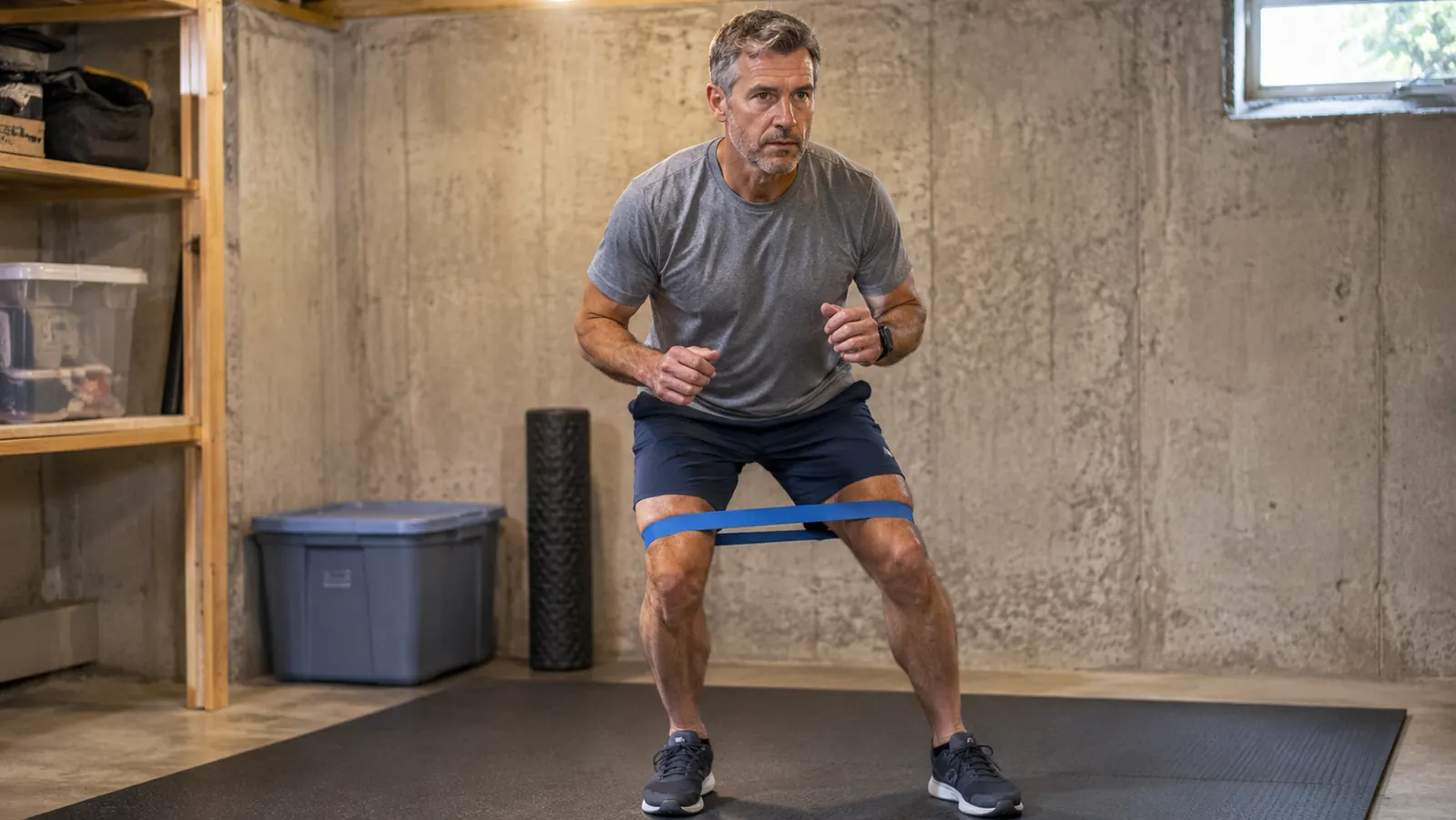
What a loop band does that a tube band cannot is go around both of your legs at once and stay there. Lateral band walks are the single most useful thing I do before soccer, and I mean that plainly. I put the band just above my knees, drop into a quarter squat that is shallower than it was at 40, and shuffle across the width of my basement mat, which is about six feet, then back. Twelve steps each direction, twice through. My hips loosen up, my right ankle tracks straighter, and by the second pass I stop noticing that small catch I get when I plant on uneven ground. My knees push out instead of caving in when I get tired late in a game. With the tube set, those same walks are a mess. The handles swing and knock against each other, they catch on the hem of my shorts, and I spend half the set rearranging instead of moving. That is not a knock on tubes. It is what happens when a tool built for your hands gets wrapped around your thighs.
Second, the whole set weighs 3.5 ounces and rolls into a bag small enough to live in my soccer duffel. The individual loops are 12 inches long, 3 inches wide and a quarter inch thick, so they fold up flat, and the bag is about the size of a fist. That is the entire reason the warm-up actually happens. If I had to dig through a bin in the basement before a 9 a.m. game in October, I would skip it, and I would tell myself I would do it Monday. The five levels matter more than I expected. The extra light band is what I started with on ankle work, and one of the heavier bands is what I use now for glute bridges. The instruction booklet has illustrated exercises, which is how I rebuilt a routine I had half forgotten from a handful of sessions five years ago. I am not a trainer. I needed the pictures, and I am not embarrassed about that.
Eighteen months in, they have held their shape. I check the edges for nicks every few weeks, mostly because latex is latex, and I keep them out of the car in July, which in Cincinnati is not optional. The band I reach for most has stretched a little, which is normal and honest and the reason a five level set makes sense instead of one band you own forever.
Where Tube Bands With Handles Win
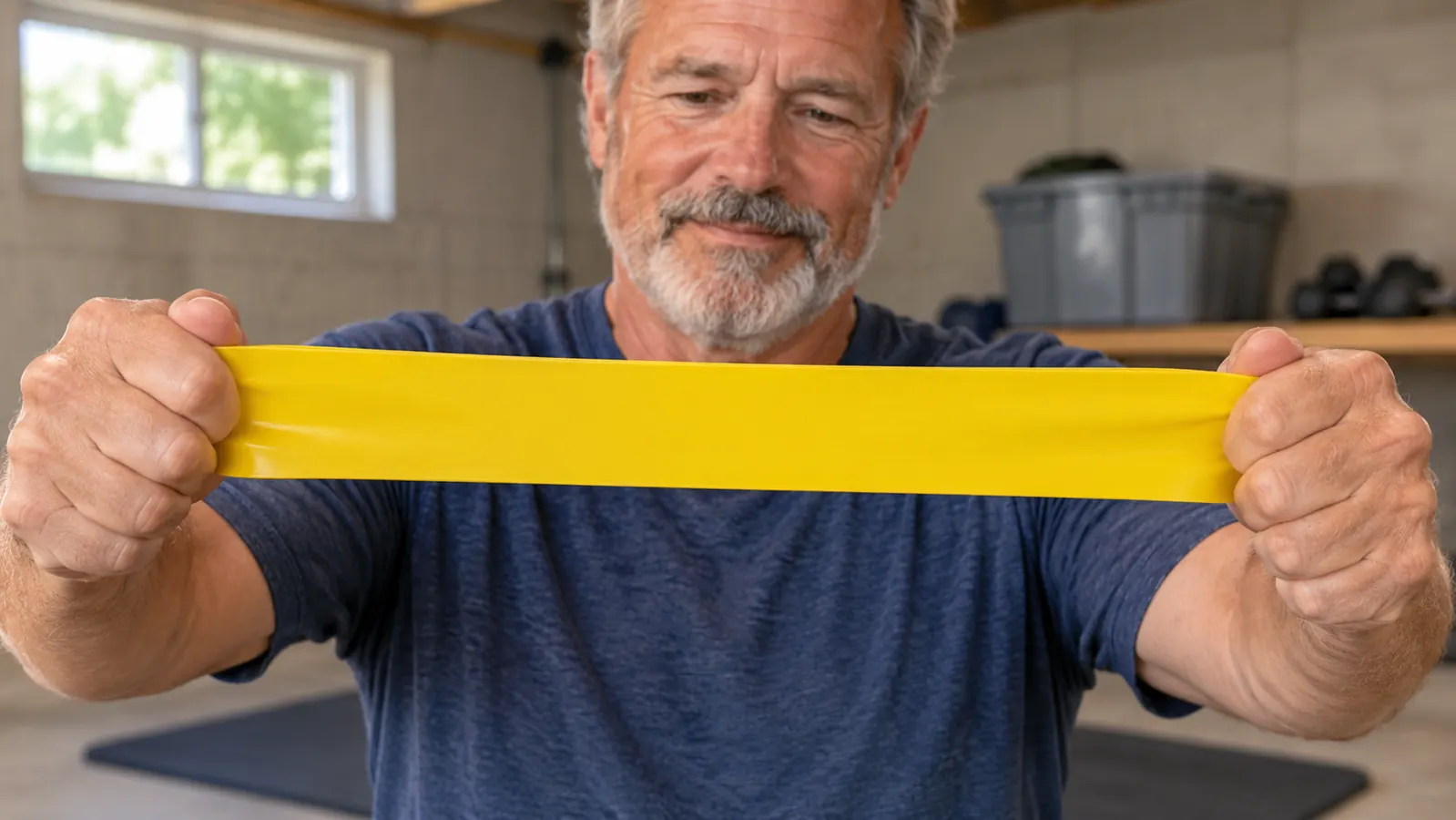
Tubes win the moment I want to pull something with intent. Rows, face pulls, a press, anything where my hands are the anchor point. In the four weeks I had the borrowed set, I did three sets of twelve rows twice a week and the handles let me hold on for the whole set. A flat latex loop across your palm is fine for twenty seconds and then it starts biting. By the third set you are adjusting your grip instead of working, and the set ends before your back does. The set I borrowed also clipped together, so two tubes gave me more resistance than any single loop I own, and I could feel the difference in a row in a way I never feel it in a band walk. That is a real advantage and I am not going to pretend otherwise. If I were training for something specific instead of trying to stay healthy at 49, that would settle the whole argument.
Anchoring is the other one. When I row with a loop, I shut it in the basement door. It works, but I always have a small worry about the edge of the door chewing the latex over time, and I find myself opening the door to check the band instead of finishing the set. A tube set comes with a door anchor, so the band runs around a soft webbed piece instead of pinching on a hinge, and setup takes seconds. The trade is that you own more parts. Tubes, handles, clips, anchor, bag. I keep my gear in one plastic bin in the basement corner. My loops take up a corner of that bin, roughly the space of a folded pair of socks. The tube set took a shelf, and I was not the one storing it, which tells you something about which one got used more often.
The whole set weighs 3.5 ounces and lives in my soccer duffel. That is the entire reason the warm-up actually happens.
If Staying on the Field Is the Goal, Start With the Loops
Five latex loops, extra light through heavy, a carry bag and an illustrated guide. This is the set that made it into my duffel and stayed there for eighteen months.
Amazon Check Today's Price on Amazon →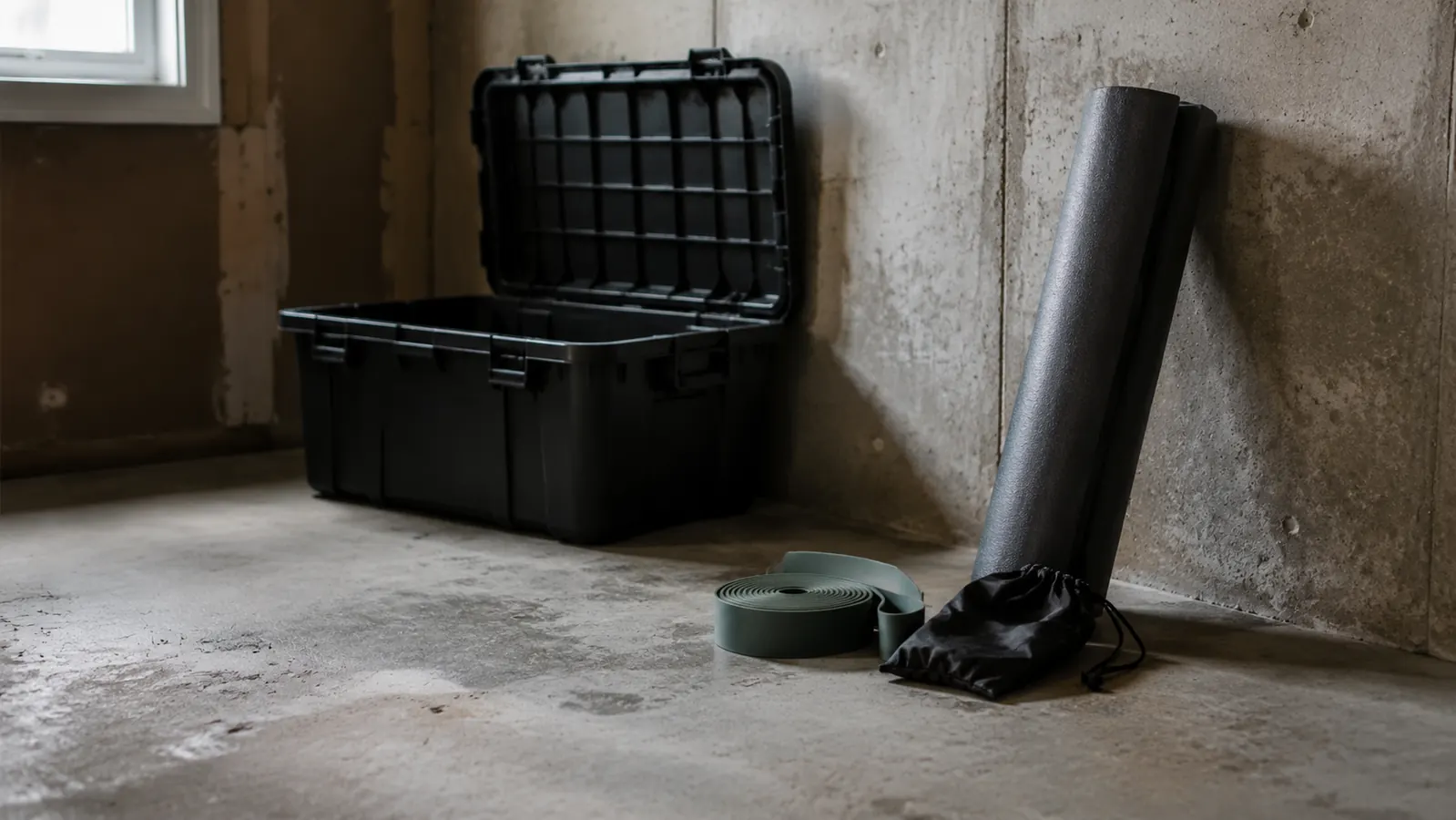
How I Split the Work Between Them
My week looks like this. Sunday morning before soccer, ten minutes on the mat. Band walks with the loop above the knees, fifteen glute bridges with the heavier band looped just above the knees, and a few slow ankle movements with the extra light loop around my right foot, pointing my toe and pulling against the band for a two count. Tuesday and Thursday, a short prehab session in the basement, same movements plus a hip stretch. Wednesday basketball at the YMCA, and that is where the tubes would be the better tool if I still had them, because that is when I want to row and press. On running days, three mornings a week, mostly three to five miles, I do not touch bands at all. The soreness under my left kneecap is managed with a strap just below the kneecap and slower mileage, not with a band.
Here is what a Tuesday in February actually looks like, because that night decides whether any of this survives contact with real life. I get home a little after six, the basement is cold, and the last thing I want is a forty minute workout. So I do the short version. Band around the shins, twenty steps each direction. Bridges. Ankle work. Twelve minutes with the timer on my phone, then I put the loop back in the bag and the bag back in the duffel so it is ready for Sunday. The reason I finish that session in February is that there is no setup, nothing to clamp to a door, nothing to untangle. The tube set, bless it, had me threading a band through an anchor and checking a clip before I had done a single rep, and on a cold night that is exactly the kind of friction that ends a routine.
Notice what that split says. The loops cover the two things that keep me playing and the tubes cover the thing that would make me stronger. Strength matters and I am not dismissing it. But at 49, with an ankle that still feels loose on uneven ground, the boring hip work is what I cannot skip. Buy the loops for the job you will actually do on a Tuesday night in February. Buy the tubes if you have a door, a spare fifteen minutes and a plan to load them.
What I Liked
- Five levels in one bag, so the extra light band works for ankle work and the heavier ones work for glute bridges
- 3.5 ounces for the whole set, which is why it actually travels to the field
- Goes around both legs, the setup band walks and hip work actually need
- Illustrated instruction booklet rebuilt a routine I had half forgotten
- Latex has held its shape after eighteen months of twice a week use
Where It Falls Short
- Nothing to grip, so long pulling sets get uncomfortable fast
- No door anchor included, you improvise with a post or a door
- Latex is latex, a hot car or a nick in the edge will end it early
- The jump between levels feels bigger than I wanted for ankle work
Who Should Buy Which
Get the Fit Simplify loops if you already have exercises to do and you need them to happen at home, at the field or in a hotel room. That covers anyone working through a short list a physical therapist gave them, anyone with hips or ankles that complain on uneven ground, and anyone whose warm-up is currently nothing at all. The bag in the duffel is the whole reason this worked for me. A band you leave in the basement does not do anything for your Sunday.
Get a tube set with handles if your actual gap is strength. If you want to row, press, pull and add load in small steps, the handles and the clip system are worth the extra shelf space. It is also the better pick if you are coming back from a layoff and want one tool that scales, since stacking tubes is smoother than jumping between loop levels. The set I borrowed came from a teammate who uses his three nights a week and does not touch loops at all.
Get both if you are the type who will actually use them. Loops for the ten minute warm-up and the Tuesday prehab, tubes for the Wednesday session. Skip both if you are buying them as a substitute for a plan. I sat on a set of exercises for five years and the bands were not the problem. I was. Talk to your doctor or a PT before you load a joint that has been giving you trouble, especially if it has been more than a tweak.
One Bag, Five Bands, Eighteen Months of Sundays
The set that started as PT homework and turned into the reason I warm up at all. Five latex loops, a carry bag and the illustrated guide that rebuilt the routine.
Amazon Check Today's Price on Amazon →