
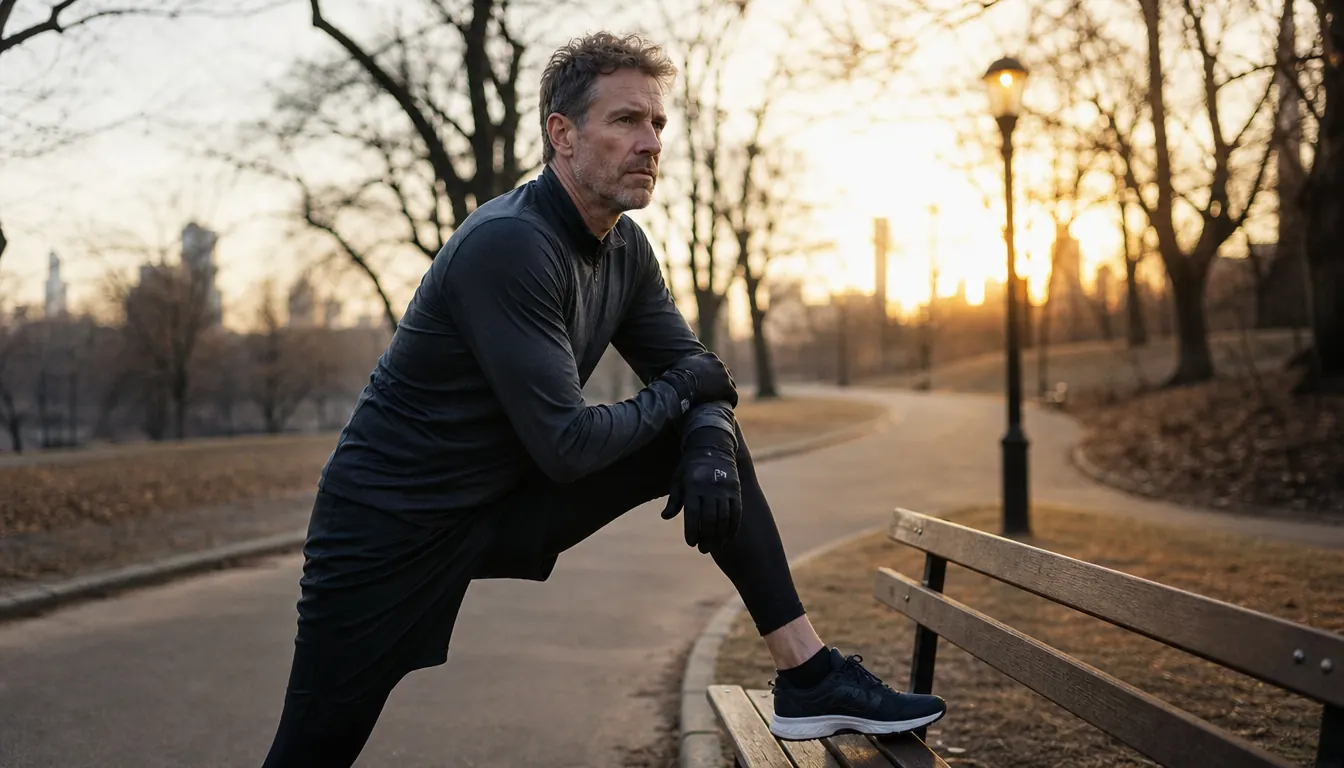
Here is the version of this review I wish I had read eight months ago: the Bodyprox patella tendon knee strap is a decent piece of gear that will not save you from yourself. It is a strip of webbing, a hook and loop closure and a silicone gel pad. What it does is narrow and specific. What it does not do is strengthen your hips, clean up your running form, or talk you out of adding three miles in one week because the weather finally turned.
My name is Grady Holloway. I am 49, I live in Cincinnati, and I run three mornings a week, usually three to five miles on the neighborhood roads and a park loop. I also play Sunday morning rec-league soccer, about fifteen years of that now, and pickup basketball at the Y on Wednesday nights. The ache that sent me shopping sits just below my left kneecap. It flares when I get greedy with mileage, which is a thing I do roughly every spring. I bought the Bodyprox two pack about eight months ago for exactly that reason.
The Quick Verdict
A quiet, thin, adjustable strap that makes the first mile and the downhills calmer. It will not fix your knee, it slides over slick tights, and the hook and loop wants lint picked off it. Still the piece of knee gear I reach for most.
Amazon Check Today's Price →If the soreness sits just below the kneecap, this is the cheap experiment to run first
Two straps in the pack, one size, hook and loop closure, hand wash only. It will not replace strength work. What it will do is make the downhills quieter while you build the rest back up.
Amazon Check Today's Price on Amazon →How I've Used It
I wear it on the left knee only, positioned just below the kneecap, and only for runs. That last part was a decision. I did not put it on for soccer and I did not put it on for basketball, because I wanted to know exactly what it was doing. My ankle brace handles Sunday mornings. Wednesday nights belong to the massage gun and a hot shower. The strap is a running item, and after eight months I am confident that is the right assignment for it.
The ritual is not interesting. I go down to the corner of the basement where I keep a rubber mat and a plastic bin of gear, I do about ten minutes of band work, I put the strap on, and I go out the door. The ten minutes of band work is the part that actually helps, and I will keep saying that until somebody takes the keyboard away from me. Lateral band walks, glute bridges, a little ankle work. The strap goes on after all of it.
One thing I did not expect: the putting-on happens before the putting-on. If I am wearing tights, which in Cincinnati is roughly November through March, the strap goes over the fabric, and I have to be honest, it does not sit as still as I want. Over bare skin in the summer it stays put through a five mile run. That is a real difference, and it took me two winters to stop being annoyed about it and just plan around it.
There was one morning in early April that settled it for me. I had built back up to four miles on the park loop, the trees were still bare, and I had a stiff breeze in my face for the whole back half. My knee had been grumbling all week. I put the strap on, did the band work first, and ran the whole loop without thinking about my left leg once until I got back to the car and had to dig my keys out. That is not a dramatic story. It is also the exact reason I kept wearing the thing. A piece of gear that makes you forget it exists is doing its job, and this one earns that on most mornings.
What Nobody Tells You About Placement
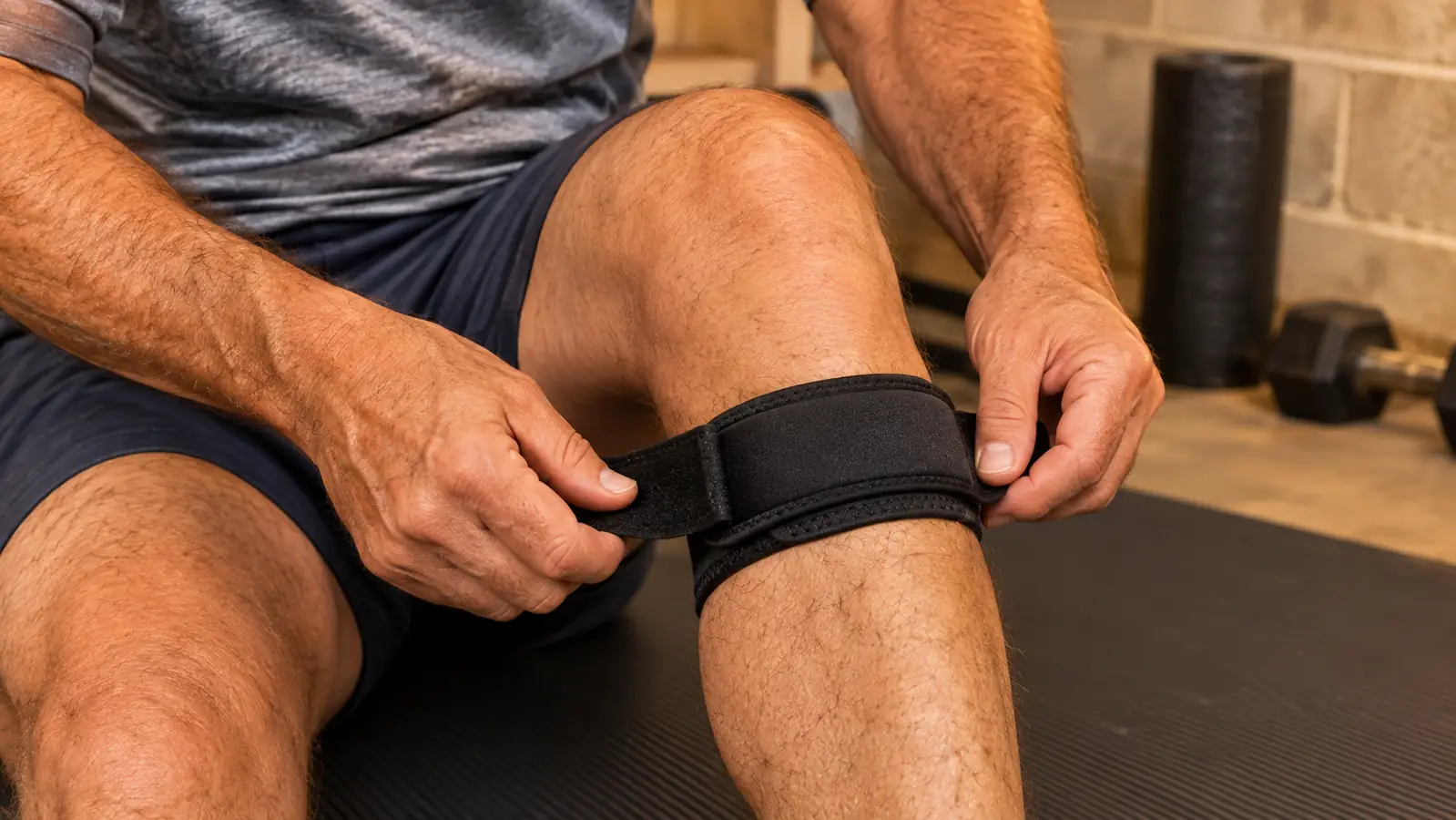
Every description of this kind of strap says it goes below the kneecap, and that is true, but it undersells how much range there is in that sentence. Below the kneecap is a two inch band of real estate, and where you land inside it changes how the whole thing feels. Too high and it presses on the bottom edge of the bone. Too low and it is just a tight loop around your upper calf doing nothing you want.
The gel pad has a front and a back in practice, even if the label does not make a fuss about it. The pad should sit over the tendon, not off to one side of it. I figured this out in week three, in my own driveway, by walking back inside and starting over. If you buy one of these and it feels like nothing at all, check where the pad is sitting before you decide the product is bad.
Snug is the other thing. Tight is not better. My first week I cranked it down the way you tighten a boot, and my calf was complaining by mile two. The strap only needs to be firm enough that it stays where you put it. If your lower leg is throbbing or going numb, you have overdone it, and that has nothing to do with the brand.
I also learned that the strap has to go on last. Not first, not in the middle. If I put it on and then did the band work, the lateral walks and the glute bridges would drag it down a half inch and I would head out the door with the pad sitting too low. It sounds like a small thing until you have done it twice and spent the first mile wondering why the strap is doing nothing. Now the order is fixed: bands, then sit on the edge of the mat, then the strap, then stand up and take three steps to check it before I touch the door handle.
The last unglamorous truth is that placement is a two-handed job for the first couple of weeks. You will sit on the edge of something, get it roughly set, stand up, take three steps, adjust it again. After a month it takes about four seconds. I want to be clear that the learning curve exists so it does not surprise you into thinking you bought the wrong thing.
The Fit Details That Decide Everything
Bodyprox makes this in one size, with a hook and loop closure, and the strap adjusts across a decent range. On me it works. I am not going to pretend I have tested it on every leg in Ohio, because I have not. If you have a very large calf or a very small one, one size is a gamble, and the honest advice is to buy it somewhere with a return policy rather than trusting a review, including this one.
My leg measures about fifteen inches around just below the kneecap, which is a completely average number for a 49 year old man who runs and plays soccer but does not race. On that measurement the strap closes with a good bit of webbing left over in both directions, so I have room to go tighter or looser as the morning demands. I cannot tell you where the ceiling is on this thing, because I have never been near it. I can tell you the closure has not slipped mid-run once in eight months, and that includes the mornings I got the tension obviously wrong and had to stop at the top of the hill to reset it.
The materials are listed as nylon, SBR, spandex and cotton, with silicone gel in the pad. It weighs about three ounces and it is roughly a tenth of a centimeter thick, which is the number that matters most to me. Thin enough that it disappears under a pair of tights. Thin enough that I forget it is there by the second mile, which is the entire point of a strap like this.
The closure is hook and loop, which means it is fast, adjustable, and completely indifferent to cold hands at six in the morning. It also means it collects lint, grass and whatever else lives at the bottom of a gear bin. I have to pick fuzz off the hook side every couple of weeks or it stops gripping properly. Small thing. Annoying thing. Worth knowing before you buy.
What It Does on a Run, and What It Doesn't
Downhills are where I notice the difference, and where I notice the absence of it if I forget to put the strap on. There is a hill on the park loop that I have a long and complicated relationship with. Going up is an effort problem. Going down is where the soreness below the left kneecap used to announce itself. With the strap on, that announcement is quieter.
Quieter is the right word, not gone. I want to be straight with you, because I have read too many reviews that would have me believe a piece of webbing is a cure. It is not. On a day when I have slept badly and eaten badly and run too fast, my knee still talks to me. The strap reduces how loud it talks. That is a modest claim and it happens to be the true one.
The first mile is where I feel it most, both the strap and the knee. There is a few minutes of noticing the pressure below the kneecap, then it fades and I stop thinking about it. I have come to understand that as the intended experience. If it is still distracting at mile three, the placement or the tension is off, not you.
The honest version of the downhill test is that it shows up in the days after, not the day of. The old pattern was that a hill-heavy Tuesday run would leave me feeling it on Wednesday morning when I swung my legs out of bed. That is the moment the strap wins its keep, because a Wednesday where I feel normal is a Wednesday where I drive to the Y and play basketball instead of sitting on the couch with the foam roller feeling sorry for myself. Small change. It compounds. It is the reason I still own the thing and did not toss it in a drawer back in May.
What it does not do is strengthen anything. It does not fix the hip on that side that I ignored for years. It does not make me land softer. It does not buy me extra miles. I still do the band work twice a week at home with the resistance loop set I bought when I finally got serious about redoing the exercises the physical therapist showed me after my ankle sprain five years ago. The strap is a supporting character in a story about consistency.
The hills are where you will notice it working
One strap below the kneecap, one spare in the bin for laundry day. Adjustable hook and loop closure, a gel pad that sits over the tendon, thin enough to forget you have it on by mile two.
Amazon See the Bodyprox Patella Strap on Amazon →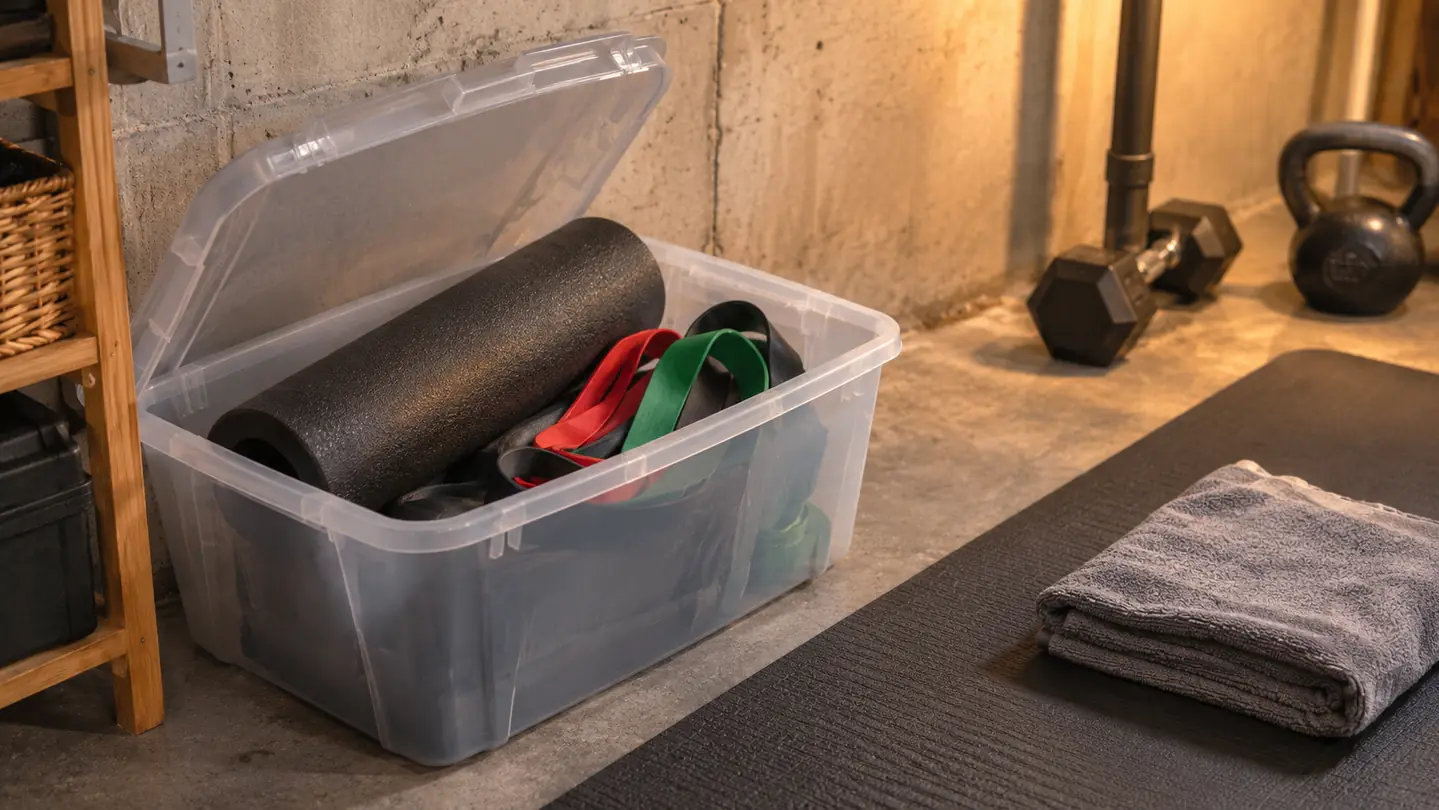
The Maintenance Nobody Warns You About
Hand wash only. That is on the label and it is not a suggestion. I wash mine in the bathroom sink with a little soap, press it out in a towel, and hang it over the edge of the laundry basket overnight. It is dry by morning in the summer. It is not dry by morning in February, which is when the second strap in the pack earns its keep more than any other time of year.
February is the month that makes this a genuine two pack instead of a one pack with a spare rattling around. I hang the washed strap over the laundry basket in the basement, the basement is cold, and by six the next morning the webbing is still damp in the middle where the pad sits. Damp webbing against a cold leg on a 34 degree morning is a bad way to start a run. The second strap solves it, and it costs me nothing but a little space in the bin.
Anything that sits against your skin and gets sweaty is going to hold onto that. The strap is fabric with a gel pad, and after a few months of three runs a week it will smell like a gym bag if you leave it alone. Mine gets a rinse every couple of weeks and a proper wash once a month. That is not a knock on Bodyprox. It is what fabric does.
I keep the spare strap in the plastic bin with the foam roller and the bands, and I have never needed it out on the road. Its job is to be there on laundry day and on the mornings I have left the first one in a pocket. That is a boring job, and it is worth having something in the bin for it.
What I Liked
- Thin and light enough to forget you are wearing it, listed at a tenth of a centimeter and about three ounces
- Adjustable hook and loop closure makes the tension easy to set and reset
- The silicone gel pad sits over the tendon once you learn where to place it
- Two straps in the pack, so laundry day and lost-strap day are both covered
- Survives regular hand washing without fraying or losing its grip
Where It Falls Short
- One size genuinely means one size, and it will not suit every calf
- Slides over slick tights, which is a winter problem you cannot fix
- The hook side collects lint and needs picking clean every couple of weeks
- Hand wash only, so there is no lazy laundry shortcut
- Does nothing for the muscular side of the problem, which is the bigger side
Two runs in the same week used to be a coin flip for my left knee. Eight months later, three is normal, and the strap is a small part of why.
Who This Is For
This is for the runner whose ache lives in one spot, just under the kneecap, and who has already worked out that adding mileage too fast is the trigger. It is for someone who wants a small, quiet, adjustable thing to take the edge off while the real work happens in the ten minutes before the run. It is also for the person who likes a spare, because two straps in one pack means you never sit out a run waiting for fabric to dry. Grady Holloway is not a doctor and this is not medical advice. If the soreness is sharp, swelling, or getting worse week over week, talk to your doctor or a PT before you buy anything.
Who Should Skip It
Skip it if you are looking for something that fixes the problem on its own. Skip it if your pain is above the kneecap, on the outside of the knee, or in the joint itself, because this strap is built for one spot and one spot only. Skip it if you mostly run in slick tights and you know a sliding strap will drive you up a wall. And skip it if you have not done the boring work yet, because a strap on top of weak hips is a bandage on a leak. Eight months in, mine is holding. That is not the same as healed, and I would rather tell you that plainly than sell you a story.
Start with the strap. Stay for the band work.
The Bodyprox patella tendon knee strap comes as a two pack in one size with an adjustable hook and loop closure. Use it for the runs, use the spare for laundry day, and keep doing the ten minutes of work that actually moves the needle.
Amazon Check Today's Price on Amazon →