Every spring I do the same dumb thing. The weather breaks, the roads dry out, and I go from three easy runs a week to five, plus a longer loop on Saturday, and by the second week there is that familiar ache just below my left kneecap. It is not sharp. Nothing pops. It is a low, warm soreness that shows up on stairs and hangs around for a day. I am 49, I play rec-league soccer on Sunday mornings, and I run the same park loop in Cincinnati three mornings a week. I have felt this exact thing enough times to know the pattern. The soreness does not come from running. It comes from running more than I was ready for.
About eight months ago, in the spring, I bought the Bodyprox patella tendon knee strap, the two pack, and started wearing one on the left knee just below the kneecap for my runs. Let me be clear about what that strap does and does not do. It does not fix a tendon. It does not make the soreness disappear. It gives the tendon a little support and it gives me a physical reminder, every time I crouch down to put it on, that I am supposed to be building slowly. The second strap of the pack lives in the plastic bin in my basement recovery corner. The reminder turned out to be the useful part, because my problem was never gear. My problem was the way I added miles.
The strap that made me slow down long enough to build up
Bodyprox patella tendon knee strap, two pack, one size with a hook and loop closure and silicone gel padding. I wear one just below the left kneecap on run days. The spare goes in the gear bin.
Amazon Check Today's Price on Amazon →Five Steps That Actually Changed My Runs
Step 1: Put the strap on before your shoes, not after
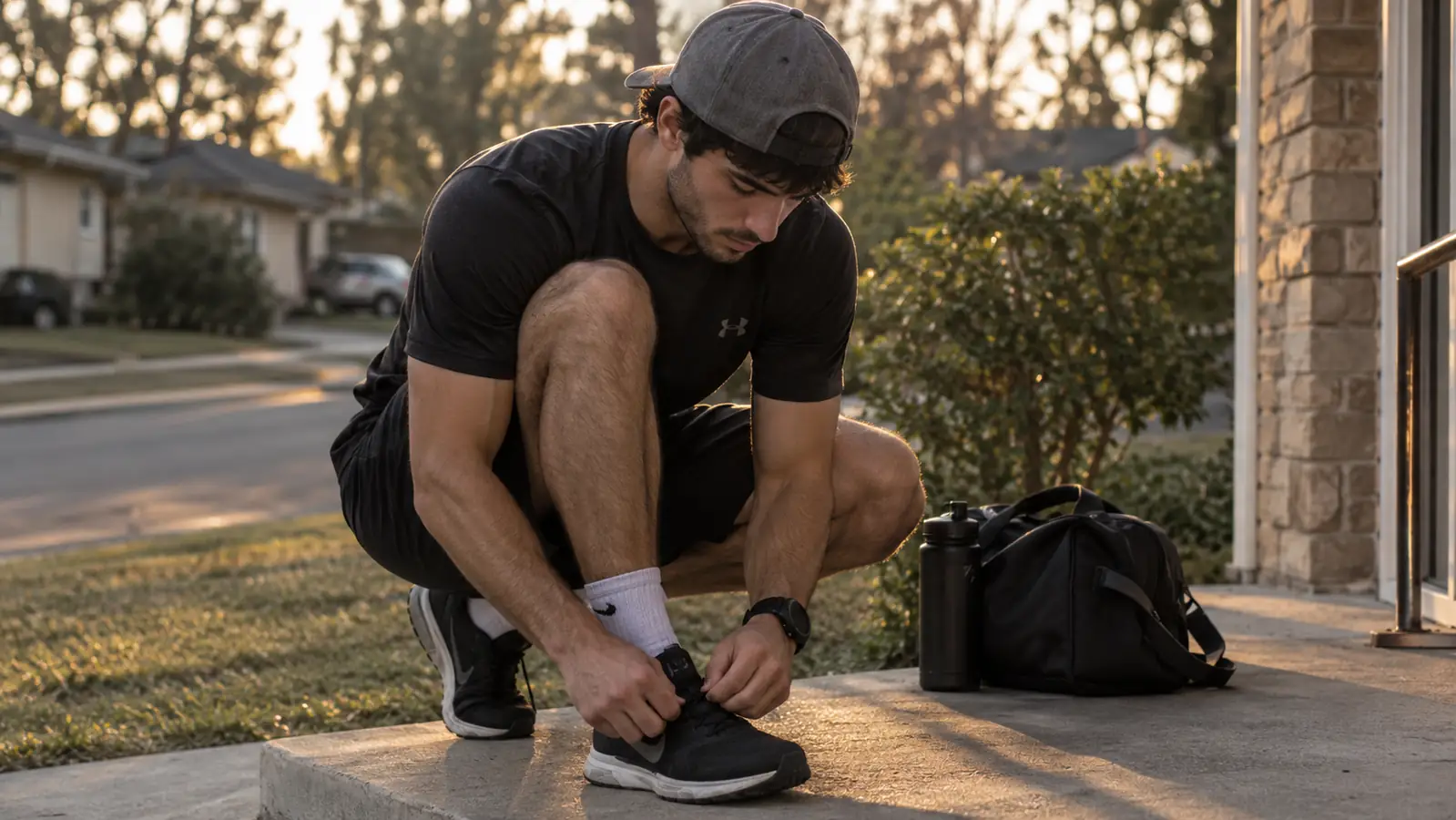
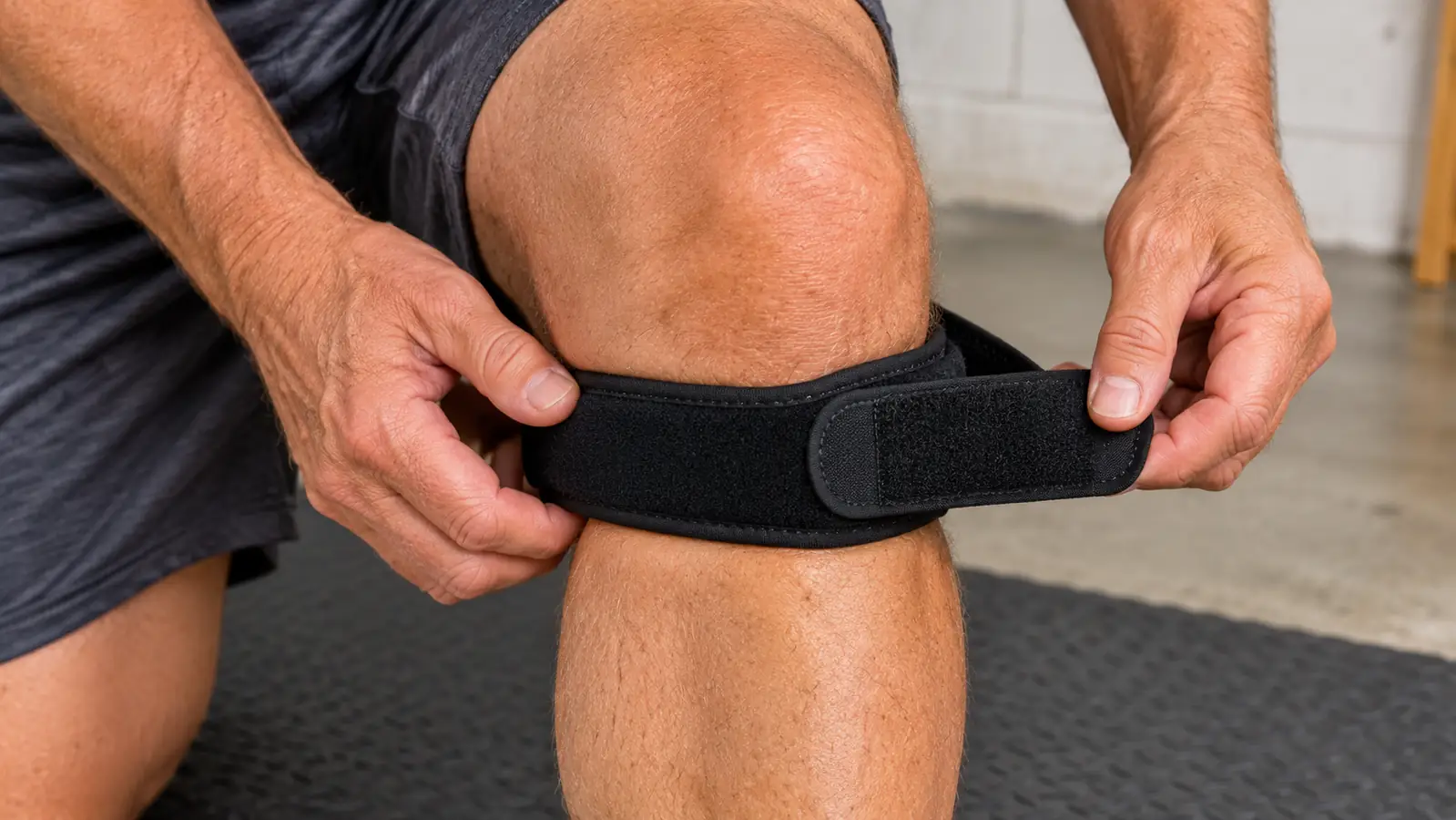
I learned this the boring way. If I lace up first, I end up sitting on the porch step fighting with the closure, I rush it, and it rides up. Now the strap goes on before the shoes, over a thin sock, sitting just below the kneecap with the padded section against the sore spot. The closure is hook and loop, so I can adjust it to my own leg instead of picking a size off a chart. Bodyprox makes it in one size, and the adjustment is the whole point.
The placement takes a few runs to dial in. Too high and it sits on the kneecap, which is useless and annoying. Too low and it is on the shin doing nothing. Mine sits in the soft spot just under the kneecap, and I can find that spot without looking now, which matters at 6:20 in the morning when the kitchen light is the only light on in the house.
Snug, not tight. If I can feel my pulse in it, it is too tight, and I will spend the whole run thinking about my knee instead of my pace. The Bodyprox strap is listed at 0.1 centimeters thick and 3.2 ounces, which in plain terms means I forget it is there under shorts and it does not change my stride. The material is nylon, SBR, spandex and a little cotton, with silicone gel padding under the strap. It has never once slid down mid-run on me.
One note from the label I ignored for a month: hand wash only. I threw it in with the laundry once and the closure picked up so much lint it stopped holding well. Since then it gets rinsed in the sink after a sweaty run and hung over the edge of the bin.
Step 2: Add mileage in half miles, not whole ones
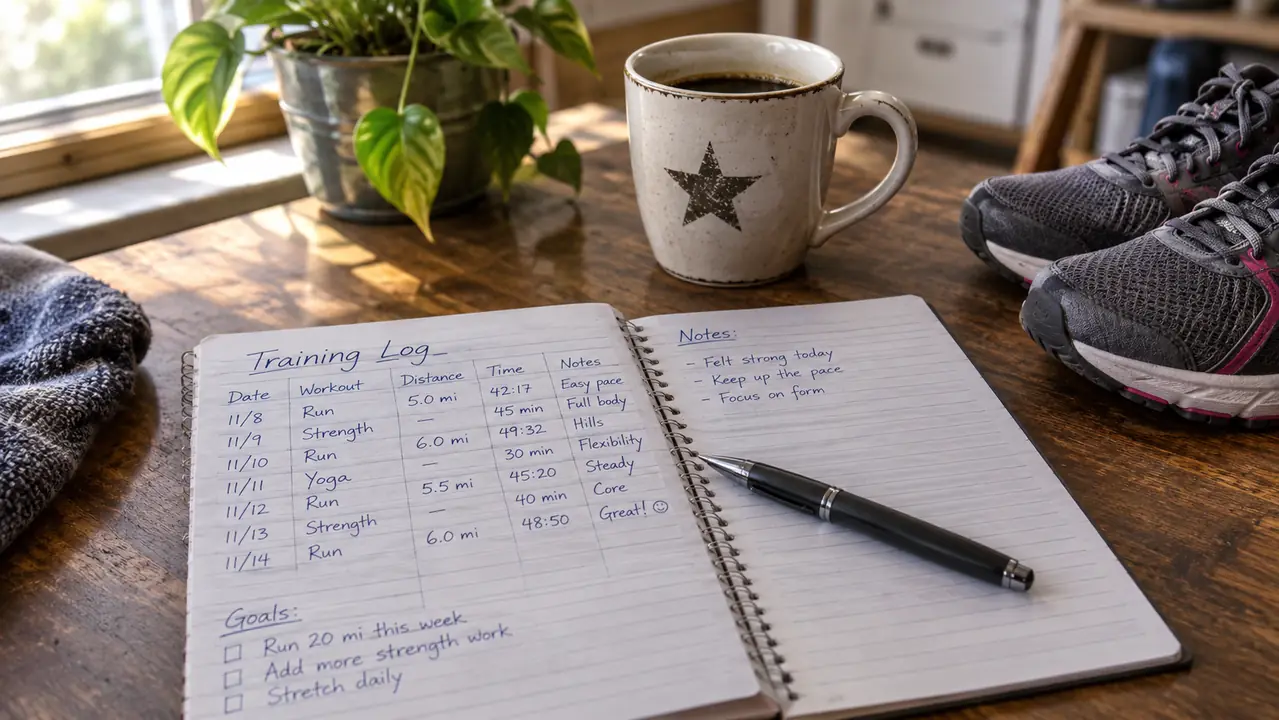
Here is the rule I actually follow now, and it has nothing to do with a watch. I add half a mile to one run per week. That is it. Then I hold that new distance for two weeks before I touch it again. Three runs a week at 3 to 5 miles each leaves plenty of room to creep up slowly.
The first time I tried this I felt ridiculous. Half a mile is eight minutes. It felt like nothing. But eight minutes a week adds up over a season, and the point was never to feel like I was doing something. The point was to get to October without the ache below my kneecap turning into something that made me stop entirely.
My route is a park loop with one long hill and a couple of road crossings, roughly 3 miles by my count. Building on it means adding the extra bit at the end, not going out faster. When I add speed and distance in the same week, the soreness comes back every single time, and I have tested that thoroughly enough to call it a result.
I also stopped tracking pace on these runs. I track the number of times I think about my knee. A good week is zero. A week where I think about it twice on the same run means I hold the distance instead of adding to it, and I do not care what the plan on the fridge says.
Step 3: Warm up the hips and ankles before the knee complains
My right ankle rolled badly in a soccer game when I was 44, and it still feels loose on uneven ground. The soreness is in my left knee. Those two things are on opposite legs and they still talk to each other, because when one joint gets stingy the rest of the chain covers for it. A physical therapist walked me through hip and ankle work after that sprain. I did it for a few months and then let it slide for years.
About a year and a half ago I dug out the Fit Simplify resistance loop bands I had bought and started the same routine again, ten minutes before I leave the house. Lateral band walks, glute bridges, a few ankle circles, some banded ankle work. It is not impressive. It is the same boring thing every time, and it is the single best change I have made for running comfort.
Ten minutes is the whole thing. Band walks across the basement, twenty steps each way. Fifteen glute bridges. Ankle circles. If I skip it because I am running late, I feel it around mile two, and I have never once finished a run and thought the warm-up was a waste.
The strap did not add a single mile. The half mile I added on a Tuesday, and then held for two weeks, did that.
Step 4: Give the knee a recovery slot in the week
Sunday nights after soccer, I am on the mat in the basement with the Blackroll foam roller. It is smooth, 6 inches across and about 12 inches long, dense enough to hold its shape, and it has lasted three years. Calves, quads, the IT band area and upper back. I stay off the lower spine with it. It is not a treat. It is the price of admission for playing soccer at 49.
Wednesday nights after pickup basketball at the YMCA, the TOLOCO massage gun comes out. Lisa gave it to me for a birthday about a year ago. It recharges with a USB cable and came with ten attachment heads in a case. I use it on low speed for a couple of minutes per muscle, on calves and quads. Never on the kneecap, never on the ankle bone, never on the spine or the neck. That is not caution I invented. That is just where it does not belong.
Neither of those tools goes near the knee. The knee gets the strap on run days and rest on the others. That is deliberate. When something is sore, my instinct is to attack it with a tool. The better move has been to leave the knee alone and work on the parts above and below it.
The order matters less than people think. Roll on Sunday, gun on Wednesday, strap on run days. What matters is that the recovery work happens on a schedule instead of only when something hurts. When I only did it after a flare-up, I was always starting from behind.
Step 5: Recheck the strap and the plan every couple of weeks
Hook and loop wears out. Mine started slipping after that one accidental trip through the wash, and I could feel it move about a mile and a half in. That is the signal to swap in the second strap from the pack or replace it, not the signal to crank it tighter.
I check the plan at the same time. Am I still holding the new distance for two weeks, or did I get greedy? Is the soreness showing up on stairs, or only in the first mile? Those two answers tell me more than any app, and they take about thirty seconds on a Sunday night.
The other thing I check is whether I still need the strap on every run. On easy days, sometimes I leave it in the bin. There is no rule that says you have to wear it forever, and I would rather it stay a tool I reach for than a thing I cannot run without.
And if the soreness shows up when I am not running, or it wakes me up, or it is sharp instead of warm, that is where my expertise ends. That is a talk to your doctor or a PT moment. I have done the ignore it and hope routine before. It cost me more weeks than getting it looked at would have.
What Else Helps
Two unglamorous things have helped as much as anything I strap on. The first is shoes. I rotate two pairs and I retire them before the tread is gone, because a worn shoe changes how the whole leg lands and I notice it in the knee first. The second is the surface. My neighborhood is crowned and slanted toward the curb, and running the same side of the road every morning means the same leg does the same extra work all season.
Sleep is the third one, and I am bad at it. When I get under seven hours a few nights in a row, everything feels heavier, and the first place I feel it is the knee on the stairs. Boring, but there it is.
None of this is treatment. A Bodyprox strap, a band, a roller and a massage gun help me feel looser, recover more comfortably and stay consistent, and staying consistent is the thing that actually moved the needle. If your knee is more than a tweak, get it looked at. I am a sales manager in Cincinnati who plays too much soccer, not a physical therapist, and I am not going to pretend otherwise.
Build the miles. Let the strap handle the reminder.
Two straps in the pack, one size, hook and loop closure with silicone gel padding. One for run days, one for the gear bin. Hand wash only, which you will learn once.
Amazon Check Today's Price on Amazon →