
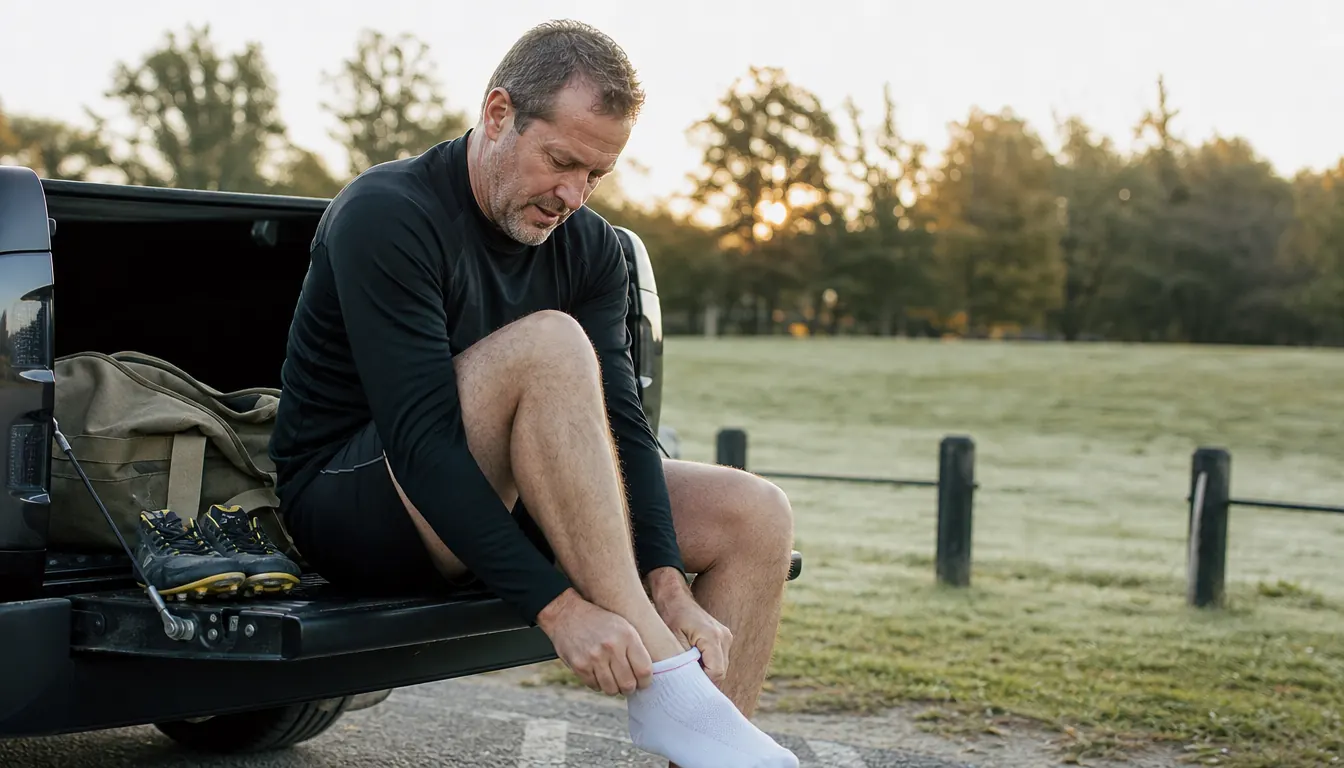
I ordered the Med Spec ASO on a Tuesday afternoon, standing in a soccer complex parking lot with my phone, because my right ankle had rolled again two days earlier on a field with more ruts than grass. I had wrecked that same ankle at 44. I was 47 when the brace showed up in the mail. I am 49 now, and it is still in the outside pocket of my soccer duffel, the laces frayed, and I still put it on every Sunday morning before I pull a cleat over it.
Let me get the disclaimer out of the way, because it matters. I am not a doctor, a physical therapist or an athletic trainer. I am a sales manager in Cincinnati who plays rec-league soccer on Sunday mornings, runs three mornings a week and plays pickup basketball at the Y on Wednesday nights. If your ankle is more than a tweak, go see somebody who went to school for it. What follows is the review I wish I had read before I clicked buy, including the parts that are not flattering to the brace and the parts that are not flattering to me.
The Quick Verdict
A well-built lace-up that does one job well, provided you buy the size the chart puts you in and accept that it takes a minute to put on. It is support, not repair.
Amazon Check Today's Price →One brace, two seasons, still laced up every Sunday
I have replaced the laces and nothing else. If you are going to own one lace-up ankle brace, own the one athletic trainers keep pulling out of their bags, and then learn to lace it the way they do. The size chart is the whole ballgame.
Amazon Check Today's Price on Amazon →What Nobody Tells You Before You Order One
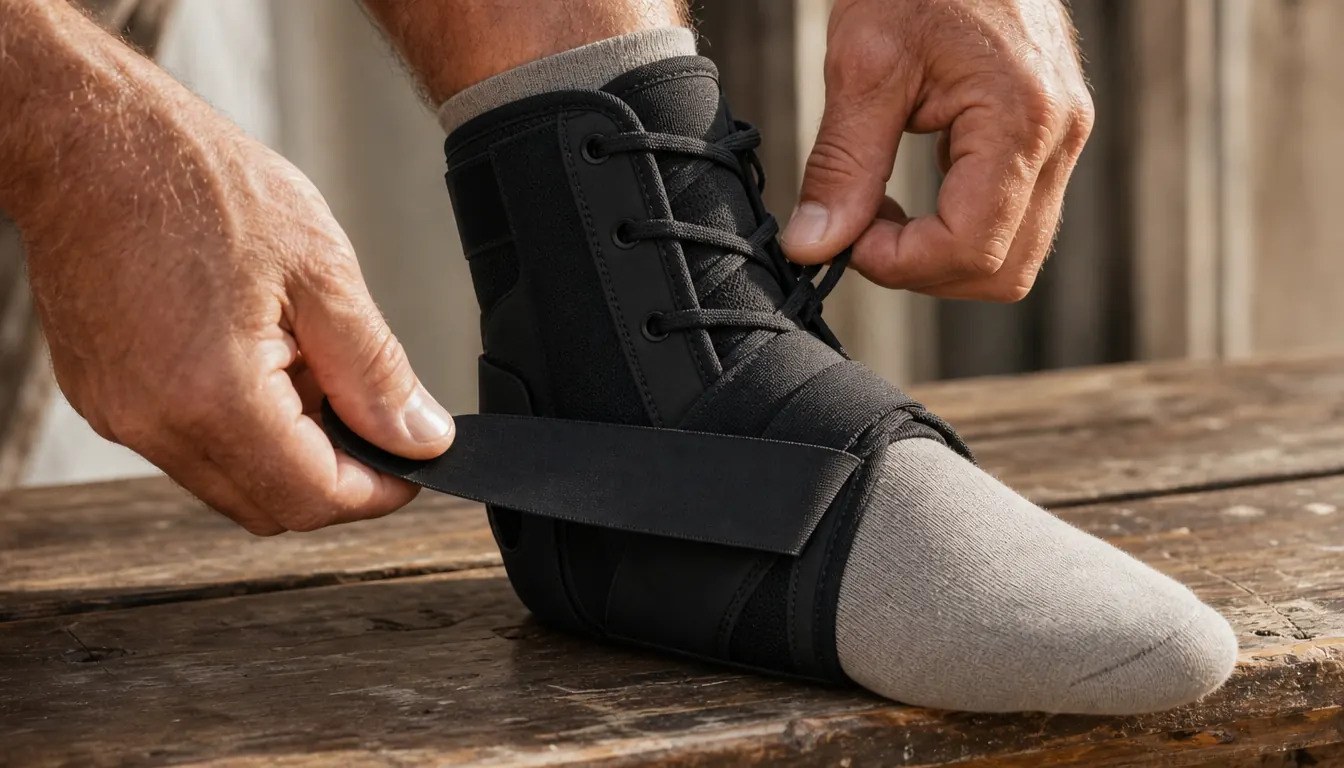
The laces are not the point. The two long figure-8 straps are. You lace the brace snug so the nylon sits flat against your foot, then you take those two straps, cross them over the top of your foot in a figure eight and anchor the ends on the sides. That cross is what limits the sideways roll. If you lace it and skip the straps, or you run the straps loose because they pinch, you have bought a nylon sock with shoelaces on it. I did exactly that for the first month and told anyone who would listen that the brace did not work.
The second thing nobody tells you: this is a two-handed, sit-down operation. It is not a sleeve you kick on in the car. I need a bench or a tailgate, a minute of quiet, and both hands free. Somewhere between 40 and 60 seconds if I am not being harassed by a teammate. That sounds trivial until it is 34 degrees and your fingers are stiff and the referee is already checking watches. Show up early or lace up at home. Those are the options.
Third: the brace does not stop your ankle from rolling. I want to be careful here because the listing language is understandably optimistic and I am not going to sell you a guarantee the product cannot make. What the Med Spec ASO does for me is limit how far the ankle can turn and give me a firm reminder of where the edge is. I still have to plant my feet and pay attention. Nothing you can strap to a foot will override a bad decision at speed on a wet field, and if you buy this expecting armor, you will be disappointed and possibly hurt.
Fourth: the sock underneath decides whether the whole thing works. A thick cushioned sock and the brace bunches in the heel and slides. No sock and you will feel every seam of the nylon by the second half. I landed on a thin sock, pulled tight, with no wrinkles at the heel. That one detail changed my experience more than anything else, and it took me three Sundays and a small blister to figure out.
The morning I finally got it right was a Sunday in late October, first round of the rec league playoffs, about 41 degrees at kickoff. I had a thick sock on out of pure cold-morning instinct, and within four minutes the brace had bunched up under my arch. I sat on the bench, pulled the sock off, put on the thin one I keep in the duffel for exactly this, and laced back up. Zero bunching for the next ninety minutes. Now I keep two thin socks in that bag and leave the thick ones for the walk back to the car.
Fifth, and this one is genuinely annoying: you will re-tension the straps roughly ten minutes into play. The nylon gives a little as it warms against your foot. The fix is to stop after the first hard run, sit on the bench for fifteen seconds, and snug the cross back down. Do it once and the brace stays put for the rest of the match. Skip it and you spend the game wondering if it is loose, which is its own kind of distraction.
How I Actually Use It
Sunday soccer is the main job and the reason I bought it. I get to the field about twenty minutes before kickoff, sit on the tailgate, pull on the thin sock, lace the brace over it on my right ankle only, then get the cleat on over the top. The brace goes inside the shoe, not over it. That is worth saying plainly because I have watched a guy try to wear one on the outside like a sandal and then wonder why it felt wrong. Left ankle gets nothing. It has never given me a problem.
One play from this past fall sums it up. I was chasing a ball toward the sideline, planted my right foot on a patch of bare dirt where the grass had given up, and the ankle started to go. The brace caught it maybe halfway through the roll, which is not the same thing as stopping it. I stumbled, stayed upright, and played the rest of the half. Before the brace, that exact play is how I ended up on the ground holding my foot and saying words my daughter should not hear. Halfway is enough to matter.
Wednesday basketball at the Y is the second job. Same brace, different shoe with more room in it, and honestly the brace is easier to live with in a basketball shoe than in a tight cleat. I play about ninety minutes, half-court mostly, and I notice the brace most when I come down off a rebound and land on somebody's foot. It does not make that pleasant. It makes it feel contained instead of loose, which is the difference I paid for.
I do not wear it for road runs. That is a deliberate choice, not a knock on the brace. My three morning runs are straight lines on neighborhood pavement and a park loop, and I want my ankle doing the small stabilizing work itself on that surface. The brace lives in the soccer duffel, not in the plastic bin in my basement recovery corner where the rest of my gear sits. It has one job and it does not travel.
Getting It Into a Soccer Cleat Without Losing Your Mind
The listing says the brace is made to fit inside a shoe, and it does, but there is a technique to it. Lace the brace, set the heel all the way back into the shoe, then pull the tongue up over the laces of the brace rather than trying to slide your whole braced foot in at an angle. If you force it, the cross straps shift and you have wasted the whole point. I loosen my cleat laces two full rows before I start and it goes on in one motion.
It is lightweight nylon, so it does not add bulk the way a hinged brace or a stiff boot does. I have never once felt like my cleat fit differently because of it, and nobody on the field has ever noticed I was wearing something. That low profile is the reason it stayed in my bag. I owned a bulky brace before this one and I stopped wearing it because it felt like a ski boot and I was slow. The best brace is the one you actually put on in the parking lot at 7:40 in the morning.
I also tried it in my old pair of cleats first, the narrow ones I grabbed years ago because they looked fast and never actually fit me. With those, the brace was a fight every single time and I dreaded the parking lot. The brace was fine. The shoe was the problem. When I moved to a wider cleat a half size up from my dress shoe, the whole routine got easier in about a week. If you are cramming this into a tight shoe and hating the experience, look at the shoe before you blame the brace.
Two Years In: What Held Up and What Did Not
The nylon shell has held up better than I expected. Two years of Sunday soccer and Wednesday basketball, and there are no tears, no split seams, no stretched-out eyelets. The straps have softened but they still hold tension, and the whole thing still shapes itself to my foot when I pull it on. What wore out first was the laces, which frayed at the tips and got hard to thread sometime in the second year. I replaced them with a spare set of thin shoelaces and moved on. That is a small annoyance, not a reason to buy a new brace.
Care is simple, and simple is all I am willing to do. I hand wash it in the utility sink with a little mild soap every few weeks during the season, rinse it, and hang it over the edge of the laundry tub to air dry. I have never put it in the dryer and I would not. The instructions that come in the box say the same thing, which is the one piece of product literature I have actually read in the last five years. The warranty is six months limited, which tells you what the maker expects for lifespan. Mine has beaten that by a wide margin.
I check the eyelets and the strap anchors every few weeks when I wash it, mostly out of habit from a cheap brace I owned years ago that let go at the worst possible moment. Two years in, nothing on the Med Spec ASO has loosened at a stitch line. The elastic in the straps has relaxed a little compared to new, maybe ten percent, and I make up for it by snugging a hair tighter at the start. That is the whole maintenance log. No drama, nothing to report, keep doing the same thing.
What I would do differently: I would order based on the size chart the first time instead of guessing from my shoe size. I got lucky with the MD. The chart asks for a measurement around the ankle and heel, not the size of your sneaker, and those are not the same number. Guessing is how people end up leaving a two-star review about a brace that was simply the wrong size for them. Measure, write the number down, order.
What I Liked
- The figure-8 straps give real side-to-side control when you tension them correctly
- Lightweight nylon profile fits inside a soccer cleat or basketball shoe without changing the fit
- Has held up for two years of twice-weekly play with only the laces replaced
- Nylon and laces dry fast and are easy to hand wash
- One brace, one ankle, no learning curve after the first two weeks
Where It Falls Short
- Takes 40 to 60 seconds and both hands, sitting down, to put on properly
- The straps need re-tensioning about ten minutes into play
- Laces fray before anything else does
- Will not stop an ankle from rolling, and treating it like armor is a mistake
- Wrong size ruins the whole experience and the size chart is not the shoe size
It has never once fixed my ankle. It let me keep playing Sunday soccer while I did the unglamorous band work in my basement that actually did the fixing.
Where It Falls Short
The honest low point is the first ten minutes of every session. The brace is at its least cooperative right after you put it on, and if you are the kind of person who wants gear to disappear the moment you wear it, this will bother you. It is a piece of equipment, not clothing. You feel it. I have gotten used to it and I still notice it on the first sprint.
The other limitation is that it only addresses the ankle. My left knee gets sore below the kneecap when I add mileage too fast, and my lower back tightens up after long drives and after basketball, and the Med Spec ASO does nothing for either of those. That is not a criticism, it is a scope statement. A brace that claims to fix everything fixes nothing. This one covers one joint on one side of the body, and it covers it well.
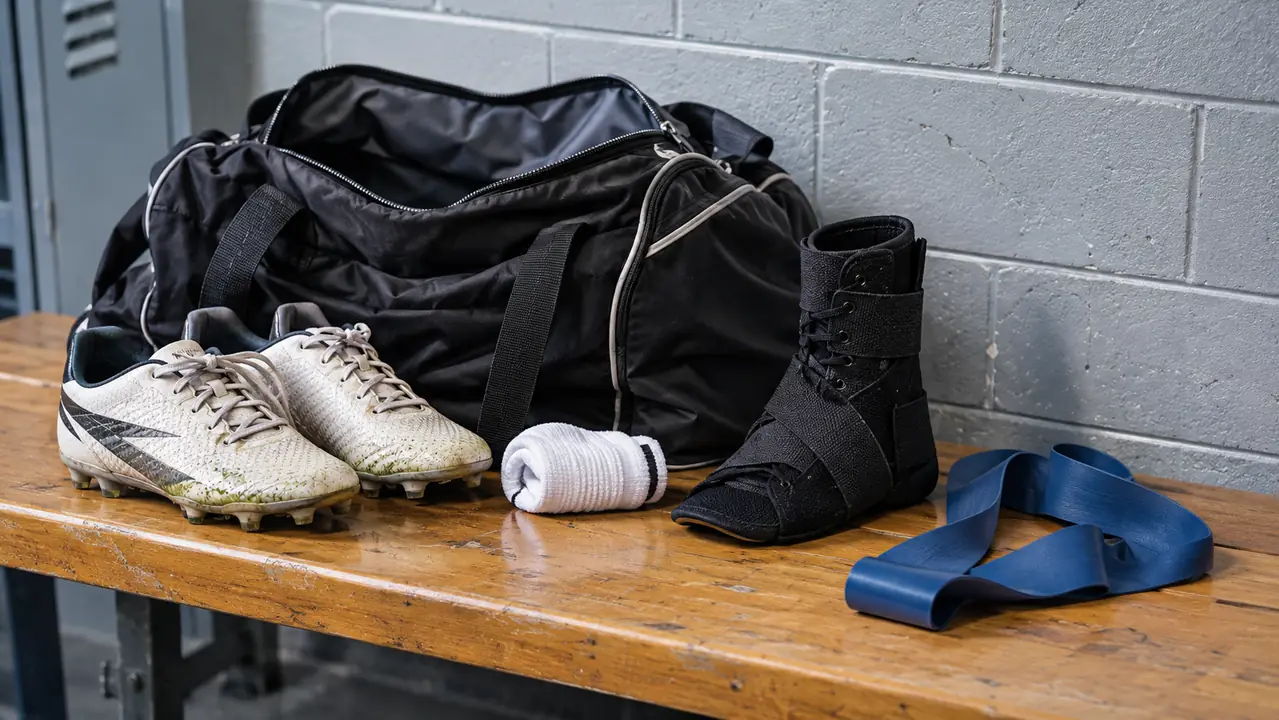
And the biggest caveat: do not let the brace replace the boring work. When I sprained that ankle at 44, I saw a physical therapist for a handful of sessions and got a set of hip and ankle exercises. I let them slide for years, which is exactly why the ankle rolled again at 47. What actually changed my situation was buying a set of resistance bands a year and a half ago and doing a ten minute warm-up before soccer and a short session twice a week. The brace bought me the time to be consistent. It did not do the work.
Who This Is For
This is for the weekend athlete with one ankle that has gone over more than once and still feels unreliable on uneven ground. Somebody playing soccer, basketball, tennis or volleyball a couple of times a week who wants side-to-side control inside a normal shoe and is willing to spend a minute putting it on properly. It is also for the person who has already been told by a professional to wear a lace-up brace and needs one that fits under a cleat. The Med Spec ASO is the shape most people picture when they hear lace-up ankle brace, and there is a reason for that.
Who Should Skip It
Skip it if you want something you can pull on in ten seconds while walking to the field, because this is not that. Skip it if you have a fresh injury, a swollen ankle, or pain that has not been looked at, because your first stop is a doctor or a physical therapist, not an Amazon listing. Skip it if you are expecting a brace to prevent rolls entirely. And skip it if you are not going to measure your ankle and order the size the chart gives you, because a badly sized lace-up brace is worse than no brace at all and you will blame the product for your own shortcut.
Measure your ankle tonight, lace it up Sunday morning
Two years in, the only thing I have replaced is the laces. If your right ankle is the one that keeps letting you down, this is a sensible place to spend your money, and the six month warranty is worth knowing about before you buy.
Amazon Check Today's Price on Amazon →