
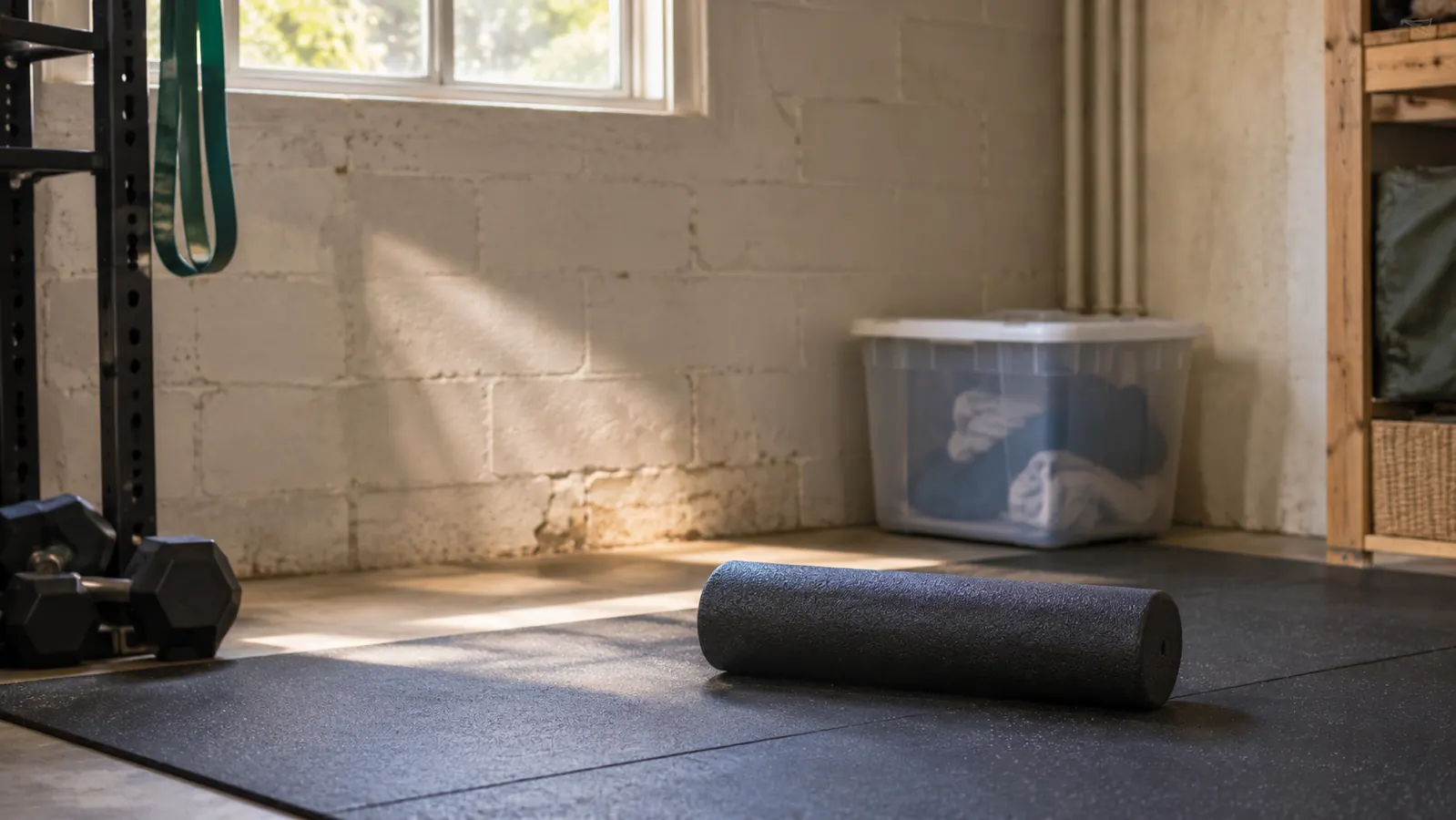
The first thing you notice about the Blackroll Standard Foam Roller is how little there is to it. A cylinder. Smooth all the way around, no ridges, no knobs, no grooves cut into the surface. Mine sat in the plastic gear bin in my basement for the first month after I bought it, mostly because I could not work out how a plain piece of foam could do anything the textured roller at the sporting goods store could not.
Three years later, it is the piece of gear I reach for most often, and it is also the one I complain about most. Both of those things are true at once. So this is the honest version, the one I would give a teammate in the parking lot after a Sunday game, including the parts that are irritating and the parts I would not pay for again if I had it to do over.
The Quick Verdict
Dense, light, and still holding its shape after three years. Short enough to be annoying on your upper back, smooth enough to slide sideways across a muscle without a ridge catching you.
Amazon Check Today's Price →The Roller That Has Survived Three Years of Sunday Nights
11.81 inches long, 5.91 inches across, 155 grams. Mine has no flat spot and no soft middle after three years in a basement corner. Check today's price on Amazon.
Amazon Check Today's Price on Amazon →What Nobody Tells You Before You Buy One
Here is the part the product page buries down near the specs: this thing is short. The listing puts it at 11.81 inches long and 5.91 inches across, and that is accurate, because I have measured mine against a tape more than once while trying to work out why my upper back sessions felt cramped. Eleven and a half inches means you are never rolling both sides of your spine at the same time. It means a quad takes three passes to cover what a longer roller covers in one. It means if you lay it crosswise under your shoulders and roll out, you run out of roller before you run out of back.
I found that out on a specific night, a Sunday last October, after a game we lost badly in cold rain. My upper back was locked up the way it gets when I spend a match hunched against the wind. I laid the roller crosswise under my shoulder blades, rolled out toward my head, and came off the end about six inches sooner than I wanted. I tried shifting it down and going again, and shifting it up, and after four passes I had covered the same strip of back four different ways and none of them felt like the pass I actually needed. I finished that night with my hands on a tennis ball against the wall instead. That is the workaround. It works, but it is more work than one long roller would have been.
It weighs 155 grams. That sounds like trivia until you own one. It means the roller does not stay where you put it. On the rubber mat in my basement it is fine. On the bare concrete beside the mat it walks. On anything smooth it will shoot out from under a calf the first time you put real weight into it. I have chased mine across the floor more than once, usually close to ten at night when I am tired and not in the mood.
The listing describes the firmness as extra soft. I have no idea what they were comparing it to, because mine has never behaved like anything soft. What it is, is dense, and it holds its shape. Three years of being knelt on, sat on, leaned into and used as a footrest while I tie my shoes, and there is no flat spot, no soft middle, no dent where the outside of my thigh lives. When I put my full weight through it, it does not give. Plan for that. If what you want is something that sinks under you, this is not it.
I tested that claim the hard way in the second month. I had been pressing down with everything I had, on the theory that harder meant deeper, and my left quad was sore to the touch for two days after a session that had not felt like much at the time. I backed off to maybe half my body weight and slowed the passes down, and the soreness went away and the rolling started doing more for me, not less. That is not on the box. Nobody at the store tells you. You either figure it out or you decide the roller hurts and quit on it.
One exercise card comes in the box. It is a card, with a handful of positions printed on it, and mine went into the gear bin during the first week. The instruction that actually stuck came from the few sessions I did with a physical therapist after my ankle went, plus the internet, like everybody else.
How I've Used It for Three Years
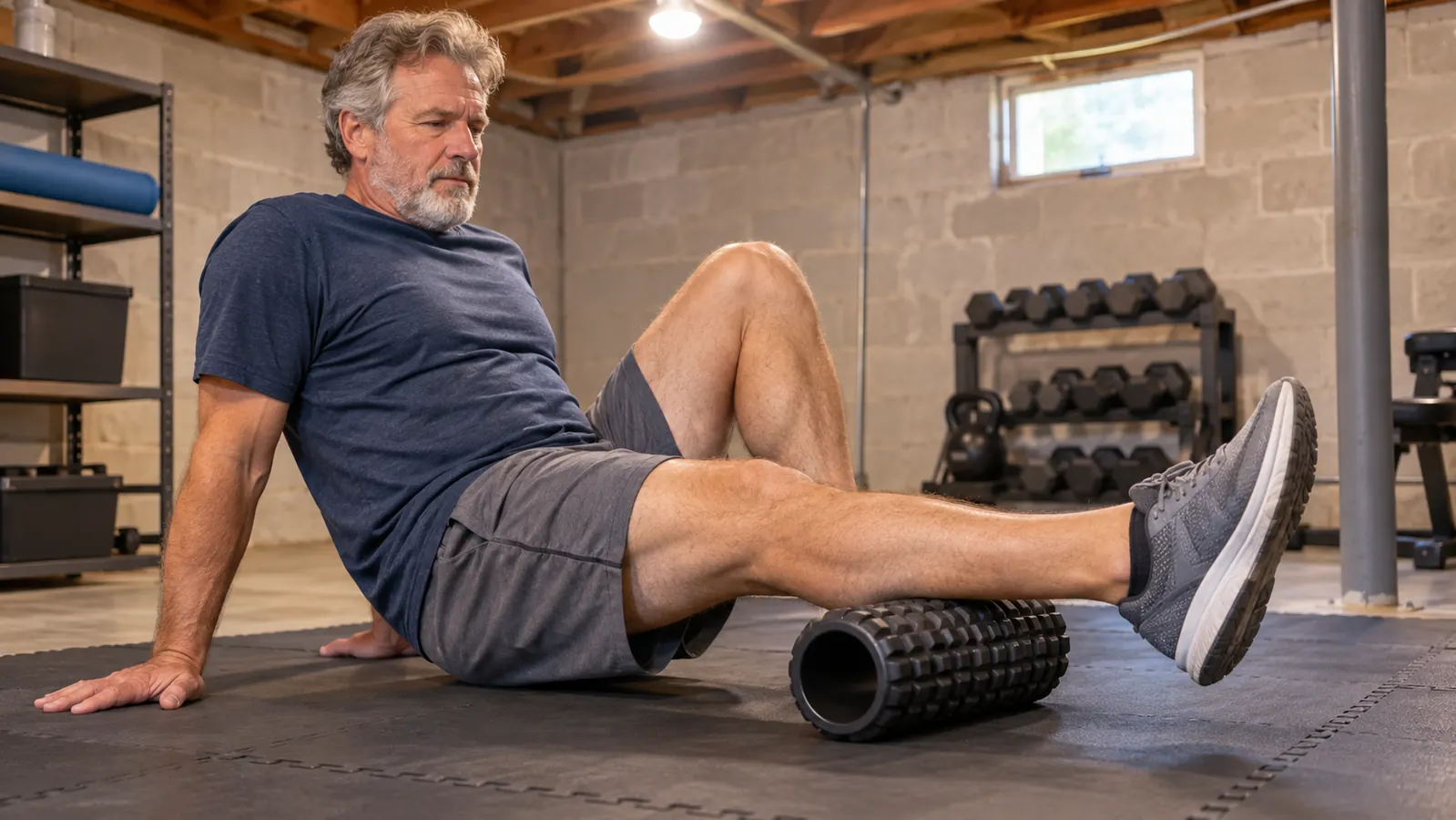
My routine has not changed much. Sunday night, after soccer, I drag the mat out to the basement corner, set the Blackroll down, and work through calves, quads, the outside of my thighs, and then my upper back. Twenty minutes if I am being good, ten if I am being honest about it. I never roll directly on my lower spine. I tried that once, early on, and it felt exactly as unpleasant as everyone says, so that ended it. The ankle I leave alone. A roller is not going to do anything useful for a joint that has been loose since I was 44, and I am not going to pretend otherwise.
What it actually does for me is diagnostic. Ten minutes on a Sunday night tells me which part of my legs is going to complain during Monday's run. Some weeks the left quad is the tight one. Some weeks it is the calf on the right side, the one attached to the bad ankle, which makes sense when I think about how much I compensate over there. Rolling does not fix either of those. It surfaces them. Then I know whether to take Monday easy or whether I can push the pace.
The clearest example I have is a Monday in March, the first warm week of the year, when I got greedy and added a mile to my usual loop three runs in a row. Tuesday morning my left knee was complaining in the familiar spot below the kneecap and my right calf felt like a rope. I rolled that Sunday night and the calf was the loud one, not the knee, which was not what I would have guessed. So I ran short and slow on the roads and wore the knee strap and left the calf alone apart from the roller. By Thursday the calf had let go. Left to my own instincts I would have blamed the knee and iced the wrong leg for a week.
That distinction is most of the review. I have a TOLOCO massage gun that Lisa gave me for my birthday a year ago, and it does a different job entirely. I use it after Wednesday basketball, on low speed, a couple of minutes per muscle, never on the ankle bone or the kneecap or the spine. The gun is for a knot I already know is there. The roller is for finding out what is there in the first place. I would keep both. If I had to keep one it would be the roller, because you cannot aim a gun at something you have not located yet.
Rolling does not fix anything. It surfaces the problem in about ten minutes, and then I get to decide what to do about it.
What It Doesn't Do
It does not replace my knee strap. I wear a Bodyprox patella strap just below my left kneecap on runs, and that thing earns its keep when I have added mileage too fast, which I do roughly every spring. Rolling the quad does not do that job. Neither does rolling make the strap unnecessary. Two different jobs, and I got tired of pretending one covered for the other.
It does not get into the spots a textured roller gets into. I have used the knobbly ones at the Y. They dig. If your problem is a small spot that needs something narrow pressed into it, this smooth surface will not reach it. What the smooth surface does better is let me move sideways across a muscle without a ridge catching and stopping me. When I am working the outside of my thigh, that matters. The texture fights me on that movement and this one does not. There is a spot near the top of my right calf, maybe two inches below the back of the knee, that a knobbly roller found in about four seconds and that this one skates right past. I know it is there now and I use a thumb on it.
It does not help the ankle, and I will keep saying that because it is the thing I would most want a friend to hear before spending money. A joint that has been loose since an old sprain needs the resistance band work, the balance work, and in my case the brace on the field. The roller sits that one out. It also does nothing for a lower back that is tight from four hours in a car. That one I handle with the bands and a walk, not with this.
And it does not shorten a bad week. There was a stretch this past winter when work ran long and I missed four Sunday sessions in a row. When I finally got back down to the mat, the roller did not undo any of it. It just told me, in detail, how much I had let slide. That is worth knowing. It is not the same as fixing it, and I would rather say so than sell you the idea that ten minutes saves you a month of neglect.
What I Liked
- Dense and holds its shape, with no flat spot or soft middle after three years
- Only 155 grams, so it never feels like an effort to pull out of the bin
- Smooth surface lets you slide sideways across a muscle without a ridge catching
- Compact at 11.81 inches by 5.91 inches, easy to keep in a corner
- Works calves, quads, the outside of the thigh and the upper back with no moving parts to break
Where It Falls Short
- 11.81 inches is short, so upper back work is cramped and one sided
- Slides on hard or smooth floors once you put real weight into it
- The listing contradicts itself on material, one field says polyvinyl chloride and the next says PVC free
- No texture, so it cannot dig into one specific stubborn spot
- Not the cheapest plain cylinder of foam you can buy
The Annoyances, in Order of How Much They Bother Me
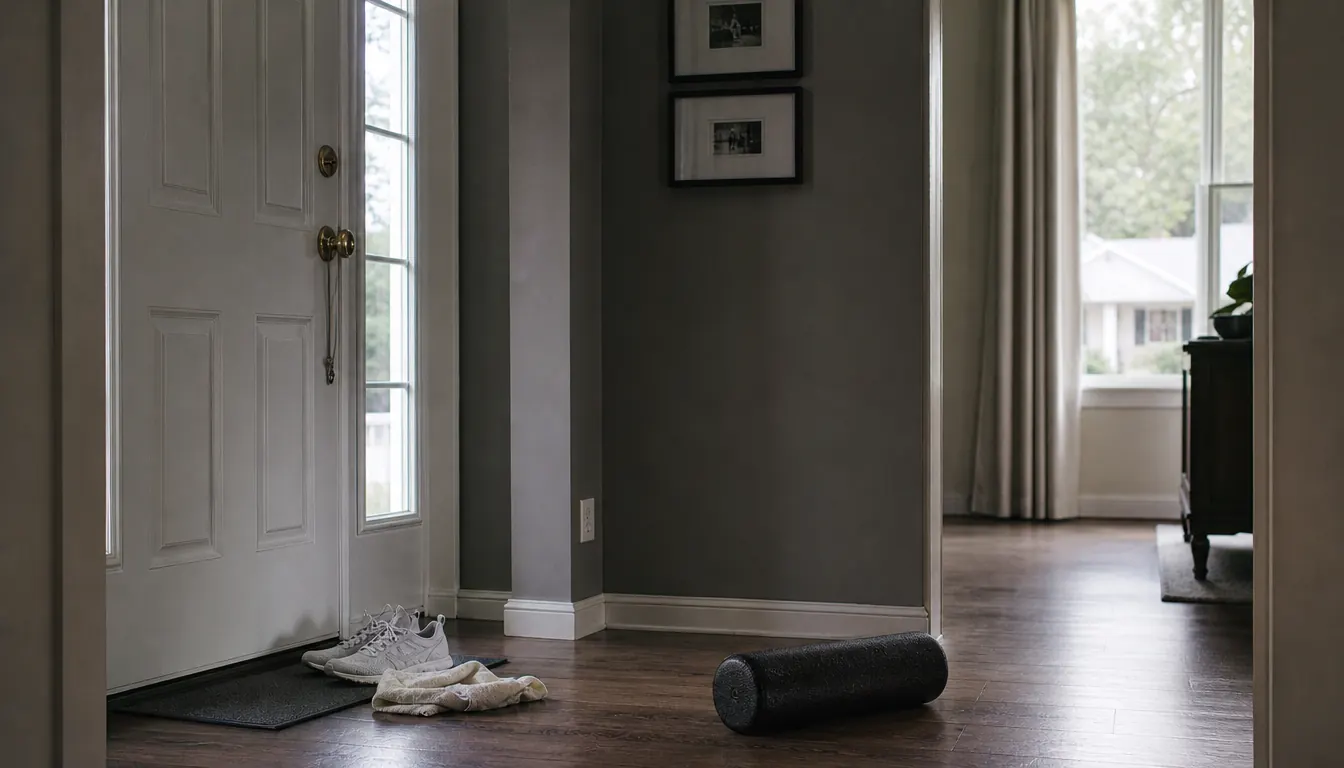
First, and this is the one that actually costs me time, it slides. A smooth cylinder on a smooth floor has nothing to grip with. On my rubber mat it behaves. Step off the mat for any reason and it becomes a projectile. I have solved this the lazy way, by never rolling anywhere except the mat, but if your only floor is hardwood or tile, budget for that. It is the kind of small thing that makes you stop using a piece of gear, and I would rather you heard it from me than figured it out on a Tuesday night.
I did try to fix it. I thought about cutting a length of the cheap non slip drawer liner and keeping it under the roller, which is the sort of idea you have at ten at night and never act on. What I actually did was give up and keep the roller on the mat. The mat has a nubby underside and does not slide on the concrete, and after three years the arrangement has held. The lesson is that this roller wants a surface, and if you do not give it one it will find the far wall of the basement without your help.
Second, there is no guidance on how hard to press. The card shows positions and that is it. Nothing tells you what pressure should feel like, so the first month I was leaning in far harder than I needed to and wondering why my legs felt beaten up the next day. What works for me now is light pressure and slow passes, letting the dense foam do the work instead of my body weight. That is not printed anywhere on the product. You learn it or you bruise.
Third, the listing contradicts itself. One field says the material is polyvinyl chloride and the field right beside it says PVC free. Both cannot be true. I am not going to guess which one is right, and I am not going to pretend I know what mine is made of. What I can tell you is how it has behaved: no cracking, no crumbling at the edges, no chemical smell after three years in a dry basement. That is the part I can actually vouch for. The Amazon copy is the part I cannot.
Fourth, the Blackroll is not the cheapest plain cylinder of foam on the market. You are paying something for the name and for a density that does not collapse. Whether that is worth it depends on whether you have already bought two cheap rollers that went soft in six months. I did. That is why I stopped replacing them.
Who This Is For
This is for the person who has already tried rolling and wants a tool that will still be in the corner in three years. Weekend athletes, people who run a few times a week, people who play a rec sport and wake up stiff the next morning. If you want one dense, light cylinder that covers calves, quads, the outside of your thigh and your upper back, and you are willing to work within a short length, the Blackroll does the job and it keeps doing it.
It is also a reasonable first roller if you are the type to buy once. The lack of texture makes it forgiving while you are learning where things are, because a smooth surface will not catch you the way a knobbly one will. The trade is that you give up the ability to dig into one specific spot later.
Who Should Skip It
Skip it if you want texture. If your thing is a stubborn spot in a glute or a spot along the shoulder blade that needs something narrow and pointy pressed into it, this flat surface is the wrong tool and the knobbly rollers at the gym are the right one. Skip it if you plan to roll on a hard floor, unless you are willing to put down a mat first. And skip it if you want a long roller you can lie on lengthwise, because at 11.81 inches it will not do that for you.
One more honest note before you decide. If what you have going on is more than a tweak, a roller is not the answer and neither is a review from a sales manager in Cincinnati. The knee that gets sore below the kneecap when I ramp mileage, the back that tightens after long drives, the ankle that rolls on bumpy fields: those are things I manage, and I manage them alongside a brace, a strap, bands and the exercises a physical therapist showed me once. If yours is sharper than that, talk to your doctor or a PT before you buy anything at all.
Buy the One I'm Still Using in Year Three, Not the One I Replaced Twice
Dense, 155 grams, 11.81 inches long, and unchanged after three years of Sunday nights on a basement mat. Check today's price on Amazon and read the reviews from people who roll on hard floors, because they will tell you about the sliding too.
Amazon Check Today's Price on Amazon →